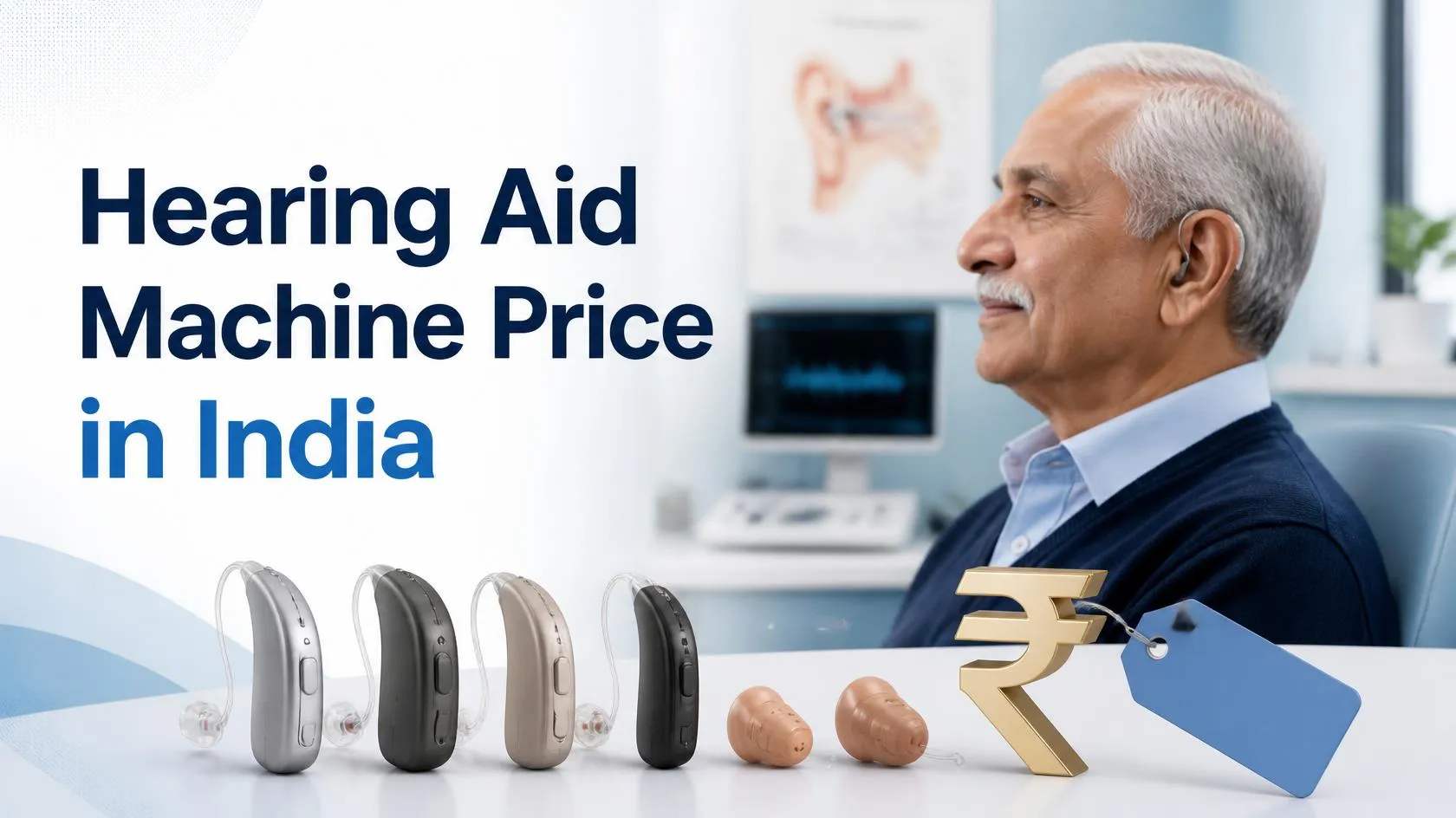

Choosing a hearing aid machine isn't just about picking a brand — it's about matching the technology level to your actual hearing loss and budget. Two devices that look identical on a shelf can perform completely differently depending on the processing chip inside, which is exactly why hearing aid machine prices span such a wide range. Here's a detailed look at what you're paying for in 2026, broken down by technology level.
Hearing Aid Machine Price by Technology Level
| Technology Level | Price (per ear) | Best For |
|---|---|---|
| Basic | ₹8,000 – ₹25,000 | Mild hearing loss, quiet settings |
| Standard | ₹25,000 – ₹60,000 | Mild-moderate loss, some noise exposure |
| Advanced | ₹60,000 – ₹1,50,000 | Moderate loss, regular noisy environments |
| Premium | ₹1,50,000 – ₹3,00,000+ | Moderate-severe loss, demanding listening situations |
You can view specific models within each range at Soft Hear's hearing aids page.
Breaking Down What You're Paying For
A hearing aid machine price isn't just the cost of the physical device. It typically covers:
- The device itself — microphone, processor chip, receiver, and casing, engineered to fit comfortably and function reliably for years.
- Diagnostic hearing test — required to program the device correctly to your specific hearing profile.
- Custom fitting — adjusting settings, volume curves, and comfort to your individual ear and hearing loss pattern.
- Follow-up visits — fine-tuning over the first few weeks as your brain adjusts to amplified sound.
- Warranty and service — usually 1–3 years depending on the tier, covering manufacturing defects and general servicing.
This is why comparing a clinic's hearing aid machine price to an online listing for "just the device" rarely gives an accurate picture — the online number is missing most of what actually makes a hearing aid work well for you long-term.
Does a Higher Price Always Mean Better Hearing?
Not necessarily for everyone. Someone with mild hearing loss who mostly needs help in quiet, one-on-one conversations may do perfectly well with a mid-range device and see little practical benefit from premium features they'll rarely use. Premium pricing pays off most for people who need to function well in noisy offices, restaurants, or large group settings, frequently take phone calls, or want smartphone connectivity and rechargeable convenience.
This is exactly why a hearing test — not a price list — should guide your decision. An audiologist can tell you, based on your actual audiogram and lifestyle, whether the jump from a standard to an advanced or premium tier will make a meaningful, noticeable difference for you, or whether it's an unnecessary expense.
How Technology Tiers Actually Differ
It helps to understand what the price difference between tiers is buying you, beyond marketing language:
- Noise reduction channels: higher tiers split incoming sound into more separate frequency bands, allowing more precise noise filtering.
- Speech-in-noise processing: premium tiers use more sophisticated algorithms to isolate a speaker's voice from surrounding chatter — the single feature most people notice most in daily life.
- Automatic scene detection: advanced and premium devices automatically recognize whether you're in a quiet room, a noisy restaurant, or in traffic, and adjust settings without you touching a control.
- Directionality: better microphone arrays in higher tiers more accurately focus on the person you're facing while reducing sound from behind or the sides.
- Connectivity range: premium devices generally offer more stable, longer-range Bluetooth streaming and broader compatibility with accessories like TV streamers and remote microphones.
Brands to Consider at Each Price Point
Soft Hear works with several globally trusted brands across all budget levels, including Signia, Phonak, ReSound, Widex, Starkey, and Beltone. Each brand offers its own version of basic through premium tiers, so the technology-level comparison above applies broadly across brands, not just to one manufacturer.
Common Mistakes When Comparing Hearing Aid Machine Prices
- Comparing device-only prices to all-inclusive clinic quotes — always check what's bundled in.
- Choosing based on the lowest number without a hearing test — you may end up with insufficient power for your actual hearing loss.
- Overbuying premium features you won't use — smartphone app control matters little if you rarely use a smartphone.
- Ignoring warranty length — a cheaper device with a 1-year warranty can cost more long-term than a slightly pricier one with 3 years of coverage.
- Not asking about trial periods — a trial lets you confirm the tier is right before committing to the full price.
Getting an Accurate Quote
Because hearing aid machine price depends heavily on your individual hearing loss, the most reliable next step is a free assessment rather than browsing price lists in isolation. Soft Hear's audiology services include a full diagnostic test before any device is recommended, so your quote reflects what you actually need — not a generic package.
Find your ideal hearing aid machine and price. Book a free consultation with Soft Hear.
Frequently Asked Questions
What's included in a hearing aid machine price?
Typically the device, hearing test, custom fitting, follow-up visits, and warranty.
Is a premium hearing aid machine always worth the extra cost?
Only if your hearing loss and lifestyle need the extra noise-handling and connectivity features — a hearing test will confirm this.
Can hearing aid machine price be paid via EMI?
Yes, most clinics including Soft Hear offer EMI plans for premium devices.
How much difference does technology tier really make day to day?
For people who spend time in noisy environments or group settings, the jump from basic to advanced or premium tiers is often very noticeable in speech clarity; for quieter lifestyles, the difference may be smaller.



























Sign in to leave a comment.