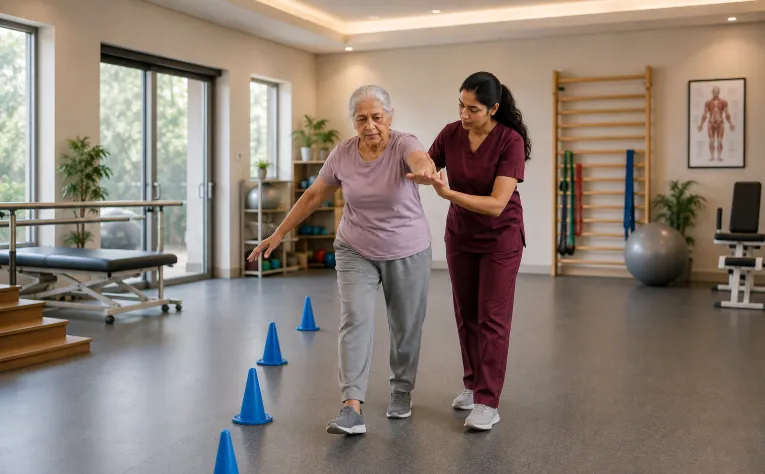

Heart failure can significantly change how an older adult feels and functions every day. Simple activities such as walking to the bathroom, climbing a few steps, bathing, or getting dressed may suddenly cause breathlessness, fatigue, weakness, or reduced stamina.
While heart failure requires ongoing medical management, rehabilitation can also play an important role in helping suitable patients regain functional capacity and confidence.
Heart failure rehabilitation is a structured programme that combines medically guided exercise, education, lifestyle support, and monitoring to help patients manage their condition and improve their ability to perform daily activities.
At Antara Senior Care, cardiac rehabilitation for seniors is approached with a focus on safety, individualization, medical oversight, and functional independence. The aim is not to push a patient beyond their limits, but to help them gradually become stronger and more confident within clinically appropriate boundaries.
What Is Heart Failure Rehabilitation?
Heart failure rehabilitation is a structured rehabilitation approach for people living with heart failure.
It is designed to help appropriate patients improve:
- Physical fitness
- Muscle strength
- Exercise tolerance
- Functional mobility
- Confidence with activity
- Ability to perform daily activities
- Understanding of heart failure management
Heart failure rehabilitation is not a replacement for medical treatment.
Instead, it complements medical management by helping patients safely work on their physical and functional abilities.
For seniors, this can be particularly important because prolonged inactivity can contribute to muscle weakness, deconditioning, reduced balance, and greater dependence on caregivers.
Why Do Seniors Become Weak After Heart Failure?
Heart failure can affect the body in several ways.
The heart's reduced ability to pump effectively can contribute to symptoms such as breathlessness and fatigue. As a result, patients may naturally reduce their physical activity.
Over time, this can create a cycle:
Heart failure symptoms → Reduced activity → Muscle deconditioning → Lower exercise tolerance → Greater difficulty with daily activities
A structured cardiac rehabilitation aims to safely interrupt this cycle where appropriate.
However, the programme must be tailored according to the patient's medical condition and tolerance.
Common Functional Challenges After Heart Failure
An older adult with heart failure may experience:
Fatigue
Routine activities may require more energy than before.
Breathlessness
Physical exertion may trigger shortness of breath.
Reduced Exercise Capacity
Patients may not be able to walk or exercise for as long as they previously could.
Muscle Weakness
Reduced activity can contribute to loss of strength.
Reduced Mobility
Patients may spend more time sitting or in bed.
Fear of Exertion
Some patients become hesitant to exercise because they are afraid that physical activity may worsen their symptoms.
A structured rehabilitation programme can help address these challenges while keeping safety central.
How Does Cardiac Rehabilitation Help Seniors?
Cardiac rehabilitation for seniors is more than an exercise programme.
A comprehensive programme can combine:
- Medical assessment
- Individualised exercise
- Strength and conditioning
- Functional mobility training
- Education
- Activity monitoring
- Nutrition guidance where appropriate
- Risk-factor management
- Lifestyle support
At Antara, the rehabilitation programme is designed according to the individual's medical and functional needs.
Heart Failure Rehabilitation at Antara
At Antara Senior Care, rehabilitation follows a structured and personalised approach.
Before beginning an exercise programme, the patient's overall health and functional condition should be assessed.
The rehabilitation team can consider factors such as:
- Medical history
- Current symptoms
- Exercise tolerance
- Mobility
- Muscle strength
- Balance
- Functional independence
- Fatigue levels
- Risk factors
Based on the assessment, an appropriate rehabilitation plan can be developed.
The objective is to help patients gradually improve their functional capacity without unnecessary overexertion.
What Does Exercise After Heart Failure Look Like?
One of the most important aspects of exercise after heart failure is that it should be appropriately prescribed.
It is not about exercising as hard as possible.
Depending on the individual's clinical condition, rehabilitation may include:
Walking
Walking can be used as a functional form of aerobic activity when appropriate.
The duration and intensity can be gradually progressed according to tolerance.
Low-Intensity Cardiovascular Exercise
Selected patients may participate in structured cardiovascular exercise under appropriate supervision.
Strength Training
Light, appropriately prescribed resistance exercises may help address muscle weakness and deconditioning.
Flexibility and Mobility Exercises
Gentle exercises may help maintain joint mobility and support functional movement.
Functional Training
Patients may practise movements relevant to everyday life, such as:
- Sit-to-stand
- Walking
- Transfers
- Stair practice where appropriate
- Basic daily activities
The exact exercise programme should be individualised and medically appropriate.
Why Strength Training Matters in Heart Failure Recovery
When patients become less active, they can lose muscle strength.
This can make everyday activities increasingly difficult.
For example:
Reduced activity
↓
Leg weakness
↓
Difficulty standing from a chair
↓
Less movement
↓
Further deconditioning
Appropriately supervised strength training can help address this cycle in suitable patients.
The goal is not bodybuilding or intense exercise. It is to improve the strength needed for functional independence.
How Cardiac Rehabilitation Supports Daily Function
The success of rehabilitation is not measured only by how long a patient can exercise.
For seniors, meaningful improvements may include:
- Walking farther without excessive fatigue
- Standing from a chair more easily
- Moving around the home more confidently
- Completing personal-care activities
- Participating in family activities
- Reducing dependence on caregivers
This is why functional goals should be incorporated into the rehabilitation programme.
Importance of Monitoring During Rehabilitation
Older adults with heart failure may have different levels of exercise tolerance.
Therefore, rehabilitation should be monitored appropriately.
Depending on the patient's condition, the team may monitor:
- Heart rate
- Blood pressure
- Oxygen saturation where clinically indicated
- Breathing
- Fatigue
- Symptoms during activity
- Recovery after exercise
The rehabilitation team can modify the intensity or duration of an activity based on the patient's response.
Patients should also be educated about recognising symptoms that require medical attention.
Heart Failure Rehabilitation Is Not “One Size Fits All”
Two patients with heart failure may have completely different rehabilitation needs.
One patient may be able to walk independently but have poor endurance.
Another may have significant weakness and require assistance with basic transfers.
Therefore, their rehabilitation programmes should not be identical.
At Antara, rehabilitation goals are based on the individual's:
- Medical condition
- Functional ability
- Mobility
- Exercise tolerance
- Age
- Recovery goals
- Overall care requirements
This personalised approach is especially important when caring for older adults.
Role of a Multidisciplinary Team
Heart failure affects more than physical fitness. A multidisciplinary approach can help address different aspects of recovery.
At Antara, depending on individual requirements, care may involve:
Rehabilitation Physician
Provides medical rehabilitation oversight and helps guide the overall rehabilitation plan.
Physiotherapy
Focuses on mobility, strength, endurance, balance, and functional movement.
Nursing Team
Supports monitoring, daily care, medication-related routines, and observation of symptoms as part of the overall care plan.
Occupational Therapy
May help patients adapt everyday activities and improve functional independence when required.
Nutrition Support
Appropriate nutritional guidance can be incorporated where needed as part of overall senior care.
This coordinated approach can help connect medical management with everyday functional goals.
Heart Failure Recovery: Why Gradual Progress Matters
Recovery does not necessarily mean returning immediately to the activity level a person had before heart failure.
Progress may happen in small steps.
For example:
Short assisted walk
↓
Longer supervised walk
↓
Improved standing tolerance
↓
Better daily activity participation
↓
Greater functional independence
Small improvements can have a meaningful impact on quality of life.
The rehabilitation team can gradually modify the programme according to the patient's progress and tolerance.
Can Seniors Exercise Safely After Heart Failure?
Many people with heart failure may benefit from appropriately prescribed physical activity, but exercise should not be started or intensified without appropriate medical guidance.
The right programme depends on the individual's medical condition, symptoms, functional status, and clinical assessment.
Patients should not attempt to push through concerning symptoms simply in the belief that more exercise will always lead to faster recovery.
At Antara, safety and individualisation remain central to rehabilitation planning.
What Should Families Look for When Searching for “Cardiac Rehab Near Me”?
When families search for “cardiac rehab near me,” choosing a programme based solely on the availability of exercise equipment may not be enough.
Consider whether the centre provides:
- Medical and rehabilitation oversight
- Individualised assessment
- Structured exercise programmes
- Functional rehabilitation
- Monitoring during activity
- Physiotherapy
- Nursing support
- Senior-friendly infrastructure
- Personalised goals
- Progress tracking
- Multidisciplinary care
For older adults, the environment itself should also support safe mobility and daily activities.
Why Choose Antara for Cardiac Rehabilitation in Chennai?
For families looking for cardiac rehabilitation in Chennai, Antara Senior Care provides a structured senior-care environment where rehabilitation can be integrated with broader supportive care.
Our approach focuses on the individual rather than treating heart failure only as a medical diagnosis.
Depending on the patient's needs, rehabilitation may include:
- Rehabilitation physician oversight
- Physiotherapy
- Structured mobility and exercise
- Strength and conditioning
- Functional rehabilitation
- Balance and mobility training
- Nursing support
- Occupational therapy where appropriate
- Individualised rehabilitation goals
- Ongoing monitoring and progression
The aim is to help suitable patients build confidence in movement, improve functional capacity, and work toward greater independence.
Senior-Friendly Rehabilitation Environment
For older adults recovering from heart failure, rehabilitation should take place in an environment designed with safety in mind.
Antara's senior-care environment incorporates features designed to support mobility and everyday care, such as:
- Grab bars
- Anti-skid flooring
- Emergency call buttons
- Functional beds
- In-built oxygen pipeline
- Trained care support
These features can be particularly useful for seniors who require assistance or supervision during their recovery.
What Families Can Do to Support Heart Failure Rehabilitation
Family involvement can help patients maintain consistency.
Encourage, Don't Pressure
Support the rehabilitation plan rather than pushing the patient to exercise beyond their prescribed limits.
Follow the Medical Plan
Medication, dietary recommendations, follow-up appointments, and other medical instructions remain important components of heart failure management.
Watch for Changes
Families should communicate significant changes in symptoms or functional ability to the patient's healthcare team.
Encourage Appropriate Activity
Where approved by the rehabilitation team, encourage the patient to participate in daily activities rather than remaining inactive throughout the day.
Celebrate Functional Progress
Walking a little farther, standing more comfortably, or completing a personal-care task with less assistance can all represent meaningful progress.
Frequently Asked Questions
What is heart failure rehabilitation?
Heart failure rehabilitation is a structured programme combining medically appropriate exercise, education, monitoring, and lifestyle support to help suitable patients improve physical function and manage their condition.
Can exercise help with heart failure recovery?
Appropriately prescribed exercise can help improve physical fitness and functional capacity in suitable patients. Exercise should be individually assessed and guided according to the person's medical condition.
Is cardiac rehabilitation suitable for seniors?
Older adults may benefit from cardiac rehabilitation when they are medically appropriate for it. Programmes should be adapted to their functional ability, symptoms, mobility, and overall health.
What exercises are done after heart failure?
Depending on the patient's condition, rehabilitation may include walking, low-intensity cardiovascular exercise, appropriately prescribed strengthening, mobility exercises, and functional activities.
When should someone search for cardiac rehab near me?
If a person with heart failure is experiencing reduced exercise tolerance, weakness, deconditioning, or difficulty with everyday activities, families can discuss whether structured cardiac rehabilitation is appropriate with their treating healthcare professional.
Conclusion
Heart failure can affect much more than the heart. For older adults, it can lead to fatigue, weakness, reduced mobility, deconditioning, and loss of independence.
A structured heart failure rehabilitation programme can help suitable patients gradually work on strength, endurance, mobility, and everyday function while remaining within appropriate clinical limits.
At Antara Senior Care, our approach combines rehabilitation oversight, physiotherapy, functional training, nursing support, and personalised rehabilitation goals. For seniors in Chennai, the focus is not simply on exercising more—it is on helping patients move safely, participate in daily activities, and work toward greater independence.
When considering cardiac rehabilitation in Chennai, families should look for a programme that understands both sides of recovery: the medical needs of heart failure and the everyday functional needs of an older adult.

























Sign in to leave a comment.