
Strategic Shifts and Commercial Opportunities in the Worldwide Hemodialysis Vascular Access Market
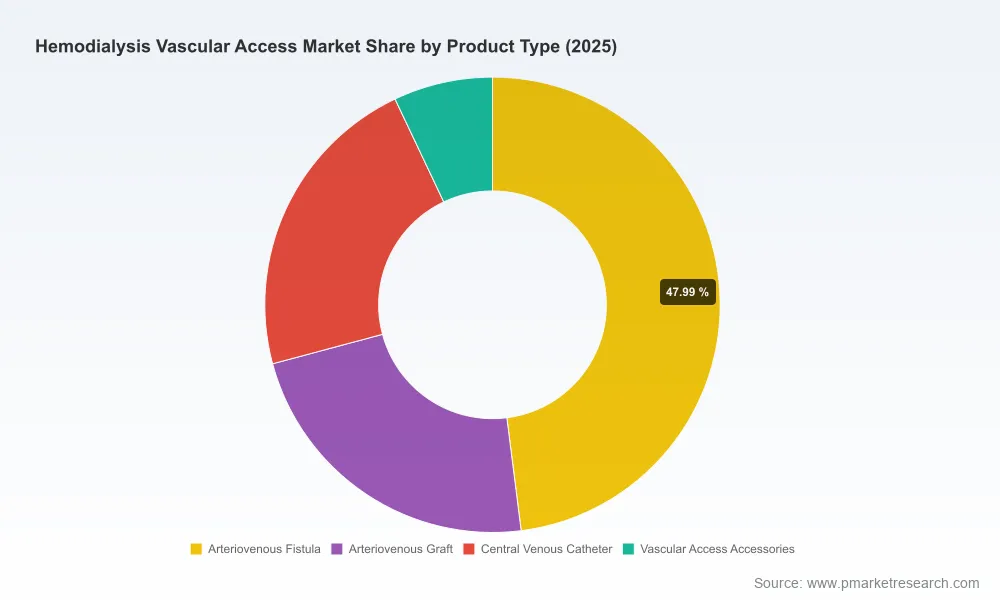
The global hemodialysis vascular access market stands at a pivotal juncture, navigating a period of steady expansion amid evolving clinical standards, regulatory refinements, and technological breakthroughs. Valued at approximately $2.79 billion in 2025, the market is projected to expand at a compound annual growth rate of 5.88 percent, reaching an estimated $4.16 billion by 2032. This trajectory reflects more than demographic inevitability; it captures a structural recalibration in how vascular access is designed, placed, managed, and reimbursed. For executives, investors, and procurement strategists, the business implications extend far beyond incremental volume growth. The competitive field is consolidating around differentiated clinical value propositions, while reimbursement architectures and quality metrics are quietly reshaping procurement priorities and product development roadmaps.
Historically, the market experienced a moderate contraction in 2021 before resuming a firm upward path, driven by post-pandemic capacity normalization and the gradual return of elective and maintenance dialysis procedures. The baseline year of 2025 establishes a credible reference point for forecasting, with growth accelerating through the late 2020s as access solutions align more closely with preferred clinical pathways. This expansion is not uniformly distributed across geographies or application segments; rather, it concentrates where clinical standardization, reimbursement clarity, and procedural volume intersect most effectively. The resulting environment rewards players that can translate clinical evidence into predictable adoption curves while navigating quality reporting, coding evolution, and supply continuity requirements.
Yet the growth narrative is accompanied by structural friction points that demand strategic attention. First, the market remains highly concentrated, with a small group of manufacturers holding a dominant share of commercial volume and innovation pipelines. This concentration creates both stability and vulnerability: it supports consistent product availability and established clinical relationships, but it also raises the bar for differentiation and can slow the diffusion of novel access modalities unless supported by robust reimbursement pathways. Second, clinical guidelines increasingly favor specific access types and complication-minimizing approaches, creating a tension between established routines and evolving best practices. When guideline bodies emphasize individualized selection and complication management, manufacturers and healthcare systems must invest in education, procedural support, and outcome-tracking to realize adoption. Third, reimbursement architectures and quality measurement frameworks are becoming more explicit about access type selection and catheter utilization, nudging decisions at the point of care and influencing procurement patterns across centers and hospitals.
Market Drivers Reshaping the Value Equation
Several intersecting forces are redefining what constitutes commercial value in vascular access. Rather than viewing growth as a single narrative, it is more useful to examine the drivers that are simultaneously pulling demand upward, compressing cost structures, and raising clinical expectations.
Technological Innovation and Access Maturation
The most consequential shift is the acceleration of technologies designed to improve maturation, reduce complications, and expand options for patients with challenging vasculature. EndoAVF systems and percutaneous fistula creation platforms are enabling less invasive routes to durable access, potentially shortening time to cannulation and reducing reliance on central venous catheters when clinically appropriate. Alongside procedural innovation, bioabsorbable and bioengineered conduits are moving from experimental promise toward regulatory milestones and clinical evidence generation, signaling a longer-term diversification of the access toolbox. These developments matter commercially because they create new adoption drivers: centers seeking to reduce catheter days, improve primary patency, and standardize maturation workflows are inclined to evaluate platforms that offer measurable clinical differentiation.
Recent regulatory and clinical milestones illustrate this momentum. A bioabsorbable vascular access graft achieved EU CE marking based on pivotal trial data demonstrating meaningful secondary patency at twelve months, establishing a regulatory bridge for further commercialization and real-world evidence accumulation. In parallel, a bioengineered tissue conduit reported two-year outcomes from a prospective randomized comparison against autologous AV fistula, highlighting the growing appetite for head-to-head evidence that can inform access selection. Additional momentum is visible in device-based maturation support: one vein dilation system received FDA Breakthrough Device Designation alongside CMS Category B assignment, effectively creating a structured pathway for early clinical use and reimbursement navigation. On the digital side, a non-contact AI-driven vascular access management technology also received FDA Breakthrough Device Designation, pointing to an emerging layer of workflow intelligence that could influence access surveillance, complication prediction, and cannulation quality.
Policy, Reimbursement, and Quality Measurement
Reimbursement and quality frameworks are steadily becoming more explicit about access selection and outcomes. Reporting requirements now distinguish access types on hemodialysis claims using defined modifiers for catheters, grafts, and fistulas, making access choice visible in billing data and quality tracking. Alongside these coding conventions, dialysis circuit intervention coding has expanded to include mechanical thrombectomy and thrombolysis procedures with or without angioplasty or stenting in the peripheral dialysis segment, giving providers clearer documentation paths for maintenance and salvage procedures. On the quality side, practitioner-level metrics focused on long-term catheter rates are actively monitored, reinforcing the incentive to transition appropriate patients toward preferred access types where feasible. Clinical practice guidance continues to emphasize individualized selection and complication management, which means reimbursement visibility and guideline alignment increasingly interact to shape procurement behavior. For commercial teams, this environment rewards products and services that help centers meet documentation obligations, reduce catheter dependence, and demonstrate quality improvement in ways that are auditable and defensible.
Demand-Side Behavior and Care Setting Dynamics
Patient and provider behavior is shifting toward access pathways that balance durability, safety, and patient experience. In many settings, there is growing preference for access types associated with lower infection risk and better long-term outcomes, which expands the addressable opportunity for mature fistula and graft strategies where anatomy and clinical status allow. At the same time, the practical realities of vascular access management mean catheters remain essential for many patients, especially during maturation, in urgent starts, or when anatomy limits other options. This duality creates a stable demand base for catheter solutions while simultaneously elevating the strategic importance of maturation support, surveillance, and complication management. Healthcare delivery patterns also matter: dialysis centers represent the largest end-user segment, reflecting their central role in ongoing maintenance therapy, while hospitals continue to play a significant role in initiation, complex procedures, and inpatient management. Home dialysis remains a smaller but strategically relevant segment, reinforcing interest in access solutions that support patient mobility, ease of care, and reduced clinic dependency where clinically viable.
Supply Chain and Cost Structure Considerations
Cost structures across vascular access are being shaped by the interplay of device pricing, procedure efficiency, complication avoidance, and total episode cost. Access decisions are increasingly evaluated not only on upfront unit cost but also on downstream outcomes such as revision procedures, infection management, and catheter days. This perspective favors solutions that can reduce variability in cannulation, support predictable maturation, and lower the frequency of access-related interventions. Supply chain resilience is another practical driver: centers and procurement teams value consistent availability, broad compatibility with established workflows, and supplier reliability, especially for high-utilization consumables and catheter kits. Where manufacturers can combine clinical differentiation with dependable supply and clear documentation support, they are better positioned to navigate both budgeting cycles and quality-driven purchasing criteria.
Competitive Landscape and Strategic Positioning
The competitive field blends large, broadly integrated renal and medical technology players with specialized manufacturers and emerging innovators pursuing differentiated access concepts. Large incumbents typically compete through comprehensive portfolios that span catheters, fistula needles, grafts, and related consumables, leveraging scale, established clinical relationships, and integration with wider dialysis or renal care offerings. Their advantage lies in breadth, procurement predictability, and the ability to serve multiple access types within a single purchasing framework. This breadth is commercially meaningful because many centers prefer streamlined sourcing across the access continuum, particularly where standardization can reduce training burden and support consistent procedure practices.
Specialist manufacturers, by contrast, often compete on focused technical strengths. Some emphasize chronic and acute catheter design, others concentrate on graft materials engineered for early or immediate cannulation, and still others build reputations around introducers, needles, and accessories that support procedural efficiency and safety. This focused positioning can be highly effective in segments where specific performance characteristics, material properties, or handling qualities influence selection decisions. In practice, the market rewards a blend of portfolio reliability and targeted differentiation: buyers want dependable core products but also seek meaningful advantages in the areas that most affect outcomes and workflow.
The innovation frontier is increasingly shaped by companies pursuing access creation, maturation, and bioengineered or bioabsorbable conduits. One notable example is the development of endovascular fistula creation systems, which reflect a broader push toward less invasive procedures and faster functional access. Another is the emergence of grafts designed for early use, which address a real clinical pain point by reducing the waiting period before cannulation. Bioabsorbable and tissue-engineered conduits represent longer-horizon bets that could expand options for patients with limited native vasculature, though commercial scaling will depend on continued evidence generation, reimbursement navigation, and procedural training. Digital and workflow tools are also entering the competitive frame, with AI-enabled access management concepts gaining regulatory attention. These tools do not replace devices, but they can change how access performance is monitored and managed, potentially influencing purchasing decisions when integrated into center-level quality programs.
Worldwide Hemodialysis Needle Set Market
Market evolution is trending toward selective consolidation and targeted new entry. Large portfolios and established manufacturing footprints support consolidation dynamics, particularly where companies seek to reduce supplier fragmentation for customers or broaden their access continuum. At the same time, new entrants with differentiated device concepts or workflow technologies continue to find openings, especially when supported by breakthrough designations, specialty trial data, or reimbursement pathways that lower early adoption friction. The net effect is a landscape where scale matters, but it does not guarantee advantage on its own. Differentiation that aligns with guideline preferences, reimbursement visibility, and measurable workflow benefits is becoming a stronger determinant of competitive traction.
Hemodialyzer Market
Forward Outlook: Three Trends to Watch
Looking ahead three to five years, the market is likely to be shaped by a convergence of clinical, regulatory, and technology-driven trends that create both opportunity and execution risk.
Access Strategy Increasingly Anchored in Outcomes and Documentation
As reimbursement visibility and quality measurement become more precise, access selection and management will be judged more explicitly on outcomes such as catheter dependence, complication rates, and procedural efficiency. This trend favors solutions that help providers meet documentation expectations, support guideline-aligned selection, and reduce downstream interventions. Commercially, this opens opportunity for manufacturers and service providers that can package devices with workflow support, training, and evidence that translates into measurable quality improvement. The risk is that centers may become more conservative in adopting novel modalities until evidence and reimbursement clarity are sufficient, meaning adoption cycles can be slower for first-in-class technologies without strong clinical and payment alignment.
Diversification of Access Options Beyond Traditional Categories
The pipeline suggests a gradual expansion of access choices, including less invasive creation methods, grafts engineered for early use, and bioabsorbable or bioengineered conduits. This diversification can improve options for patients with challenging anatomy and may shift practice patterns over time, particularly in centers seeking to reduce catheter reliance and improve maturation predictability. For businesses, the opportunity lies in identifying which niches are most likely to adopt new modalities first, typically where procedural volume, clinical leadership, and reimbursement support align. The uncertainty is that some novel conduits and systems will face longer evidence and reimbursement journeys, so commercial planning should account for staged adoption rather than immediate widespread displacement of existing categories.
Workflow Intelligence and Service-Led Value
Digital and procedural support tools are gaining recognition as potential complements to device-based care. Non-contact AI-driven access management concepts and maturation support technologies illustrate a broader move toward intelligence that can assist surveillance, cannulation quality, and complication mitigation. If integrated effectively into clinical operations, such tools can strengthen the value proposition of access programs by connecting device performance with ongoing management. The commercial implication is that competitive advantage may increasingly come from combining hardware with services, training, and analytics rather than competing on device specifications alone. A key risk is fragmentation: if digital tools and device ecosystems are not interoperable or are difficult to operationalize, adoption may be limited to early-adopter programs with specialized resources.
Strategic Implications for Decision-Makers
The strategic takeaway is that vascular access is becoming a more outcomes-conscious, documentation-sensitive, and technology-diversified market. The following considerations can help translate this reality into action across roles.
For Manufacturers and Product Leaders
Portfolio strategy should balance breadth with credible differentiation in the areas that most influence clinical selection and total cost outcomes. That means continuing to strengthen core catheter, graft, and fistula product reliability while investing in innovation that addresses maturation, early cannulation, complication reduction, or workflow integration. Evidence generation and documentation support are increasingly part of the commercial package, especially where reimbursement and quality frameworks reward specific access behaviors. Companies should also prepare for staged adoption of novel modalities by building training, procedural support, and real-world evidence capabilities that can accelerate confidence among early adopters.
For Investors and Strategic Partners
Investment theses should distinguish between near-term, volume-driven opportunities in established categories and longer-horizon bets on novel conduits, less invasive creation systems, and workflow intelligence. The near-term opportunity set tends to reward reliable supply, strong clinical relationships, and alignment with guideline and reimbursement trends. The longer-horizon opportunity set depends on regulatory progress, randomized or prospective evidence, and reimbursement pathways that enable broader use. Due diligence should weigh not only technical promise but also the operational requirements for adoption, including procedural training, center-level integration, and the pace at which quality measurement and coding structures reinforce the new modality.
For Procurement and Clinical Operations Leaders
Purchasing decisions increasingly benefit from a total-value lens that accounts for access type preferences, catheter utilization goals, procedural support, and documentation compatibility. Standardization can reduce training burden and improve consistency, but it should be balanced against the need for clinically appropriate access selection in complex patient populations. Procurement programs that incorporate outcome tracking, complication management priorities, and supplier reliability tend to be better positioned to meet both budget and quality objectives. In this environment, supplier partnerships that offer clear product guidance, education, and evidence support can create more value than price-based selection alone.
Navigating the Next Phase with Detailed Intelligence
The hemodialysis vascular access market is expanding with discipline, but the strategic decisions within it are becoming more nuanced. Growth is real, yet it is distributed unevenly across segments, influenced by reimbursement visibility, shaped by guideline alignment, and increasingly affected by technologies that change how access is created, managed, and monitored. For organizations operating in this space, the value of detailed market intelligence lies in its ability to connect macro trends to actionable choices: where adoption is most likely to accelerate, which product and workflow attributes are gaining commercial relevance, how reimbursement and quality dynamics affect purchasing, and which competitors are positioned to convert innovation into adoption. A closer look at the full segmentation, regional patterns, end-user dynamics, and detailed company strategies can sharpen planning and reduce the risk of misreading where value is concentrating. The complete research report provides deeper breakdowns and customized guidance for those who need to move from market-level insight to operational and investment decisions.
PW Consulting
For detailed analysis of this topic, please visit the official page: Worldwide Hemodialysis Vascular Access Market
Lacy Lee
Senior Marketing Manager
[email protected]
PW Consulting: www.pmarketresearch.com



























Sign in to leave a comment.