
Navigating Growth and Complexity in the Worldwide Hernia Mesh Devices Market
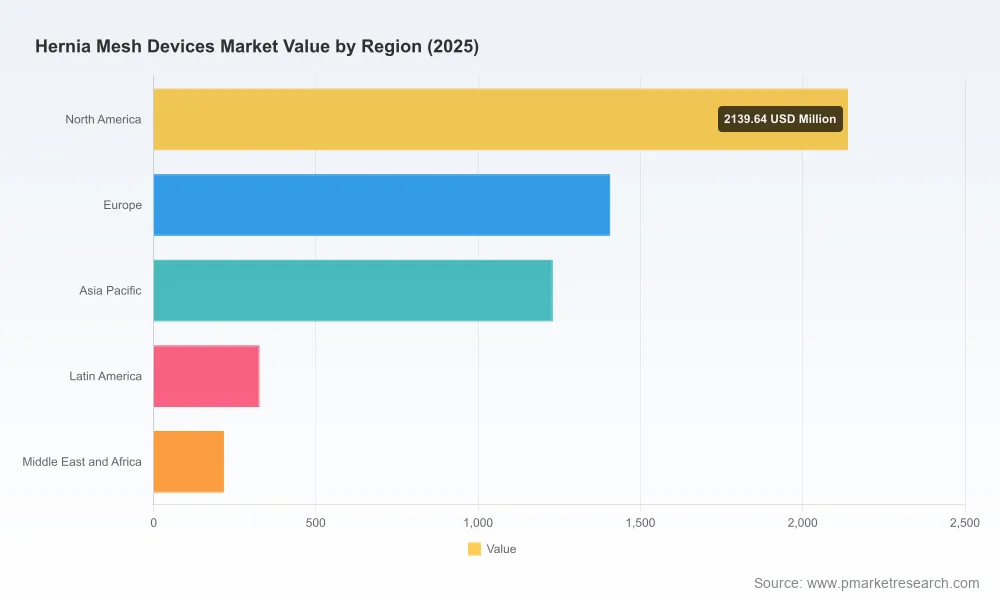
The hernia mesh devices sector has entered a phase of measured expansion, defined by steady clinical demand and an increasingly intricate competitive landscape. After a decade of rapid adoption fueled by the widespread acceptance of tension-free repair techniques, the market has matured into a space where incremental innovation, regulatory compliance, and cost efficiency dominate strategic decision-making. Revenue across the global market is projected to grow from $5,320.5 million in 2025 to $7,411.95 million by 2032, reflecting a compound annual growth rate of 4.85% over the forecast period. This trajectory signals a market that continues to expand, but at a pace that rewards operators who can balance clinical performance with economic sustainability.
Growth is not uniform across segments or geographies. The industry is navigating a structural inflection point where volume-driven expansion gives way to value-driven differentiation. Manufacturers and suppliers who rely on commodity positioning are encountering margin compression, while those investing in product innovation, clinical evidence, and supply chain resilience are capturing disproportionate share. Understanding the forces reshaping this market is essential for executives evaluating product pipelines, capital allocation, and commercial strategy.
Market Snapshot and Core Challenges
The hernia mesh market is characterized by consolidated activity among a modest group of established players and a growing emphasis on product performance, safety documentation, and procedural economics. Competitive concentration remains significant, with a handful of manufacturers accounting for the majority of revenue. This concentration reflects the capital-intensive nature of regulatory approval, clinical validation, and global distribution for implantable devices. It also creates a market environment where new entrants must bring differentiated technology or compelling cost advantages to succeed.
Three challenges define the current operating environment. First, regulatory scrutiny continues to intensify around implantable materials, biocompatibility, and post-market surveillance. Device classification frameworks have evolved to require more robust evidence for long-term safety, particularly for permanently implanted synthetic products and animal-derived biologics. Compliance now demands more than meeting baseline standards; it requires manufacturers to maintain traceable quality systems, document material performance over extended periods, and respond quickly to safety signals.
Second, the market is navigating the tension between clinical outcomes and cost containment. Surgical facilities and health systems increasingly evaluate hernia repair products based on total procedure economics rather than unit price alone. This includes considerations such as operative time, fixation methods, conversion rates, adhesion risk, and recurrence outcomes. The shift toward value-based purchasing means that product positioning has become more clinically nuanced, with reimbursement dynamics further influencing adoption patterns.
PW Consulting
Third, the competitive field is being reshaped by product discontinuation and portfolio consolidation. Historical cases of higher revision rates associated with certain composite meshes have increased institutional caution and elevated the importance of long-term clinical evidence. As a result, companies have been reviewing legacy SKUs, focusing development resources on platforms with clearer differentiation, and aligning product lines with robotic and minimally invasive procedural trends. The outcome is a market where product lifecycle management and evidence generation are as strategically important as manufacturing scale.
Key Drivers Shaping Market Momentum
The trajectory of the hernia mesh market is being pulled forward by a cluster of interconnected drivers spanning technology, regulation, demand behavior, and supply economics. Each factor influences product design choices, go-to-market strategy, and capital deployment.
Technological Innovation and Clinical Differentiation
Product innovation remains the most visible driver of competitive advantage. Manufacturers are moving beyond generic polypropylene and polyester meshes toward engineered constructions that address fixation simplicity, adhesion reduction, and long-term tissue integration. Lightweight materials, self-fixating designs, and composite architectures with resorbable or biologic barriers are gaining prominence because they can reduce operative complexity and potentially improve patient comfort. The push toward robotic-assisted hernia repair is also reshaping device requirements, with manufacturers optimizing mesh form factors and delivery systems for enhanced visualization, precision placement, and minimally invasive workflows.
Recent product activity illustrates how differentiation is being pursued in practice. A leading implant provider secured regulatory clearance for a next-generation flat mesh designed for laparoscopic ventral hernia repair, expanding options for surgeons seeking predictable placement and durable reinforcement. Another major supplier introduced an absorbable hydrogel barrier mesh for soft tissue repair, reflecting continued investment in resorbable technologies that aim to reduce foreign body response while supporting tissue healing. These launches show that product roadmaps are increasingly focused on procedural efficiency and patient-specific outcomes rather than incremental material substitution alone.
Regulatory and Reimbursement Environment
Regulatory frameworks and payment policies are shaping both market access and commercial planning. Hernia meshes are classified as Class II devices under relevant U.S. regulations, requiring premarket notification with special controls for biocompatibility and materials derived from animal sources. This classification structure creates a predictable but demanding pathway, emphasizing documentation, quality system maturity, and material safety evidence. In parallel, European regulatory expectations under the Medical Device Regulation have raised the bar for post-market surveillance, traceability, and clinical follow-up for implantable products, influencing how companies design post-launch evidence programs.
Reimbursement dynamics also influence adoption. Procedure codes for inguinal hernia repair with mesh are reimbursed under Medicare ambulatory surgical center payment rates within a defined range, creating an environment where procedural cost and efficiency matter. Because payment structures do not always reward premium product features directly, manufacturers must demonstrate value through reduced operating time, fewer complications, or improved durability. Strategic positioning therefore depends on aligning product claims with the economic decisions made by surgeons, hospital procurement teams, and outpatient facility administrators.
Demand-Side Shifts in Surgical Practice
Demand patterns are being influenced by evolving surgical preferences and patient expectations. Minimally invasive and robotic approaches are expanding in many care settings, driving interest in mesh designs that integrate well with laparoscopic instrumentation and robotic platforms. Surgeons increasingly favor products that simplify fixation, limit intraperatoreal handling, and reduce adhesion formation, especially for ventral and incisional repairs where complications can be costly and clinically significant. Patients and providers alike are paying closer attention to long-term outcomes, including recurrence and chronic pain, which raises the importance of credible clinical evidence and transparent product performance data.
At the same time, the pandemic-era backlog of elective procedures has normalized in many markets, returning volume growth to more predictable levels. This stabilization allows manufacturers to plan around steady procedural demand rather than volatile catch-up cycles. The result is a demand environment in which adoption is increasingly driven by clinical fit and operating room efficiency rather than by pure volume expansion.
Supply Chain and Cost Structure Evolution
Material sourcing and manufacturing costs remain central to margin strategy. Medical-grade polymers used in non-absorbable mesh construction sit within a defined cost band per kilogram, while advanced lightweight fibers and resorbable components command higher input costs. These material economics put pressure on manufacturers to optimize production processes, manage yield, and make deliberate choices about product complexity. Companies that can standardize high-volume materials while reserving premium inputs for differentiated applications are typically better positioned to protect profitability.
Supply chain resilience has also become a strategic priority. Multi-source sourcing, geographic diversification, and stringent supplier qualification are increasingly viewed as necessary elements of product continuity, especially for implantable devices where shortages can interrupt surgical schedules and damage customer confidence. In this environment, cost management is not simply about procurement price; it is about building a supply base that supports consistent quality, regulatory compliance, and predictable delivery.
Competitive Landscape and Leading Strategies
The hernia mesh market features a cohort of well-established manufacturers with complementary strengths in synthetic and biologic devices, laparoscopic and open repair applications, and global distribution. These companies compete on the basis of clinical heritage, product breadth, procedural integration, and post-market evidence. The competitive environment remains concentrated enough that scale, regulatory readiness, and brand trust continue to matter, yet differentiated enough that innovation and portfolio focus can shift share over time.
One dominant theme among leading players is the pursuit of procedural versatility. Several major suppliers offer synthetic and biologic options that span inguinal, ventral, and incisional hernia applications, allowing them to serve a broad range of surgical workflows. Self-fixating technologies, anti-adhesive coatings, and resorbable components have become common points of differentiation, helping manufacturers address surgeon preferences for ease of use and patient outcomes. Companies with stronger robotic surgery alignment are increasingly emphasizing lightweight designs and delivery characteristics that support minimally invasive techniques.
Another strategic theme is the careful management of legacy products and portfolio focus. Following heightened scrutiny of certain composite meshes and past product withdrawals, some manufacturers have streamlined their offerings and concentrated development on platforms with stronger clinical narratives. This consolidation reflects a broader industry shift toward risk-aware portfolio management, where product lifecycle decisions are guided by long-term evidence, procedural economics, and regulatory expectations rather than by SKU count alone.
The market is also seeing selective evolution in competitive dynamics. Large incumbents continue to leverage scale, global regulatory infrastructure, and established surgeon relationships, which makes direct displacement difficult. At the same time, differentiated technology and specialized clinical evidence can create opportunities for targeted share gains, particularly in complex ventral and incisional repairs where performance and recurrence outcomes carry heightened importance. The trend is not toward dramatic market disruption, but toward gradual realignment based on clinical fit, evidence quality, and operational reliability.
Recent industry activity reinforces these patterns. A manufacturer focused on biologic and composite solutions published five-year outcomes data demonstrating high recurrence-free survival in complex ventral hernias, underlining the value of durable clinical evidence in competitive positioning. In parallel, companies have pursued regulatory milestones for newer mesh constructions optimized for laparoscopic and robotic use, indicating that product development is increasingly synchronized with procedural evolution. These moves suggest that the next phase of competition will reward companies that can combine material science, procedural compatibility, and credible post-market data.
Future Outlook: Trends and Commercial Implications
Looking ahead to the 2026 to 2032 period, several trends are likely to shape the hernia mesh market. The first is continued emphasis on product engineering that addresses fixation, adhesion, and tissue integration. As minimally invasive and robotic procedures become more common, manufacturers will likely introduce designs that simplify placement, reduce intraoperative handling, and align with specific surgical workflows. This will not only influence product adoption but also shape how companies structure clinical evaluations and surgeon training.
The second trend is a deeper integration of clinical evidence into commercial strategy. As procurement decisions become more outcome-oriented and reimbursement constraints persist, credible long-term data will increasingly differentiate products in a crowded field. Companies that invest in structured post-market studies, registries, and real-world evidence programs may gain an advantage in discussions with surgeons and health systems. Conversely, products that rely on legacy positioning without supporting evidence may face growing scrutiny.
The third trend is the steady importance of cost discipline and supply chain reliability. Input cost variability for high-performance polymers and resorbable materials will continue to challenge margin structures. Manufacturers that can balance differentiated product features with efficient production, disciplined SKU management, and resilient sourcing will be better equipped to sustain profitability through cycle fluctuations. This trend also favors companies that can articulate total cost of ownership benefits, including operative efficiency and reduced complication risk, rather than competing solely on unit price.
Worldwide Hernia Repair Instrument Market
Risks and Uncertainties to Monitor
Several uncertainties could alter the pace or shape of growth. Regulatory requirements may become more demanding as regulatory bodies refine expectations for implantable devices, biocompatibility, and post-market surveillance. Any tightening of standards could lengthen approval timelines or increase the evidentiary burden for new products. Reimbursement pressure could also intensify if health systems and payers place greater emphasis on procedural economics, potentially limiting the premium that manufacturers can capture for differentiated features.
Clinical reputation risk remains relevant. The industry continues to operate in an environment shaped by past concerns about certain mesh products, which sustains sensitivity around safety, revision rates, and long-term outcomes. Companies that cannot maintain robust quality systems and transparent evidence may encounter resistance from institutions and surgeons. Finally, competitive consolidation and portfolio rationalization could reshape supply dynamics, creating both opportunities for focused players and challenges for those dependent on broad but undifferentiated product lines.
Strategic Actions for Decision-Makers
For manufacturers, the priority is to align product strategy with procedural trends and evidence expectations. This means prioritizing mesh platforms that support minimally invasive and robotic workflows, investing in long-term clinical data collection, and managing portfolios with discipline. Companies should also treat supply chain resilience as a strategic asset, ensuring that material sourcing and manufacturing quality can support consistent delivery without compromising compliance or cost targets. Differentiation should be anchored in clinical utility, not just material novelty, because adoption decisions increasingly depend on how well a product fits the operating room and the patient pathway.
For investors, the key is to evaluate companies based on durable competitive advantages rather than headline revenue growth alone. Factors worth scrutiny include regulatory readiness, the credibility of clinical evidence, product pipeline relevance to robotic and minimally invasive surgery, and the ability to manage costs while sustaining product quality. Portfolios with clear differentiation in complex hernia repair, strong post-market data, and disciplined lifecycle management are likely to offer more resilient value creation than those reliant on commodity positioning or broad but undifferentiated SKUs.
For procurement leaders and health system decision-makers, the focus should be on total procedural value rather than sticker price. Evaluating mesh selection through the lens of operative efficiency, fixation complexity, adhesion risk, and long-term outcomes can support better purchasing decisions and reduce downstream costs associated with complications or revisions. Supplier assessment should also include quality system maturity, supply reliability, and responsiveness to safety or performance questions, since implantable device procurement carries long-term operational and clinical implications.
Worldwide Inguinal Hernia Repair Mesh Market
Strategic clarity in this market depends on access to detailed segmentation dynamics, regional demand patterns, and company-level competitive signals. Decision-makers who want to move beyond aggregate market trends should examine deeper data on product mix, application shifts, reimbursement context, and supplier positioning to inform product planning, capital allocation, and sourcing strategy. For organizations seeking a structured view of the surgical device landscape and actionable guidance on where value is likely to accrue, a comprehensive research perspective can help translate market signals into concrete next steps. The full detailed report provides granular analysis across segments, regional dynamics, and competitive profiles to support those decisions with greater precision.
The worldwide hernia mesh devices market is not entering a period of explosive expansion, but it is entering a period of more disciplined, evidence-driven growth. Winners in this environment will be those who can combine clinical relevance, regulatory maturity, cost discipline, and supply reliability while reacting quickly to procedural evolution. For executives and investors alike, the opportunity lies in identifying where those capabilities are strongest and where future demand will be most concentrated.
For detailed analysis of this topic, please visit the official page: Worldwide Hernia Mesh Devices Market
Lacy Lee
Senior Marketing Manager
[email protected]
PW Consulting: www.pmarketresearch.com






























Sign in to leave a comment.