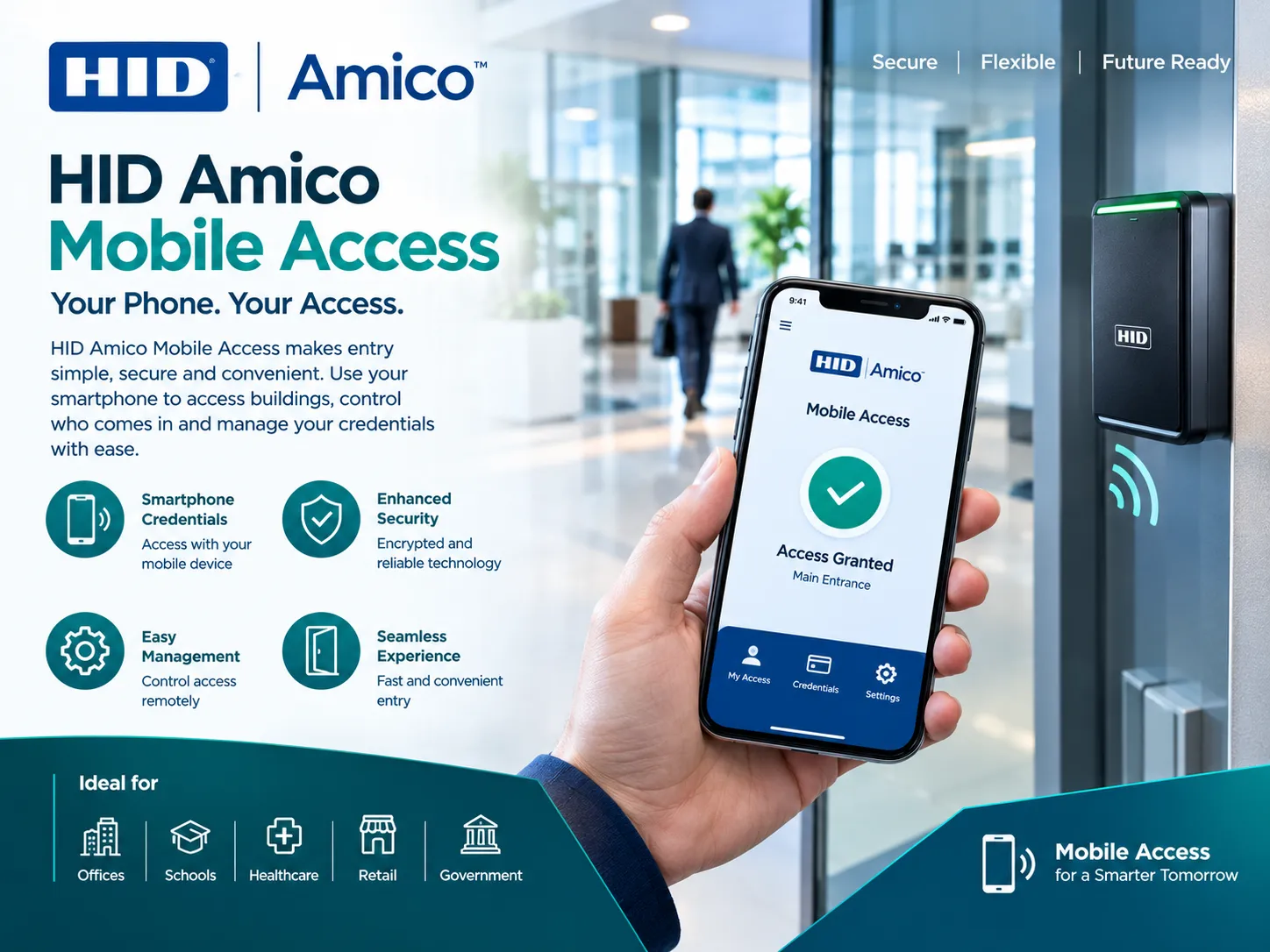

HID Amico is changing how Bahraini hospitals and clinics verify identity at sensitive doors, replacing shared keys and PIN codes with fast, touchless facial authentication built for round the clock clinical environments. Between neonatal units, pharmacies, and controlled substance storage, healthcare facilities across Bahrain need entry verification that is both instant and unmistakably accurate and this next generation reader delivers exactly that.
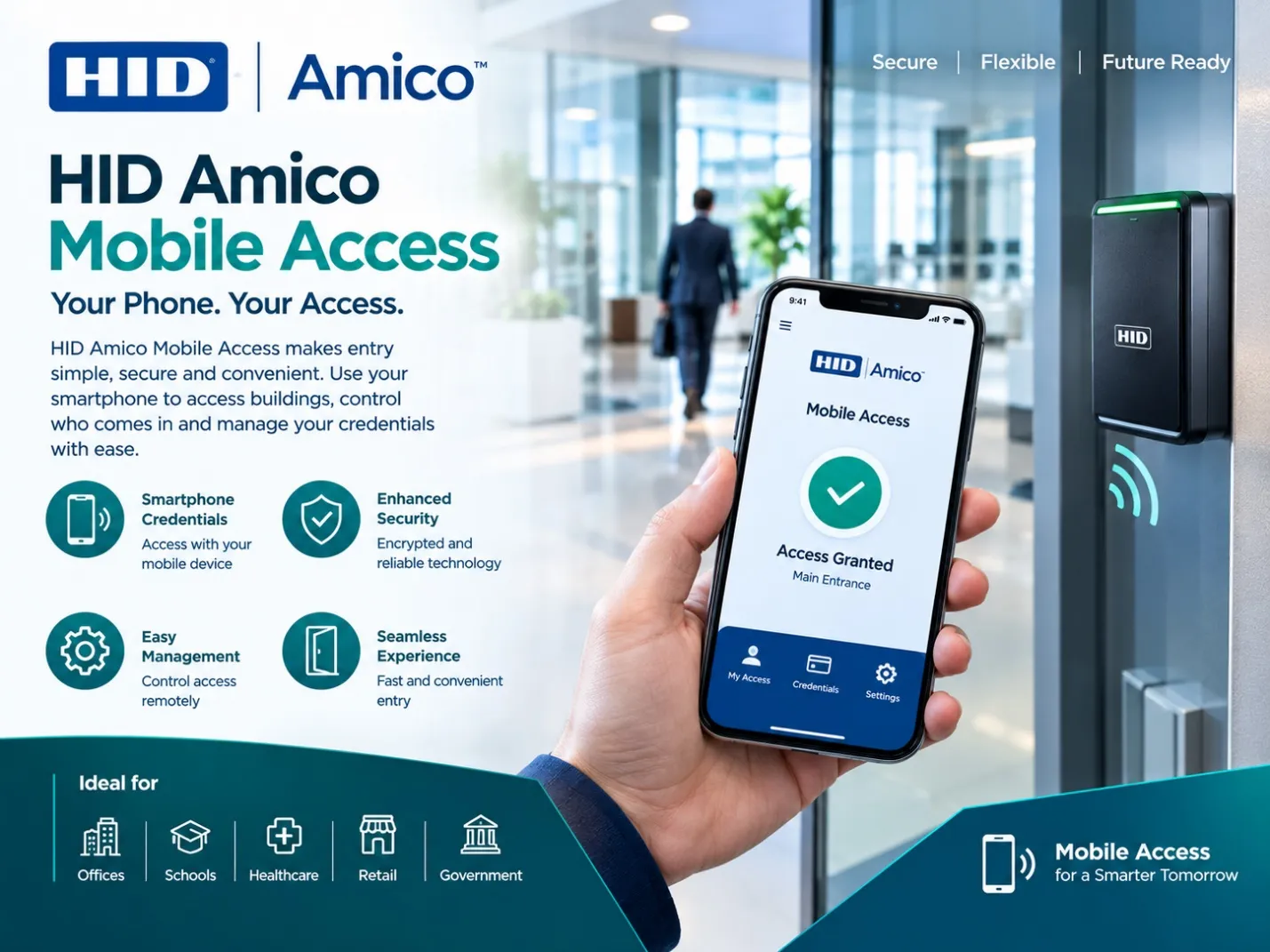
This guide explains how the platform works, what sets its anti-spoofing engine apart from conventional facial readers, and how healthcare facility managers in Manama and across Bahrain can deploy it as part of a broader clinical access control strategy.
Why Bahraini Healthcare Facilities Need Purpose Built Identity Verification
A hospital corridor carries different stakes than an office lobby. Shared cards and PIN codes verify possession of an object or knowledge of a code, not the identity of the clinician or staff member standing at the door — a gap that matters enormously around a medication vault, a neonatal ward, or a records room containing sensitive patient data. HID Amico closes that gap by confirming exactly who is requesting entry in well under a second, without requiring staff to touch a shared reader during an already busy shift.
Bahrain's National Health Regulatory Authority and broader accreditation frameworks increasingly expect healthcare facilities to demonstrate controlled, auditable access to sensitive clinical areas, making strong identity verification a compliance requirement as much as an operational one.
HID Amico Facial Recognition: How the Technology Works
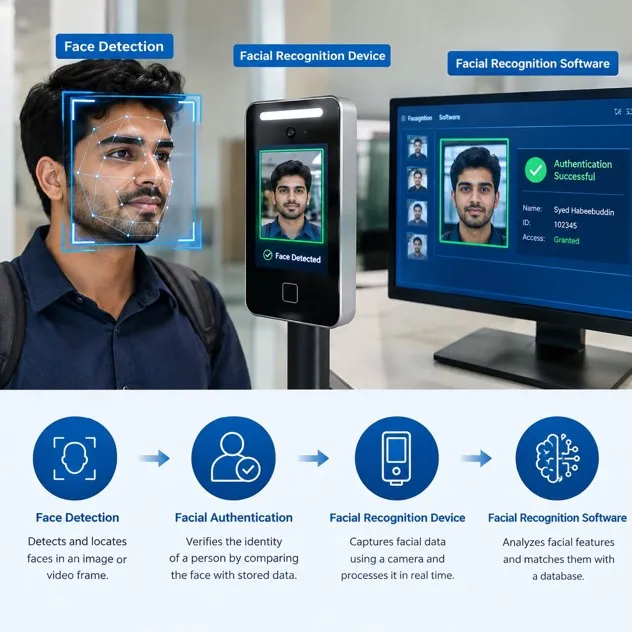
At the core of the device sits a sophisticated HID Amico Facial Recognition engine that captures a facial template, converts it into an encrypted mathematical representation, and compares it against enrolled profiles stored securely on the device or synced through a connected access control platform. The entire match and decision process completes in real time, allowing doors to release the instant a verified clinician or staff member is presented no lingering, no manual override needed from security staff during an emergency.
Because the matching engine is trained across diverse lighting conditions, skin tones, and facial coverings — including surgical masks, which are worn constantly in clinical settings — accuracy remains high across busy hospital corridors rather than being optimized only for ideal, unobstructed conditions.
HID Amico Facial Reader: Hardware Built for Clinical Environments
Software accuracy only matters if the hardware capturing the image performs reliably under real hospital conditions. The HID Amico Facial Reader is engineered with a wide-angle camera and adaptive infrared illumination that maintains recognition accuracy in bright ward lighting, dim overnight corridors, and everything in between. Its compact, wall mountable form factor withstands frequent disinfection with hospital grade cleaning chemicals, an essential requirement in any environment governed by strict infection control protocols.
- Wide dynamic range camera tuned for variable ward and corridor lighting.
- Sub second match speed even during shift change entry surges.
- Durable housing rated for frequent hospital grade disinfection.
- Accurate recognition even when staff are wearing surgical masks.
- Simple enrollment workflow that captures a new facial template in seconds.
HID Aero Controller: The Intelligence Behind Every Clinical Door
A facial reader is only one half of a complete entry solution the decision to unlock a door still needs a controller capable of applying schedules, permission rules, and integration logic. The HID Aero Controller serves as this intelligence layer, processing access decisions locally at the edge so doors continue operating correctly even during a brief network outage, then syncing event logs back to the central platform once connectivity is restored a critical safeguard for a facility where a locked-out ICU door is never an acceptable outcome.
This edge-based architecture is particularly valuable for larger Bahraini hospital campuses with multiple wings and outpatient buildings, ensuring that a single connectivity hiccup in one building never compromises the security posture of the entire site.
HID Access Control: A Unified Ecosystem for Multi Building Campuses
One of the strongest advantages of deploying this platform is that it does not operate in isolation. It plugs directly into a broader HID Access Control ecosystem that already supports cards, mobile credentials, and third-party integrations, meaning healthcare facilities with an existing card-based deployment can layer facial authentication onto pharmacy vaults and ICUs without ripping out infrastructure that already works elsewhere in the building. Visitor management, CCTV analytics, and fire alarm integrations extend the same event data across the facility's entire security stack, giving administrators a single, coherent view rather than fragmented logs across disconnected systems.
HID Mobile Access: Flexibility for Rotating Clinical Staff
Healthcare staffing is rarely static specialists rotate between departments, locum doctors cover short term gaps, and agency nurses join for single shifts. HID Mobile Access lets administrators issue and revoke digital credentials directly to a smartphone, dramatically shortening the time between a new hire's first shift and full building access, while letting facilities combine mobile credentials with facial verification on the same door for staff who haven't completed facial enrollment yet.
AI Powered Anti Spoofing: Stopping Fraud at Sensitive Clinical Doors
Facial recognition is only as trustworthy as its ability to reject fraudulent attempts — a printed photo, a video replay, or a mask held up to the camera. AI Powered Anti Spoofing analyzes subtle depth cues, texture patterns, and micro movements that distinguish a living person from a static image or screen replay, rejecting spoofing attempts in real time before a fraudulent match can ever reach the decision stage.
This layer of protection matters most around pharmacy vaults and after-hours entrances, where no security guard may be present to visually catch an obvious spoofing attempt — the device itself becomes the last line of defense against impersonation in a controlled substance environment.
Liveness Detection: Confirming a Real, Present Healthcare Worker
Closely related to anti spoofing, Liveness Detection specifically verifies that the face presented to the camera belongs to a live, physically present individual rather than a static reproduction. The system checks for natural signs of life subtle changes in facial texture and depth within a fraction of a second, adding a verification layer that operates seamlessly in the background without slowing down a clinician moving quickly between patient rooms during a busy shift.
Together, anti-spoofing and liveness detection form a defense in depth approach that pushes facial authentication well beyond the vulnerabilities associated with early generation camera-based systems, making it suitable for the most sensitive healthcare zones such as pharmacies, records rooms, and intensive care units.
HID Amico Bahrain: Compliance and Deployment Considerations
Rolling out a HID Amico Bahrain wide deployment across a hospital or clinic network involves more than mounting a reader on the wall. Facilities must align biometric data capture with Bahrain's data protection regulations, secure informed consent from enrolled staff, and configure data retention and encryption settings in line with national cybersecurity guidance and National Health Regulatory Authority expectations for controlled clinical access. Working with an integrator experienced in Bahrain's healthcare regulatory landscape shortens the path from procurement to a fully compliant, operational deployment.
HID Amico Manama: Deployment in Bahrain's Healthcare Capital
As Bahrain's capital and home to its largest concentration of hospitals, private clinics, and specialist medical centers, Manama presents some of the highest daily throughput demands for clinical entry security in the Kingdom. An HID Amico Manama installation benefits from local technical support familiar with the city's hospital campus layouts and the network infrastructure typical of large healthcare institutions, ensuring the reader's performance is tuned to real clinical conditions rather than a generic factory default.
How Tektronix Deploys HID Amico for Healthcare Facilities in Bahrain
Tektronix has spent years engineering IoT driven security infrastructure for healthcare, education, and enterprise clients across Bahrain and the wider Gulf. Our engineering team combines certified HID integration experience with an understanding of the healthcare compliance landscape unique to Bahrain, giving facility managers a partner who can specify, install, and support the platform correctly the first time in a live clinical environment.
Healthcare facility managers evaluating this technology can review our full HID Amico facial reader solution page to see hardware specifications, integration options, and deployment details tailored to healthcare organizations.
Our deployments integrate the reader with existing CCTV, visitor management, and building management infrastructure, meaning healthcare facilities gain a unified identity layer without discarding equipment already in place. Every project includes local onboarding, staff training, and ongoing technical maintenance the hands-on service that distinguishes a trusted regional integrator from a remote hardware reseller.
For a closer look at how our facial authentication and anti-spoofing deployment handles enrollment, liveness verification, and multi-site management, explore the dedicated solution page linked above.
Feedback from healthcare facility managers who have deployed the platform consistently cites three benefits: faster throughput at busy ward and pharmacy entrances during shift changes, a sharp reduction in credential sharing incidents compared to card only systems, and confident rejection of spoofing attempts that would have gone undetected on legacy camera-based readers.
Why Vendor Experience Matters When Deploying Biometric Technology in Healthcare
Biometric systems in a healthcare setting handle some of the most sensitive personal data an organization can collect, so vendor credibility deserves the same scrutiny as clinical equipment procurement. Facility managers should confirm how long a prospective integrator has worked with HID's ecosystem specifically in healthcare settings, request references from existing hospital or clinic deployments, and ask how firmware updates, warranty support, and biometric data governance are handled after installation.
A partner who documents real healthcare deployment history, holds relevant certifications, and maintains a locally available support team is far more likely to deliver a system that continues performing accurately during round the clock hospital operations, rather than one that only impresses during an initial vendor demonstration.
Best Practices for a Successful HID Amico Rollout in a Healthcare Facility
- Pilot the reader at one high traffic clinical entrance before a full site rollout to validate lighting and mounting placement.
- Combine facial authentication with mobile or card credentials for visiting specialists and temporary staff.
- Review enrollment consent language to ensure it satisfies Bahrain's data protection requirements before go live.
- Schedule periodic firmware updates to keep anti spoofing and liveness models current against new threats.
- Audit access logs regularly to confirm permission structures still match current clinical staff and rotation schedules.
Facilities that treat biometric access as an evolving security program rather than a onetime hardware purchase see the strongest long-term accuracy and the fewest operational disruptions during round the clock clinical operations.
Conclusion
HID Amico brings a genuinely next generation identity layer to Bahraini healthcare facilities, combining HID Amico Facial Recognition with a rugged HID Amico Facial Reader and an edge intelligent HID Aero Controller. Backed by broader HID Access Control and HID Mobile Access flexibility, plus AI Powered Anti Spoofing and Liveness Detection, the platform delivers fast, fraud resistant entry for clinical zones. Facilities pursuing HID Amico Bahrain compliance, or deploying HID Amico Manama installations, gain the strongest results with an experienced healthcare integration partner.
FAQs
1. What is HID Amico and why is it well suited for healthcare facilities?
HID Amico is a facial authentication platform that combines high accuracy recognition with built in anti-spoofing and liveness checks, ideal for clinical settings that need fast, touchless verification without compromising infection control protocols.
2. How accurate is HID Amico Facial Recognition when clinical staff are wearing masks?
The HID Amico Facial Recognition engine is trained to maintain accuracy even when staff are wearing surgical masks, a common requirement across hospital wards and clinical departments.
3. Does the HID Aero Controller keep clinical doors working during a network outage?
Yes. The HID Aero Controller processes access decisions locally at the edge, so critical doors like ICU entrances continue functioning correctly during a temporary network outage.
4. Can HID Mobile Access help onboard rotating hospital staff quickly?
Yes. HID Mobile Access lets administrators issue digital credentials directly to a smartphone, speeding up access for locum doctors, specialists, and agency nurses joining for short term shifts.
5. How does Liveness Detection protect sensitive areas like pharmacy vaults?
Liveness Detection analyzes depth, texture, and subtle natural movement to confirm a live human is present, rejecting printed photos or video replays that could otherwise gain unauthorized access to controlled substance storage.



























Sign in to leave a comment.