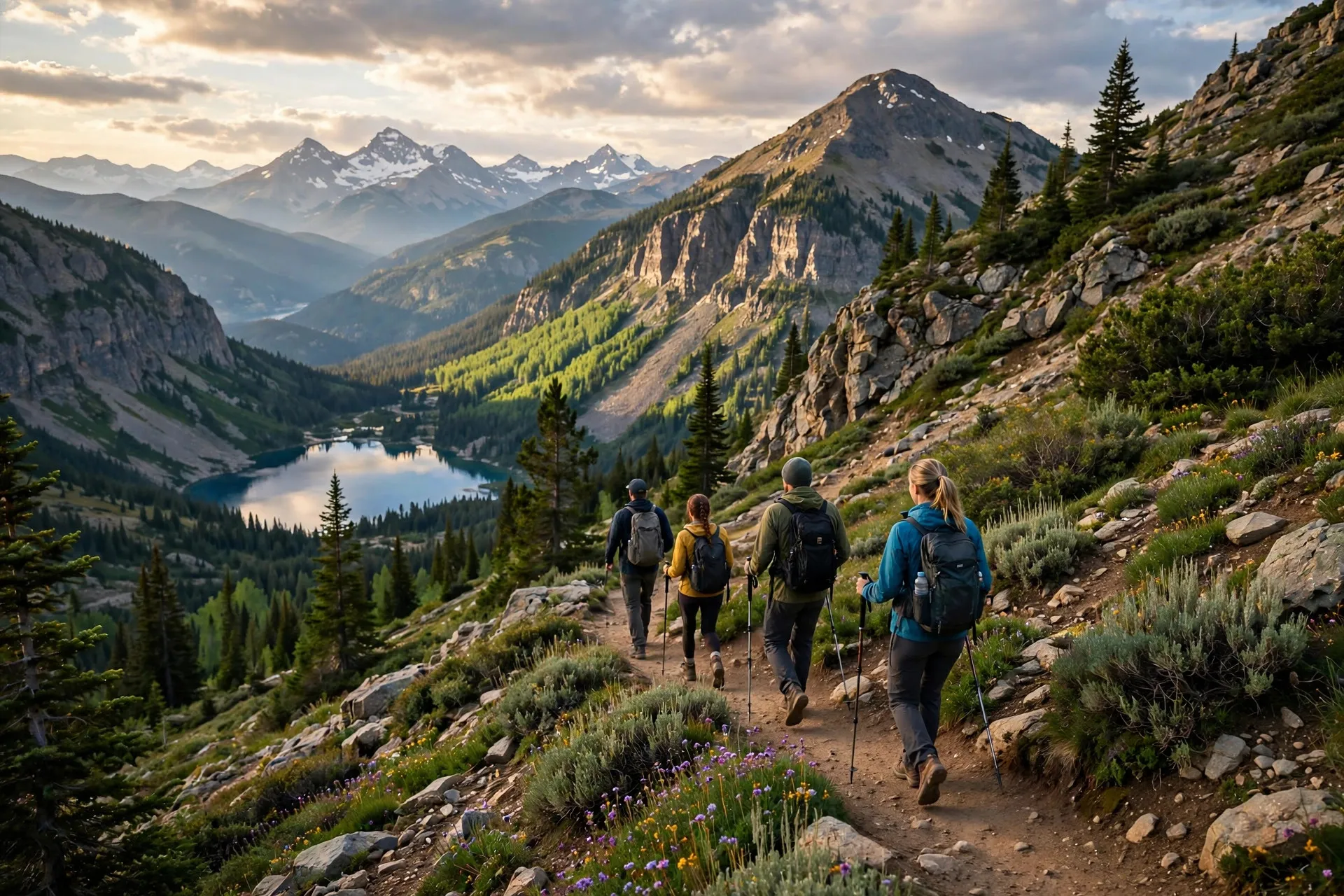

1. Introduction to Off-the-Beaten-Path Travel
Every year, millions of travelers stand in the same long lines, photograph the same famous landmarks, and eat at the same crowded restaurants. The Eiffel Tower, Machu Picchu, and the Great Wall are magnificent, but they represent only a fraction of what our planet offers. In 2026, a quiet revolution is reshaping how we explore: more travelers than ever are trading bucket-list checkmarks for genuine discovery, seeking out hidden travel gems that few guidebooks mention.
Off-the-beaten-path travel is not about being contrarian or chasing bragging rights. It is about experiencing places as they truly are, before crowds arrive, before prices inflate, and before authenticity fades. When you wander a village where tourism is a novelty rather than an industry, conversations feel warmer, prices stay honest, and every corner holds the possibility of surprise. These secret destinations reward curiosity with something increasingly rare in modern travel: the feeling of true discovery.
2. Hidden Gems in Europe
Europe may be the most visited continent on Earth, yet it still guards remarkable secrets. The Faroe Islands, an autonomous Danish archipelago in the North Atlantic, offer some of the most dramatic seascapes on the planet. Sheer cliffs, grass-roofed villages, and waterfalls that plunge directly into the ocean define this windswept destination, which receives a fraction of Iceland's visitors. Hiking here feels like walking through a landscape that time forgot.
In southern Italy, Matera's ancient cave dwellings, known as the Sassi, form one of the oldest continuously inhabited settlements in the world. Though its profile has risen since it starred in major films, the surrounding Basilicata region remains blissfully uncrowded, with hilltop towns like Craco offering hauntingly beautiful abandoned streetscapes frozen in time.
Further west, Portugal's Azores archipelago floats in the mid-Atlantic like a lost world. Emerald crater lakes, natural hot springs, and hydrangea-lined roads make Sao Miguel island feel like a secret garden. Because the islands sit far from mainland tourist circuits, you can still find breathtaking viewpoints entirely to yourself, even in the height of summer.
3. Secret Spots in Asia
Asia's vastness guarantees that countless wonders remain overlooked. Northern Vietnam's Ha Giang province, home to the legendary Ha Giang Loop, delivers some of Southeast Asia's most jaw-dropping mountain scenery. Towering limestone karsts, deep river valleys, and vibrant ethnic minority markets create an adventure that rivals far more famous routes, yet the region sees only a trickle of the visitors that crowd Ha Long Bay.
In the high Caucasus, Georgia's Svaneti region feels like medieval Europe preserved in amber. Ancient stone defensive towers rise above villages like Mestia and Ushguli, one of the highest continuously inhabited settlements on the continent, while glaciers and wildflower meadows spread beneath towering peaks. The trekking here rivals the Alps at a fraction of the cost and the crowds.
Japan, too, hides surprises beyond Kyoto and Tokyo. Tottori prefecture, on the country's western coast, is home to Japan's only desert-like sand dunes, stretching sixteen kilometers along the Sea of Japan. Nearby, the otherworldly Uradome Coast offers sea caves and white-sand beaches that most international visitors never hear about.
4. Undiscovered Americas
The Americas stretch from Arctic tundra to Patagonian ice fields, and hidden corners abound. Brazil's Lencois Maranhenses National Park looks like a hallucination: endless white sand dunes dotted with thousands of turquoise rainwater lagoons that appear each year after the seasonal rains. Despite its surreal beauty, it receives far fewer visitors than Rio de Janeiro or Iguazu Falls.
In Panama, the Guna Yala archipelago, better known as the San Blas Islands, comprises more than three hundred tiny Caribbean islands, most of them uninhabited. Managed by the indigenous Guna people, the islands have resisted mass development. There are no resorts and no cruise ships here, just palm-fringed sand cays and some of the clearest snorkeling water in the hemisphere.
For North American adventurers, Michigan's Isle Royale National Park is one of the least visited national parks in the United States, precisely because it takes real effort to reach. Accessible only by boat or seaplane, this rugged Lake Superior island offers wolf-and-moose wilderness, pristine inland lakes, and backpacking trails where genuine solitude is virtually guaranteed.
5. How to Find Hidden Destinations
Discovering secret spots requires a shift in how you plan. Start by talking to locals rather than relying solely on top-ten lists. Guesthouse owners, taxi drivers, and market vendors often know places that never appear online. Study satellite maps of regions you plan to visit: unusual coastlines, green patches in arid zones, and unmarked trails often signal something special waiting to be explored.
Travel in the shoulder season, when popular places empty out and lesser-known ones shine. Follow regional travel bloggers and photographers who specialize in a single country rather than global influencers chasing trends. And use curated resources designed for discovery: a dedicated travel guide like TripVaultGuide can point you toward under-the-radar destinations with practical planning details you will not find in generic roundups.
Finally, build flexibility into your itinerary. Some of the best hidden gems are found by taking the wrong turn on purpose, accepting a local's invitation, or staying an extra day in a town that was supposed to be a quick stop.
6. Travel Tips for Remote Locations
Venturing beyond tourist infrastructure demands extra preparation. Research connectivity in advance: download offline maps, translation packs, and your accommodation details before you lose signal. Carry enough local cash, since card readers are rare in remote villages, and keep emergency funds separate from your daily wallet.
Learn a few phrases in the local language. Even basic greetings transform how communities receive you. Pack a small medical kit, water purification tablets, and a portable charger, and always share your itinerary with someone back home. Travel insurance that covers medical evacuation is essential when the nearest hospital may be hours away.
Above all, travel responsibly. Remote destinations are often ecologically fragile and culturally sensitive. Follow Leave No Trace principles, ask permission before photographing people, support locally owned businesses, and respect customs you may not fully understand. The privilege of visiting untouched places comes with the duty to keep them that way.
7. Conclusion
Hidden travel gems remind us why we fell in love with exploring in the first place: the thrill of the unknown, the warmth of unexpected hospitality, and the quiet awe of standing somewhere few others have stood. In 2026, as overtourism strains the world's most famous sites, choosing lesser-known destinations is not just more rewarding, it is more sustainable.
So look beyond the obvious on your next trip. Pick the town with no reviews, take the road that fades off the map, and say yes to the detour. The world's secret destinations are waiting, and the memories they create will stay with you far longer than any crowded landmark ever could.



















Sign in to leave a comment.