

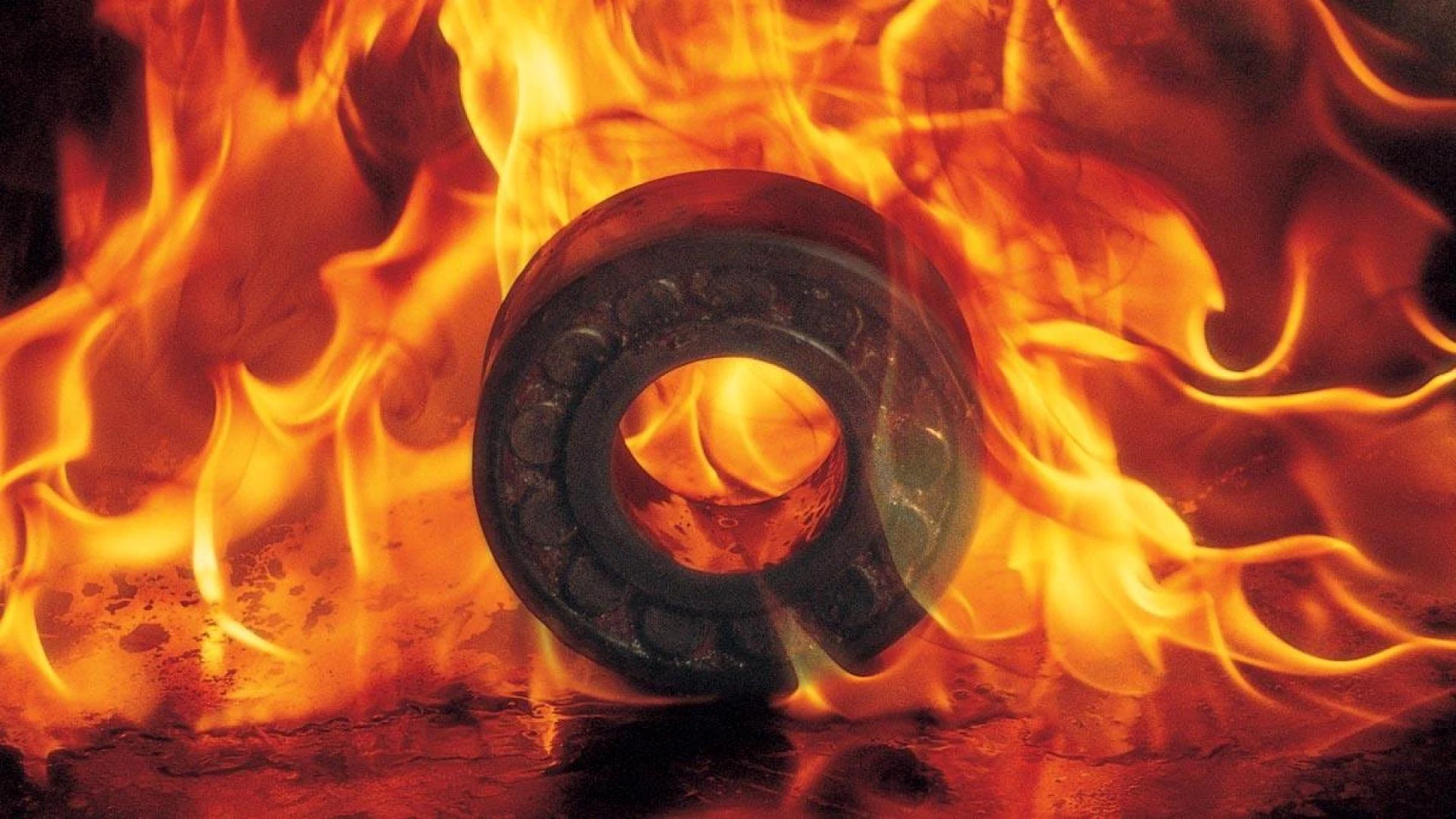
Ask any maintenance engineer what kills bearings early, and heat will be near the top of the list. Ordinary grease is fine on a shop-floor motor running at 60°C. Put the same grease inside a kiln car, a steel mill roller or a furnace fan, and it turns to a thin, oily mess within days.
That is exactly why high temperature grease exists. Here is what it does, what makes it different, and how to choose one without guesswork.
What Is High Temperature Grease?
Grease is simply base oil held in a thickener, a bit like oil soaked into a sponge. The base oil does the lubricating. The thickener keeps it in place until the machine needs it.
High temperature grease is built so that both parts survive serious heat. Its base oil resists oxidation and evaporation, and its thickener doesn't melt or soften when things get hot. Standard greases can start to break down somewhere around 120°C to 130°C. Good high temperature formulations keep working well beyond that, and some specialty types cope with 250°C or more.
Why Heat Is So Hard on Grease
Heat attacks grease in a few ways at once:
- Oxidation: The oil reacts with oxygen, thickens, turns dark and forms sludge or varnish.
- Evaporation: Lighter oil fractions vanish, leaving dry, hard residue behind.
- Bleeding and dripping: The thickener loses its grip and oil runs out of the bearing.
- Softening: The grease slumps and gets pushed out of the contact zone, leaving metal on metal.
A common rule of thumb says grease life roughly halves for every 10°C rise above the recommended operating temperature. So a small temperature error can mean a big difference in re-greasing intervals.
Types of Thickeners Used in High Temperature Grease
The thickener usually decides how hot a grease can go, so this is where to look first.
Lithium complex. A popular all-rounder. It handles higher temperatures than plain lithium grease, resists water well and suits most general industrial jobs, including electric motors and fan bearings running warm.
Polyurea. Common in sealed-for-life bearings and electric motors. It offers excellent oxidation resistance and long life at sustained heat.
Calcium sulphonate complex. Known for load-carrying ability, water resistance and corrosion protection. A strong pick for wet, hot and heavily loaded environments such as steel plants and paper machines.
Non-soap thickeners (such as bentonite clay). These don't rely on a metal soap, so they don't have a true melting point in the usual sense. That makes them a go-to for extreme heat where soap-based greases would liquefy, such as kiln cars, oven conveyor chains and furnace equipment.
Fluorinated (PTFE-based). The premium option for very high temperatures and harsh chemical exposure. It costs more, but it is worth it in the right application.
Key Properties to Check Before You Buy
The label and the technical data sheet tell you a lot. Look for these:
- Dropping point. The temperature at which grease first turns to liquid. Your working temperature should sit comfortably below it, never close to it.
- Base oil type and viscosity. Synthetic base oils generally handle heat better than mineral oils, but a well-refined mineral oil can be perfectly adequate at moderate temperatures.
- NLGI grade. This measures stiffness. NLGI 2 is the most common for bearings, while NLGI 1 or 0 may suit centralized systems.
- Extreme pressure (EP) and anti-wear additives. Essential for heavy loads, shock loads and slow, high-torque applications.
- Oxidation stability. Longer stability means longer intervals between greasing.
- Water washout and corrosion protection. Hot environments are often damp too, from steam, washdowns or condensation.
Where Is High Temperature Grease Used?
You will find it wherever metal, motion and heat come together:
- Electric motor and fan bearings
- Steel and rolling mills
- Cement plant kilns and conveyors
- Ovens, dryers and furnace equipment
- Paper and textile machinery
- Foundries and forging shops
- Automotive wheel bearings, especially on heavy vehicles with disc brakes
- Food processing lines (with appropriate food-grade greases)
Common Mistakes to Avoid
Mixing greases. Different thickeners are often incompatible. Mixing them can soften the structure and cause leakage. If you are switching products, clean out the old grease as thoroughly as you can and check compatibility first.
Over-greasing. More is not better. Too much grease in a bearing causes churning, which raises temperature further. Follow the recommended quantity.
Ignoring re-greasing intervals. Heat shortens grease life, so your schedule should reflect real operating temperature, not a generic manual figure.
Choosing by price alone. A cheaper grease that fails twice as fast costs more once you count downtime, labour and replacement bearings.
Practical Tips for Better Results
- Measure the actual bearing temperature with an infrared thermometer instead of guessing.
- Store grease in a cool, clean, closed container to avoid contamination.
- Use dedicated grease guns for each grease type.
- Watch for warning signs: dark, hardened or dried grease, unusual noise, or rising bearing temperature.
- Keep a simple log of what grease goes where, and when.
Final Thoughts
Choosing a high temperature grease isn't complicated once you know what to check. Start with your real operating temperature, then match the thickener, base oil and additives to the load, speed and environment. Get that right and you will see longer bearing life, fewer breakdowns and lower maintenance costs.

























Sign in to leave a comment.