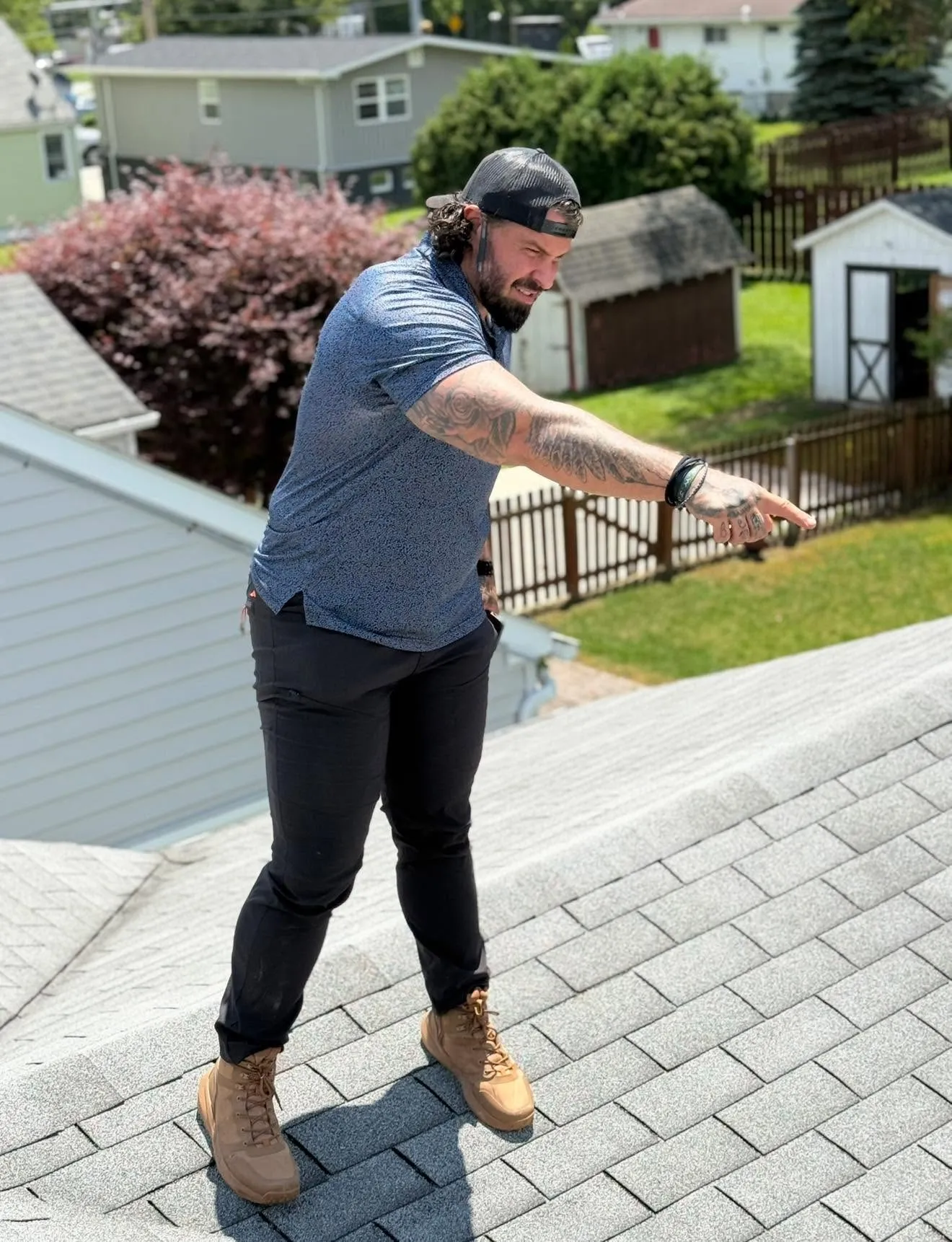

A roof does not wait for a good month. It fails in February, or the year the property taxes went up, or when the savings have already gone somewhere necessary.
For homeowners on a fixed income, that creates a particular kind of pressure — and unfortunately, it is exactly the pressure that dishonest contractors look for. Older homeowners are disproportionately targeted by home improvement fraud, and the reason is simple: urgency plus a limited budget makes people agree to things quickly.
Pennsylvania happens to have unusually strong protections for this situation, and several assistance programs most homeowners have never heard of. Here is what is available and what the law already does for you.
Start With What Might Pay for It
Before looking at financing, check whether you qualify for assistance. These change periodically, so confirm current terms directly with each agency.
USDA Section 504 Home Repair
The most useful program for rural Pennsylvania homeowners, and much of the state qualifies as rural under USDA's definition.
It provides loans to very-low-income homeowners, and grants to homeowners aged 62 and older for repairs that remove health and safety hazards. A failing roof generally qualifies as exactly that, whether the work turns out to be a repair or a full roof replacement.
Current terms:
- Maximum loan of $40,000, termed over 20 years at a fixed 1% interest rate
- Maximum grant of $10,000, which is a lifetime limit
- Loans and grants may be combined, up to $50,000 in total assistance
- Applications are accepted year-round through your local Rural Development office
Eligibility requires that you own and occupy the home, that you cannot obtain affordable credit elsewhere, and that your household income falls below the limit for your county.
One condition to know before applying: grants must be repaid if you sell the property within three years.
PHFA HEELP
The Pennsylvania Housing Finance Agency's Homeowners Energy Efficiency Loan Program lends $1,000 to $10,000 at a fixed 1% APR over ten years, with no prepayment penalty — and roof replacement is explicitly eligible work.
Two practical points. Your contractor must be on PHFA's approved list, which is searchable by county, so check before choosing a roofer rather than after. And do not let work begin before the loan closes — PHFA states this plainly.
Income limits apply, with possible exceptions up to 150% of area median income. There is a self pre-screening form on their website, and their Solution Center can be reached at 855-827-3466.
Local help
Dial 211 or visit pa211.org to be connected to whatever exists in your county. If you are over 60, your county Area Agency on Aging often knows about programs that never surface in an internet search. Some county community action agencies and Habitat for Humanity affiliates run home repair programs as well.
One program to skip
A great many articles still point to Pennsylvania's Whole-Home Repairs Program. It was funded once with federal money, that money is largely exhausted, a state-funded successor has repeatedly failed to appear in the budget, and most county waitlists have closed. One call locally is worth making. Do not build a plan around it.
What Pennsylvania Law Already Does for You
This is the part most homeowners do not know, and it is genuinely protective.
The Home Improvement Consumer Protection Act — HICPA, passed in 2008 — governs residential home improvement work in Pennsylvania. It gives you several rights that exist whether or not a contractor mentions them.
Your contract must be in writing
Any home improvement contract over $500 must be written and signed by both you and the contractor. It must contain, among other things:
- A description of the work
- Approximate start and completion dates
- The total price
- The contractor's registration number
- The contractor's insurance information
- The deposit amount, with special-order materials listed separately
- The toll-free number for the Attorney General's Bureau of Consumer Protection
- Notice of your right to cancel within three business days
If required information is missing, the contract may be invalid and unenforceable against you. That is a meaningful protection, not a technicality.
Your deposit is capped by law
For a contract priced above $5,000, a contractor cannot receive more than one-third of the contract price as a deposit — or one-third plus the cost of special-order materials, where those are itemised in the contract.
A contractor demanding half the money up front is asking for more than Pennsylvania law allows. The Attorney General's office treats excessive deposit demands as a violation in themselves.
A contractor also cannot demand or receive any payment before the contract is signed.
You have three business days to cancel
You may rescind most home improvement contracts without penalty within three business days of signing, and the contractor must refund anything you have paid. Emergency work is an exception.
And this got stronger recently. The Pennsylvania Supreme Court ruled in favour of the Attorney General's office, affirming that you may cancel verbally — a contractor cannot insist on written notice. The Court found HICPA does not specify a medium, and that consumer protection law should be read in the consumer's favour.
So if you signed something yesterday that you regret, pick up the phone today.
If the contractor never gave you the written cancellation notice at all, the contract may remain voidable well beyond the three days.
If work never starts
If 45 days pass from the stated start date without substantial work being performed, you generally have the right to request a refund of your deposit.
Clauses that are not allowed
HICPA prohibits certain terms outright, including hold-harmless clauses, waivers of building code requirements, confessions of judgment, and jury trial waivers. If you see any of them, that contract is not compliant.
Verify the Contractor in Thirty Seconds
Any contractor performing more than $5,000 of home improvement work annually in Pennsylvania must register with the Attorney General's office and carry a HIC number.
The number is verifiable online or by phone, free, in under a minute. A contractor who cannot produce one is not a bargain at any price, and working with an unregistered contractor forfeits several of the protections above. Any established Pennsylvania roofing contractor will hand the number over without hesitation.
The Warning Signs That Matter Most
Fixed income or not, these are the patterns worth knowing:
- Door-knocking after a storm, especially crews with out-of-state plates
- A price that expires today, or pressure to sign during the first visit
- A request for a large deposit — remember the one-third cap
- An offer to waive, absorb, or "cover" your insurance deductible. This is not generosity. Depending on how it is handled it can constitute insurance fraud, and you would be exposed alongside the contractor.
- No written scope — just a number
- Cash only, or payment to an individual rather than a company
- Reluctance to provide a registration number
The deductible offer deserves particular attention, because it is presented as a favour to someone who is worried about money. It is the opposite.
Ask About Discounts — They Usually Exist
Many established contractors offer discounts to seniors, teachers, and first responders without advertising the details.
Two things matter. Ask before the estimate is written, because a discount requested afterwards can quietly be absorbed into a number that already exists. And ask for it to appear as its own line on the estimate rather than folded into a total.
Also ask what it applies to. Plenty of homeowners assume a discount covers replacement only, when it often covers repairs too.
A Repair May Be Enough
Finally, and this is worth saying plainly: not every failing roof needs replacing.
A localised problem on an otherwise sound roof can often be repaired, buying several seasons to plan properly. A contractor who inspects a mid-life roof with one damaged section and immediately proposes a full tear-off should be asked to explain the reasoning, and a second opinion costs nothing.
If a leak is active, emergency tarping is comparatively minor work that stops damage compounding while you arrange funding. Ask for it. A reputable contractor will stabilise the roof now, quote the roof repair or replacement separately, and schedule the full job when you are ready — rather than treating urgency as leverage.
Frequently Asked Questions
Can I get a grant to replace my roof in Pennsylvania?
Possibly. USDA Section 504 offers grants up to $10,000 to rural homeowners aged 62 and over for health and safety repairs. Most other programs are loans.
How much deposit can a Pennsylvania contractor ask for?
For contracts over $5,000, no more than one-third of the price, plus itemised special-order materials. A contractor cannot take any payment before the contract is signed.
Can I cancel a roofing contract after signing?
Yes, within three business days, without penalty. Pennsylvania's Supreme Court has confirmed you may cancel verbally — a contractor cannot require written notice.
What if my contract is missing required information?
It may be invalid and unenforceable against you. If the written cancellation notice was never provided, the contract can remain voidable beyond three days.
Is it safe to accept an offer to cover my insurance deductible?
No. Depending on how it is handled, it may constitute insurance fraud, and you would be exposed alongside the contractor. Treat it as a warning sign.
















Sign in to leave a comment.