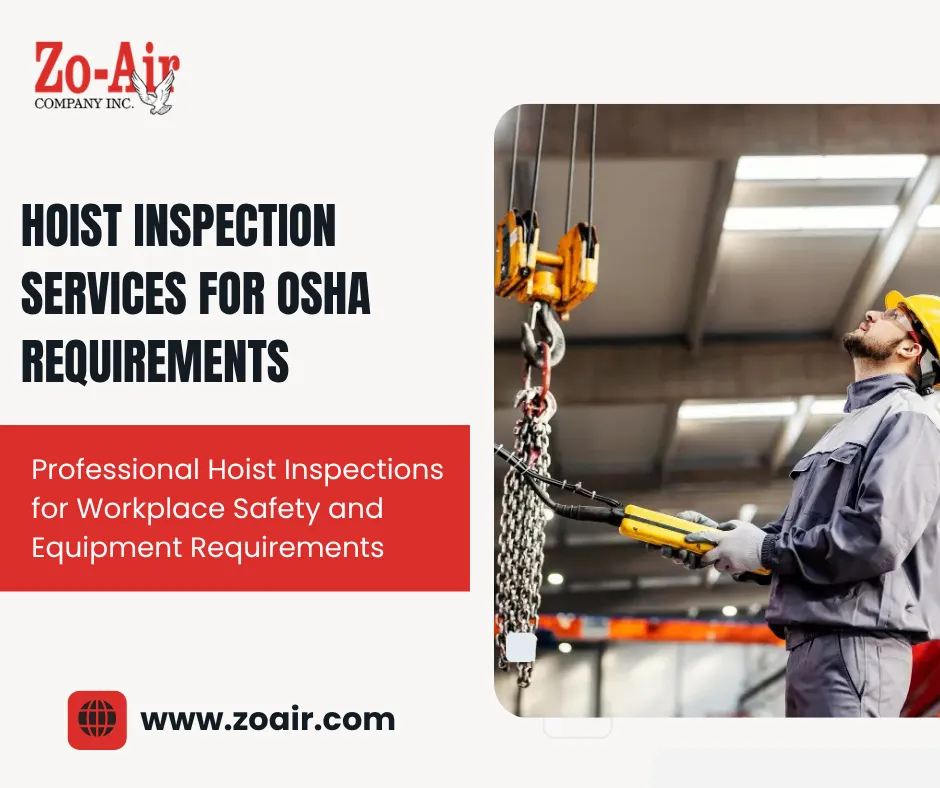

Hoists are widely used in industrial facilities, warehouses, workshops, construction environments, and material-handling operations. They help lift, lower, and position loads while reducing the physical effort required for handling heavy materials. Because hoists work with substantial loads and moving components, regular attention to their condition is an important part of safe equipment use.
Hoist servicing involves checking the condition and operation of a hoist, identifying potential issues, and carrying out appropriate service or repair work. The exact service requirements can vary depending on the hoist type, capacity, operating environment, usage, and manufacturer recommendations.
A structured servicing approach can help businesses identify worn components, unusual operation, and other equipment concerns before they interfere with lifting activities. This article explains what hoist servicing involves, why it matters, which components are commonly checked, and what businesses should consider when arranging service work.
What Is Hoist Servicing?
Hoist servicing is the process of inspecting, assessing, and servicing hoist equipment to help keep it in suitable operating condition. Depending on the equipment and its condition, service work may include visual inspections, functional checks, adjustment, lubrication, component replacement, electrical checks, or repairs.
Hoists can include mechanical, electrical, hydraulic, or pneumatic components. Different designs require different service procedures, so technicians generally need to understand the specific equipment before carrying out work.
A typical service assessment may consider:
- General equipment condition
- Wire rope, chain, or lifting medium
- Hooks and hook blocks
- Brakes and braking components
- Gears and mechanical parts
- Motors and electrical components
- Controls and limit switches
- Load chain or wire rope movement
- Fasteners and structural connections
- Unusual noise, vibration, or movement
- Signs of wear, corrosion, or damage
The goal is to identify conditions that may affect the hoist's operation and determine whether adjustment, repair, replacement, or further inspection is appropriate.
Why Is Hoist Servicing Important?
Hoists operate under demanding conditions. Repeated lifting cycles, heavy loads, dust, moisture, temperature changes, and other workplace factors can contribute to wear over time.
Regular hoist servicing provides an opportunity to identify equipment concerns and address them based on their condition. It can also help businesses understand the current state of their lifting equipment and plan appropriate service work.
Some common reasons for arranging hoist service include:
Identifying Component Wear
Parts such as chains, wire ropes, hooks, gears, brakes, and bearings can experience wear through normal use. A service inspection can help identify visible or operational signs of deterioration.
Supporting Safe Operation
A hoist should be operated according to its intended application and rated capacity. Checking important components and operating functions can support a safety-conscious lifting environment.
Addressing Operating Problems
Unusual sounds, jerky movement, slow lifting, excessive vibration, or control issues may indicate that a hoist requires attention. Service work can help determine the cause and appropriate corrective action.
Planning Equipment Repairs
Servicing can provide useful information about equipment condition. Businesses can use this information to prioritize repairs or component replacement based on the findings.
Common Types of Hoist Servicing
The type of service required depends on the hoist design and its operating environment. Some common service activities include the following.
Mechanical Hoist Servicing
Mechanical components can include gears, shafts, bearings, brakes, couplings, and other moving parts. Technicians may inspect these components for wear, damage, alignment issues, or other conditions that could affect operation.
Where appropriate, adjustments, lubrication, or component replacement may be carried out according to equipment requirements.
Electric Hoist Servicing
Electric hoists contain motors, controls, electrical connections, switches, brakes, and other electrical components. Service work may involve checking electrical connections, controls, motor operation, braking functions, and limit devices.
Electrical servicing should be carried out by appropriately qualified personnel using procedures suitable for the specific equipment.
Wire Rope Hoist Servicing
Wire rope is a critical part of many lifting systems. During service, technicians may examine the rope for visible signs of wear, broken wires, corrosion, kinks, crushing, deformation, or other concerns.
Other related components, including sheaves, drums, hooks, and reeving arrangements, may also require attention.
Chain Hoist Servicing
Chain hoists use load chains to lift and lower materials. Service checks may include examining the chain, hooks, gears, brake system, chain guide, and other mechanical components.
If chain wear, deformation, or damage is identified, the equipment should be assessed before continued use.
What Does a Hoist Service Usually Include?
There is no single service procedure that applies to every hoist. However, a professional service assessment may include several key areas.
Visual Inspection
The technician may examine the hoist and associated components for visible damage, corrosion, wear, loose parts, or other unusual conditions.
Functional Testing
The hoist may be operated through its normal functions to identify issues with lifting, lowering, controls, braking, or movement.
Brake Inspection
Brakes play an important role in controlling and stopping loads. Their condition and operation may therefore be checked as part of the service process.
Hook Examination
Hooks can be exposed to significant forces during lifting. Technicians may look for deformation, cracks, excessive wear, or other visible concerns.
Chain or Wire Rope Inspection
The lifting medium is examined for signs of wear or damage. The appropriate inspection criteria depend on whether the equipment uses chain, wire rope, or another lifting medium.
Electrical Checks
For electric hoists, service work may include checking controls, wiring, connections, switches, motors, and other electrical components.
Lubrication and Adjustment
Certain equipment components may require lubrication or adjustment according to the manufacturer's specifications and the condition identified during servicing.
Signs That a Hoist May Need Servicing
Operators are often in a useful position to notice changes in equipment behavior. A hoist may require professional assessment when there are noticeable changes such as:
- Unusual noise during operation
- Excessive vibration
- Jerky lifting or lowering
- Problems with controls
- Slow or inconsistent movement
- Brake-related concerns
- Visible chain or wire rope damage
- Hook deformation or unusual wear
- Oil or fluid leakage
- Electrical faults
- Unexpected stopping
- Difficulty lifting loads within the equipment's rated capacity
These signs should not be ignored. If equipment appears damaged or does not operate as expected, it may be appropriate to stop using it and arrange an assessment by a qualified professional.
How Often Should Hoists Be Serviced?
The appropriate service frequency depends on several factors. These can include the type of hoist, frequency of use, load characteristics, operating environment, manufacturer recommendations, and applicable workplace requirements.
A hoist used frequently in a demanding industrial environment may require different inspection and service attention from equipment used occasionally in a cleaner environment.
Businesses should consider:
- Manufacturer recommendations
- Equipment usage and duty cycle
- Operating environment
- Previous inspection findings
- Equipment age and condition
- Applicable safety requirements
- Any changes in equipment performance
A service schedule should be based on the specific equipment rather than relying on a single frequency for every hoist.
Hoist Servicing and Preventive Equipment Care
Regular servicing is one part of responsible lifting equipment care. Operators can also contribute by carrying out appropriate pre-use checks and reporting unusual equipment behavior.
Good equipment practices may include:
- Following the manufacturer's operating instructions
- Staying within the rated capacity
- Avoiding shock loading
- Keeping the operating area suitable for lifting activities
- Reporting unusual sounds or movement
- Checking lifting accessories before use
- Keeping service and inspection records
- Addressing identified equipment concerns promptly
- Using trained personnel for operation and service work
These practices can help businesses build a more organized approach to lifting equipment management.
Choosing a Hoist Servicing Provider
When selecting a company for hoist servicing, businesses should consider the provider's experience with the type of equipment involved. Different hoists have different mechanical and electrical arrangements, so familiarity with the equipment can be valuable.
It is also useful to ask about:
- Types of hoists serviced
- Inspection and testing procedures
- Technician experience
- Repair capabilities
- Replacement component availability
- Service documentation
- Safety procedures
- Understanding of applicable equipment requirements
Clear communication about the hoist model, capacity, operating environment, and known problems can also help the service provider prepare for the job.
Hoist Repair vs. Hoist Servicing
Hoist servicing and repair are related but not identical.
Servicing generally involves inspection, assessment, adjustment, lubrication, testing, and other routine or condition-based work.
Repair is typically required when a component has been damaged, worn, or otherwise found unsuitable for continued operation. Repair work may involve replacing a brake component, chain, wire rope, motor component, control part, bearing, or other equipment element.
A service inspection may identify a repair requirement. In other cases, a specific operating problem may lead directly to a repair assessment.
The Role of Proper Documentation
Keeping records of inspections and service work can help businesses track equipment history. Service documentation may include information about the equipment inspected, findings, work completed, components replaced, and recommendations for further action.
Accurate records can make it easier to identify recurring problems and determine when additional assessment may be appropriate.
For facilities with multiple hoists, organized records can also help distinguish the condition and service history of individual pieces of equipment.
Final Thoughts
Hoists are important components of many material-handling operations, and their condition can influence how lifting activities are performed. Hoist servicing provides an opportunity to examine equipment, identify wear or operating concerns, and carry out suitable service or repair work.
The right service approach depends on the hoist type, usage, operating environment, manufacturer guidance, and applicable requirements. Regular attention to equipment condition, combined with appropriate operation and professional assessment, can support safer and more organized lifting operations.
For businesses using electric, chain, wire rope, or other types of hoists, working with experienced technicians can help address equipment-specific service requirements and determine appropriate next steps.
Frequently Asked Questions About Hoist Servicing
1. What is hoist servicing?
Hoist servicing involves inspecting and assessing hoist equipment and carrying out suitable service work based on its condition. Depending on the equipment, this may include testing, adjustment, lubrication, component inspection, and repair.
2. How often should a hoist be serviced?
Service frequency varies according to the hoist type, usage, operating environment, manufacturer recommendations, and applicable requirements. Businesses should follow the equipment manufacturer's guidance and establish service intervals based on actual operating conditions.
3. What components are checked during hoist servicing?
Commonly checked components can include hooks, chains, wire ropes, brakes, gears, bearings, motors, controls, limit switches, electrical connections, drums, and other relevant parts.
4. What are the signs that a hoist needs attention?
Unusual noise, vibration, jerky movement, control problems, brake issues, visible damage, slow operation, chain or wire rope wear, and unexpected stopping can indicate that a hoist may require professional assessment.
5. Can hoist servicing include repairs?
Yes. If servicing identifies damaged or worn components, repair or replacement work may be recommended. The required work depends on the equipment condition and the nature of the issue.
6. Does every hoist require the same service procedure?
No. Electric, chain, wire rope, hydraulic, and other hoist systems can have different components and service requirements. The service procedure should be appropriate for the specific equipment.
7. Why should hoist service records be kept?
Service records provide a history of inspections, findings, repairs, and component replacements. They can help businesses track equipment condition and plan future service activities.
8. Can operators identify hoist problems?
Operators may notice changes such as unusual sounds, movement, controls, or visible damage during normal use. Any concerning change should be reported and assessed by an appropriately qualified person before the equipment is returned to service when necessary.
9. What should businesses consider when choosing a hoist servicing company?
Consider the provider's experience with the relevant hoist type, technician qualifications, inspection procedures, repair capabilities, documentation practices, and familiarity with applicable equipment requirements.
10. Does hoist servicing apply to industrial lifting equipment?
Yes. Hoist servicing can be relevant to hoists used in industrial facilities, workshops, warehouses, construction environments, and other applications where lifting equipment is used. The appropriate service approach depends on the equipment and its operating conditions.























Sign in to leave a comment.