Home Colour Combinations That Make Small Rooms Feel Bigger


Choosing home color combinations for a small room feels harder than it should, because every choice is visible at once and a wrong colour can make the whole space feel smaller. The good news is that small rooms reward a few simple rules, and once you understand them, colour becomes a tool for opening up a space rather than a risk to be feared.
Start with light as your base. Pale walls reflect more daylight, and daylight is what makes a room feel larger. This does not mean every wall must be white. Warm off-whites, pale greys and soft sage tones all reflect light well while adding more character than a stark white, and they provide a calm background for everything else in the room.
Add one deeper colour, used sparingly. A single accent wall, a dark sofa cushion set, or a deep-coloured piece of furniture gives the eye a point of focus and stops a pale room from feeling washed out. The key is proportion: roughly seventy percent light tones, twenty percent mid-tones, and ten percent deep colour keeps the room balanced without closing it in.
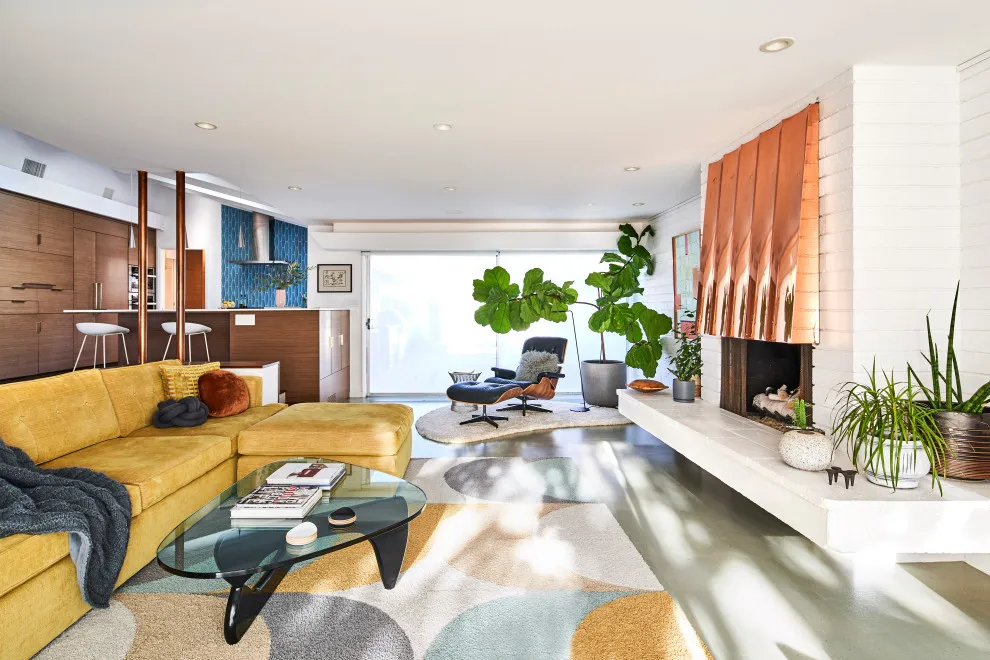
Repeat colours across the room. A cushion that echoes the colour of a rug, or artwork that picks up the tone of a throw, creates a sense of continuity that makes a small space feel intentional rather than crowded. Repetition tricks the eye into reading the room as one coherent space, instead of a collection of separate objects competing for attention.
Cool colours recede, warm colours advance. This old painter's rule is genuinely useful in a small room. A cool blue or green on the farthest wall can make that wall feel slightly further away, while warm terracotta or mustard, used in small amounts near the entrance, draws the eye in and makes the room feel welcoming. Use cool tones where you want distance, and warm tones where you want cosiness.
Be careful with contrast. Very high contrast, such as jet black against bright white, creates strong visual boundaries that chop a small room into pieces. Softer contrast, such as charcoal against warm grey, or navy against pale blue, gives definition without division. If you love bold contrast, use it in accessories you can change easily, rather than in fixed features like flooring or cabinetry.
Flooring colour matters more than wall colour in some rooms. A continuous floor colour, running from one room into the next without a harsh threshold, makes both rooms feel larger because the eye travels uninterrupted. If you cannot change flooring, a large rug in a tone close to the floor colour achieves a similar effect, while a small rug with a strong border does the opposite.
Lighting changes colour completely. A shade that looks perfect in a shop can look grey, yellow or pink at home, depending on your bulbs and window direction. Always test paint or fabric samples in your own room, at different times of day, before committing. A sample viewed in morning daylight, evening lamplight and on a cloudy day tells you far more than any photograph.
Do not ignore the ceiling. Painting a ceiling the same pale colour as the walls, or just one shade lighter, removes the visual line where wall meets ceiling and makes the room feel taller. A bright white ceiling against coloured walls, by contrast, draws a hard line that can make a low room feel lower. This is a small change with an outsized effect.
Finally, edit ruthlessly. Even the best colour scheme cannot rescue a room crammed with competing patterns and colours. Remove one item, step back, and see if the room breathes better. Small rooms reward restraint, and a palette of three colours, used consistently, will almost always look more expensive than a palette of ten used randomly.
Colour is not decoration alone in a small room; it is structure. Use light tones to open the space, one deep tone for focus, repetition for coherence, and soft contrast for calm. For more worked examples and room-by-room ideas, explore practical small room design guidance and test each combination in your own light before you commit.







Sign in to leave a comment.