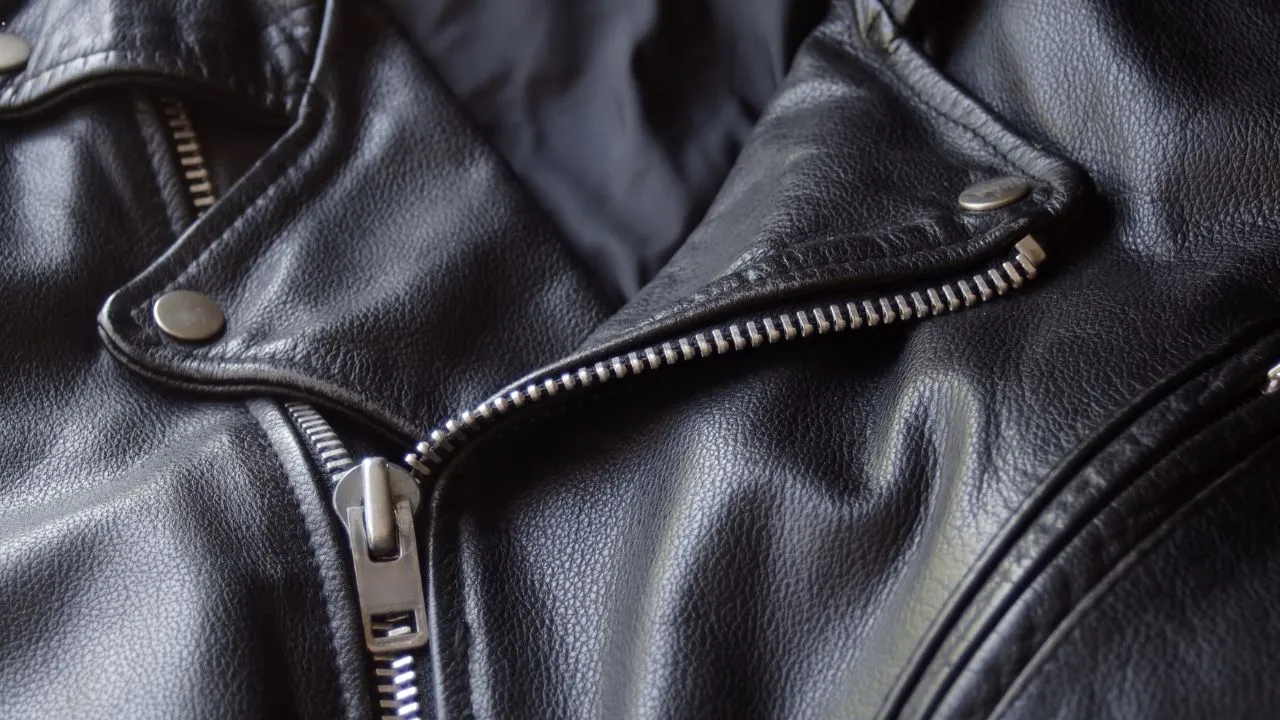

Short answer: Horsehide ages best if you want deep, dramatic character and decades of wear. Goatskin ages best if you want a jacket that stays soft, supple and durable with minimal fuss. Cowhide ages best when it is full-grain, vegetable- or quality-tanned, and thick enough to build a real patina. Cheap "genuine" cowhide does not age well at all.
The right pick depends on how you wear the jacket and what "aging well" means to you. Below is how each hide behaves over years of wear.
Quick Comparison
| Factor | Horsehide | Goatskin | Cowhide |
|---|---|---|---|
| Feel when new | Stiff, dense | Soft, flexible | Varies by grade |
| Break-in time | Long | Short | Medium |
| Patina and fading | Deep, high-contrast | Subtle, even | Good (full-grain) to poor (corrected) |
| Surface texture | Smooth, tight | Natural pebbled grain | Varies |
| Durability | Excellent | Excellent for its weight | Excellent (thick, full-grain) |
| Weight | Heavy | Light | Medium to heavy |
| Best for | Heritage purists | Daily wear | Value and versatility |
Why Aviators Use These Three Hides
The aviator jacket was built for function. The U.S. Army Air Corps A-2 flight jacket, adopted in 1931, was made mainly from horsehide, with goatskin also used by some wartime contractors. The Navy's G-1 jacket is closely associated with goatskin. Cowhide became the common choice for modern commercial aviators because it is widely available and easier to produce at scale.
That history matters because these jackets were meant to be worn hard. The hides that earned a place on them were chosen for strength, not just looks.
Horsehide: Slow Burn, Biggest Payoff
Horsehide, usually the shell portion of the hide (the dense section from the rump), has a tight, compact fiber structure. That density explains its reputation for toughness and for taking years to soften.
How it ages:
- Starts stiff, with a smooth, semi-glossy surface.
- Develops sharp creasing at elbows, the lower back and around the chest.
- Shows strong contrast between worn high points and darker recesses, especially in vegetable-tanned or aniline-finished versions.
- Resists tearing and surface wear for decades when cared for.
Trade-offs: It is heavy, expensive and needs patience. Many owners wear a horsehide A-2 for a year or more before it fully conforms to the body. It is also less common, so quality varies between makers.
Best for: Wearers who want a jacket that looks unmistakably lived in and who accept a long break-in.
Goatskin: Soft From Day One, Tough Underneath
Goatskin has a natural pebbled grain, a lighter weight and a supple hand. Its fiber structure is tightly interwoven, which is why a thin goatskin jacket can still outlast a thicker hide of lesser quality.
How it ages:
- Feels broken-in almost immediately.
- Softens further and develops a gentle sheen rather than harsh contrast.
- Hides scuffs well because the pebbled grain disguises minor marks.
- Holds its shape and resists tearing at stress points.
Trade-offs: The patina is more understated. If you want sharply defined fading and "whiskering," goatskin delivers a quieter version. It also tends to have a more casual, textured look than a smooth horsehide.
Best for: Daily wearers, travelers and anyone who wants comfort without a break-in period.
Cowhide: Wide Range, Quality Is Everything
"Cowhide" covers everything from heirloom-grade full-grain leather to bonded and corrected-grain products. That is why cowskin jacket gets both the best and worst reputations in jacket leather.
How quality cowhide ages:
- Full-grain, top-grain with minimal correction, develops a rich patina and softens steadily.
- Thicker cuts build character through creasing and surface darkening.
- Responds well to conditioning and holds up in cold, wet or rough use.
How low-grade cowhide ages:
- Heavily corrected or coated surfaces can crack, peel or flake because the protective finish sits on top of weakened fiber.
- Aging looks like damage, not patina.
Best for: Buyers who want a strong jacket at a more accessible price, as long as they confirm the grain type.
The Factors That Matter More Than the Animal
Species is only part of the equation. Three other variables often decide how a jacket ages:
- Grain level. Full-grain keeps the strongest fibers and develops the best patina. Corrected or split leather will not.
- Tannage. Vegetable tanning typically produces richer, more dramatic patina. Chrome tanning gives more consistency, softness and water resistance.
- Finish. Aniline and light semi-aniline finishes let the leather change visibly. Heavy pigment coatings mask aging and can crack.
A well-made full-grain cowhide aviator can outperform a poorly finished horsehide one. Always check the grain and finish, not just the animal.
How to Make Any Aviator Age Better
- Condition sparingly. One or two light applications a year is enough for most jackets. Over-conditioning softens leather and can darken it unevenly.
- Let it dry naturally after rain, away from radiators and direct heat.
- Use a wide hanger to protect the shoulders.
- Avoid long-term storage in plastic. Leather needs airflow.
- Wear it often. Body heat and movement are what shape the leather.
Which Should You Buy?
- Choose horsehide if you want maximum character, a classic A-2 look, and you do not mind a long break-in.
- Choose goatskin if you want comfort, durability and low maintenance from the first wear.
- Choose full-grain cowhide if you want a strong all-rounder at a more approachable price.
FAQ's
Which leather lasts longest on an aviator jacket?
Well-made horsehide and goatskin both have excellent longevity. Full-grain cowhide can match them when thick and properly tanned.
Is horsehide better than cowhide?
Horsehide is denser and ages with more contrast, but a high-quality full-grain cowhide can outperform a low-quality horsehide. Grain and finish matter as much as species.
Is goatskin good for an aviator jacket?
Yes. Goatskin is the traditional choice for the Navy G-1 style and is valued for softness, abrasion resistance and quick comfort.
Does leather get better with age?
Full-grain leather generally improves with wear, developing patina and conforming to the wearer. Corrected-grain or heavily coated leather usually does not.
How long does it take to break in a horsehide jacket?
Often six months to a year of regular wear, depending on thickness and tannage.
The Bottom Line
If you want the most character over time, buy horsehide. If you want the best balance of comfort and toughness, buy goatskin. If you want solid performance at a better price, buy full-grain cowhide and verify the grade. Whichever you choose, wear it hard. That is how an aviator earns its look.




















Sign in to leave a comment.