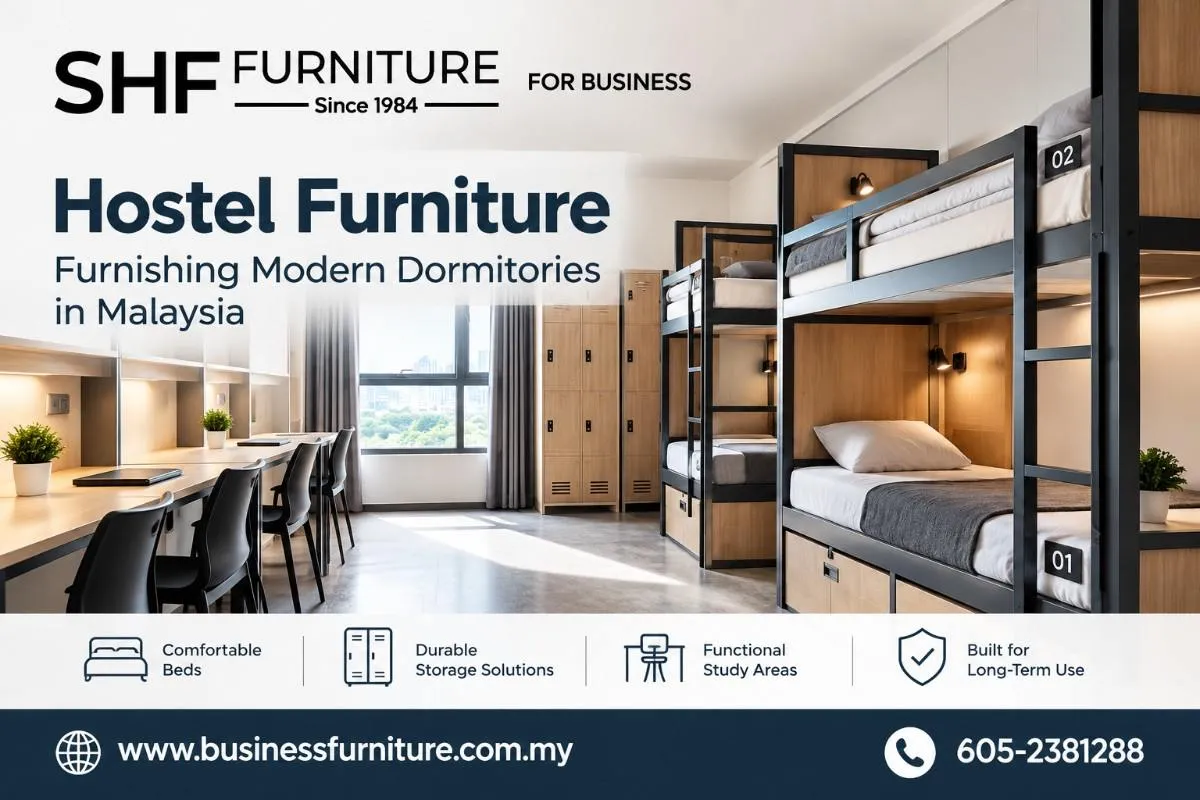

Furnishing a hostel in Malaysia requires more than picking beds and tables. The right hostel furniture must balance durability, space efficiency, safety compliance, and guest comfort — all within a realistic budget. Whether you are setting up a student dormitory, backpacker hostel, or staff accommodation, the furniture choices you make directly affect occupancy rates, maintenance costs, and overall guest satisfaction.
What Is Hostel Furniture and Why Does It Matter?
Hostel furniture refers to the purpose-built furnishings used in shared accommodation environments such as dormitories, student hostels, worker quarters, and budget lodgings. It includes bunk beds, lockers, study desks, wardrobes, and common area seating. Unlike standard home furniture, hostel-grade pieces are engineered for high turnover, heavy daily use, and multi-occupant environments.
In Malaysia, the demand for purpose-built dormitory furniture has grown significantly alongside the country's expanding student population and manufacturing workforce. According to the Ministry of Higher Education Malaysia, there are over 1.2 million students enrolled in public and private higher education institutions — many of whom require hostel accommodation. Getting the furniture selection right is not just an aesthetic decision; it is a financial and operational one.
Essential Furniture Every Hostel Needs
Before purchasing anything, map out each zone within your hostel — sleeping quarters, bathrooms, common areas, and storage corridors. Each zone has its own furniture requirements and usage intensity.
1. Bunk Beds and Single Beds
The bunk bed is the cornerstone of any dormitory setup. In Malaysia's hostel industry, double-decker and triple-decker bunk beds are the most common configurations. They maximise floor space while accommodating more guests per room.
When selecting bunk beds, look for:
- Steel or solid wood frames rated for long-term use
- Side guardrails on upper bunks for safety
- Ladder designs that are easy to grip, especially for night use
- Compatibility with standard Malaysian mattress sizes (single: 91 cm × 190 cm)
- Powder-coated or anti-rust finishes for humid tropical climates
For institutions managing student dormitories, beds with built-in under-bed storage drawers significantly reduce the need for separate storage units, saving both cost and floor space.
2. Lockers and Storage Units
Secure, personal storage is one of the top expectations of hostel guests and dormitory residents. A well-chosen locker system protects personal belongings, reduces theft incidents, and improves the overall sense of safety within the facility.
Common locker configurations for Malaysian hostels include:
- Single-tier lockers: Large compartments, ideal for student dormitories where residents store books, clothing, and electronics
- Multi-tier lockers (3–6 tiers): Space-saving, suited for worker quarters and budget backpacker hostels
- Digital lock lockers: Growing in popularity in urban hostels across Kuala Lumpur and Penang
Material matters too. Steel lockers are preferred in high-humidity environments, while laminate-finished wood lockers offer a cleaner aesthetic for student accommodations affiliated with private colleges.
3. Study Desks and Chairs
For student dormitories, study furniture is non-negotiable. A compact study desk with a small shelf or hutch maximises limited space without making the room feel cluttered.
Key considerations for dormitory study furniture:
- Desks with a minimum work surface of 80 cm × 50 cm
- Ergonomic chairs with adjustable height settings
- Integrated cable management cutouts for laptops and charging devices
- Scratch-resistant, easy-to-clean laminate surfaces
Pairing study desks with individual task lighting and power sockets at desk level is a small investment that significantly improves resident satisfaction and study productivity.
4. Wardrobes and Clothing Storage
In longer-stay dormitories — especially for students and migrant workers — residents need proper wardrobe space. Slim-profile, full-height wardrobes with hanging rails, shelves, and a small drawer are the standard for this segment.
For space-constrained rooms, open-shelf wardrobes or built-in wardrobe panels integrated into the bunk bed structure offer a smarter alternative. Many Malaysian hostel furniture suppliers offer modular wardrobe systems that can be configured per room layout.
5. Common Area and Lounge Furniture
Common areas directly influence how long guests stay and whether they recommend the hostel to others. These spaces need durable, easy-clean seating, dining tables, and recreational furniture.
Recommended hostel furnishings for common areas include:
- Heavy-duty dining tables with laminated tops
- Stackable chairs (easier to store and clean around)
- Sofas with washable or synthetic upholstery
- Wall-mounted shelving for books, board games, and shared items
What to Look for When Buying Dormitory Furniture in Malaysia
Not all furniture marketed as hostel-grade meets actual institutional demands. Here is what property managers and hostel owners in Malaysia should evaluate before placing bulk orders.
Durability and Load Ratings
Each piece of furniture should have a stated load capacity. Bunk beds, for example, should meet a minimum static load of 200 kg per sleeping surface. Ask suppliers for product specifications and warranty documentation before purchasing.
Compliance with Malaysian Standards
Furniture used in licensed hostels and educational institutions in Malaysia should ideally conform to standards set by SIRIM (Standards and Industrial Research Institute of Malaysia). SIRIM-certified products undergo testing for structural integrity, material safety, and finish durability — offering hostel operators peace of mind and reducing liability risk.
Maintenance and Replaceability
High-traffic environments mean faster wear. Choose furniture systems where individual components — hinges, drawer slides, mattress platforms — can be replaced without retiring the entire unit. Modular hostel furniture systems are increasingly popular in Malaysia for exactly this reason.
Lead Time and Local Supply
Imported furniture often comes with unpredictable lead times. Working with a local Malaysian supplier reduces logistics risk and allows for faster replacements. It also simplifies communication around customisation, which is common for larger institutional projects.
Furniture Layout Tips for Malaysian Dormitory Spaces
Even the best furniture underperforms in a poorly planned layout. Here are practical layout principles for Malaysian dormitory rooms:
- Maintain airflow corridors: Malaysia's climate demands adequate air circulation. Leave at least 90 cm between bunk beds and walls where possible
- Position study desks near natural light: This reduces eye strain and electricity consumption
- Keep locker rows away from sleeping zones: Noise from locker doors disrupts sleep, especially in shift-worker accommodations
- Use wall-mounted fixtures: Mirrors, shelves, and hooks mounted on walls free up floor space significantly
Budgeting for Hostel Furniture in Malaysia
Cost planning varies widely depending on the type of hostel and quality tier required. A standard setup for a 10-bed dormitory room in Malaysia — including bunk beds, mattresses, lockers, and study desks — typically ranges from RM 8,000 to RM 20,000 depending on material quality and supplier.
For larger institutional projects such as university residences or industrial worker quarters, bulk procurement pricing and phased delivery schedules can significantly reduce per-unit costs. Always request itemised quotations and compare at least three suppliers before committing to a bulk order.
Where to Source Quality Hostel Furniture in Malaysia
Malaysia has a well-developed furniture manufacturing industry, particularly in Johor, Selangor, and Penang. For hostel operators, working with a supplier that specialises in institutional and commercial furniture — rather than general home furniture — produces better long-term outcomes. Specialist suppliers understand load requirements, institutional use patterns, and bulk project timelines in ways that general retailers often do not.
Business Furniture Malaysia offers a dedicated range of hostel furnishings designed for institutional and commercial projects across Malaysia. Their product range includes bunk beds, lockers, study desks, and wardrobes built specifically for high-occupancy, long-term use environments — making them a practical starting point for hostel operators planning a fit-out or refurbishment.
Frequently Asked Questions
What type of bunk bed is best for a Malaysian hostel?
Steel double-decker bunk beds with powder-coated finishes are the most practical choice for Malaysian hostels due to the humid climate and high usage frequency. They offer durability, easy maintenance, and resistance to rust — all critical factors in tropical environments with heavy daily occupancy.
How much does it cost to furnish a dormitory room in Malaysia?
Furnishing a standard 10-bed dormitory in Malaysia typically costs between RM 8,000 and RM 20,000, depending on furniture quality, material, and supplier. This estimate covers bunk beds, lockers, study desks, and basic storage. Bulk orders from institutional suppliers can reduce per-unit costs considerably.
Do hostel furniture suppliers in Malaysia offer customisation?
Yes, many Malaysian hostel furniture suppliers offer customisation in terms of dimensions, colour, and configuration — especially for institutional bulk orders. Local suppliers are generally more flexible with modifications than importers and can accommodate room-specific layouts for dormitories, student residences, and worker accommodations.
What safety standards should hostel furniture meet in Malaysia?
Hostel furniture in Malaysia should ideally comply with SIRIM standards, which assess structural integrity, material safety, and surface durability. For bunk beds specifically, guardrails on upper bunks and a minimum load capacity of 200 kg per sleeping surface are key safety benchmarks operators should verify before purchasing.
Is steel or wood better for dormitory furniture in Malaysia?
Steel is generally preferred for bunk beds and lockers in Malaysian dormitories due to its durability and resistance to moisture. Wood or laminate-finish furniture suits study desks and wardrobes where aesthetics matter more. Many hostel operators use a combination of both materials across different furniture categories.
What furniture is essential for a student dormitory in Malaysia?
A functional student dormitory in Malaysia requires bunk beds or single beds, personal lockers, study desks with ergonomic chairs, wardrobes, and common area seating. These core hostel furnishings support both academic and daily living needs, ensuring residents have adequate space for sleep, study, and personal storage.
























Sign in to leave a comment.