
Anyone planning a multi-week or multi-month stay on the Gold Coast eventually runs into the same wall: "long-stay accommodation" isn't one product, it's five different ones, each with its own price, paperwork and trade-offs. A working holiday maker, an international student, or a backpacker settling in for a season all face the same first decision: hostel-style co-living, a boarding house room, a shared house, a private rental, or a serviced apartment before they've even picked a suburb. Getting that first choice wrong is expensive: Queensland's private rental market is tight enough that a newcomer without local references or a rental history can spend weeks being rejected, while the wrong share house or an unlicensed room can leave someone with no legal protection at all if something goes wrong. This guide walks through what each option actually involves, what Queensland law protects (and doesn't), and why most new arrivals end up starting with the most flexible option rather than the cheapest-looking one.
The Five Accommodation Types, and Who Each One Actually Suits
Long-Stay Hostel or Co-Living

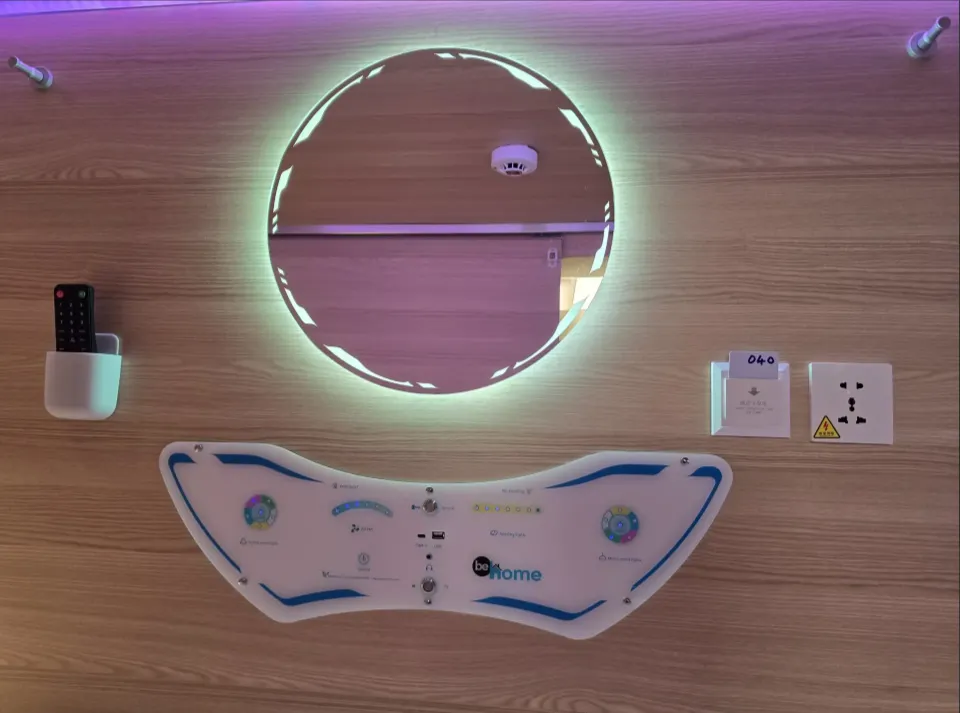
A furnished room or capsule with bills and Wi-Fi included and a minimum stay typically around four weeks is built specifically for people staying months, not nights. It suits new arrivals, working holiday makers, and students in their first term who need a stable address immediately but don't yet know their suburb, job, or course timetable.
Rooming Accommodation (Boarding House)
Renting a single room with shared kitchen and bathroom facilities is legally recognised in Queensland in its own right, under the Residential Tenancies and Rooming Accommodation Act 2008, with its own agreement form. This matters because it gives a resident real tenancy protections: a lodged bond, a condition report, a capped rent increase without requiring a full lease on an entire property.
Share House, Private Rental and Serviced Apartment
A shared house room, usually found through Facebook groups, Flatmates or Gumtree, is often the cheapest per week for someone already on the ground who can inspect in person first. A private rental of a studio or one-bedroom unit on a six- to twelve-month lease suits someone with a job, a rental history and savings for the upfront costs, which is rarely the position of someone who landed last week. A serviced apartment is furnished and flexible but typically carries a noticeable premium over an equivalent standard rental, which only tends to make sense for a short, budget-flexible assignment.
What Queensland Law Actually Protects and Where It Doesn't
Bond, Rent Increases and Agreement Forms
Under the Residential Tenancies and Rooming Accommodation Act 2008, administered by the Residential Tenancies Authority (RTA), the maximum bond for any residential tenancy or rooming accommodation is four weeks' rent, regardless of how high the weekly rent is, and it must be lodged with the RTA within 10 days of being paid. Rent on a given property can only be increased once every 12 months, with 60 days' written notice, and rent bidding is banned outright. Which agreement applies depends on what's being rented: Form 18a covers a whole property, while Form R18 covers a room with shared facilities where the provider rents out four or more rooms and critically, rooming accommodation residents are protected under the Act even if nobody hands them a written agreement. A straightforward nightly hostel bed, by contrast, usually comes with no formal agreement and almost no statutory protection at all, which is the real difference between a long-stay room and a short-stay one.
Why the Paperwork Question Comes First
A legitimate long-stay provider should be able to say immediately which agreement form applies and confirm a bond will actually be lodged with the RTA; hesitation on either question is itself useful information. Checking this before paying anything matters more than comparing weekly rates, since an unlodged bond leaves a resident with no formal recourse if a dispute comes up later.
Why the Private Rental Market Pushes New Arrivals Toward Flexible Options First
Queensland's rental market gives an honest reason why most new arrivals don't start with a private lease. SQM Research put the national residential vacancy rate at just 1.3% in July 2026, with Brisbane sitting even tighter at 0.9% well below the roughly 3% generally considered a balanced market while asking rents were up 7.2% year-on-year over the same period. In a market that is tight, agents routinely ask for a rental ledger, references, payslips and formal identification that someone who arrived days ago simply can't produce yet. A realistic timeframe for a private rental application to become genuinely competitive is four to ten weeks on the ground which is exactly the gap a long-stay hostel, boarding house room, or share house is built to fill.
Income is rarely the blocker once work starts: Australia's national minimum wage from 1 July 2026 is $26.44 per hour, or $1,004.90 for a 38-hour week, with casual employees earning at least $33.05 per hour under the standard 25% casual loading (Fair Work Commission). The harder stretch is the first few weeks before that first pay cycle lands, which is why bills-included, no-lease accommodation with a modest four-week minimum tends to be the more realistic starting point than an unfurnished rental requiring a bond, utility connections and a year's commitment upfront.
Transport Changes the Calculation Too
Choosing a base near Surfers Paradise also keeps transport costs low regardless of which accommodation type is chosen. The G:link light rail runs 27 kilometres end-to-end across 27 stations between Helensvale and Burleigh Heads, with its Stage 3 extension opening on 9 August 2026, and every tram, bus, train or ferry trip across Queensland costs a flat 50 cents under the state's permanent fare scheme. A resident living within walking distance of a station or stop can reach job interviews, classes and shopping across the Gold Coast without needing a car in the first few months, one less upfront cost to budget for while everything else is being set up.
Conclusion
Choosing between a long-stay hostel, a boarding house room, a share house, a private rental and a serviced apartment comes down to timing as much as price: Queensland's legal protections differ meaningfully between them, and the private rental market's near-record-tight vacancy rate makes a flexible, no-lease option the realistic starting point for almost anyone new to the Gold Coast. For a full breakdown of pricing, legal rights, seasonality and a week-by-week settling-in plan, BeHome's complete guide to long-stay options on the Gold Coast covers each of these five accommodation types in detail before deciding where to land first.






















Sign in to leave a comment.