

If hot water is taking a bigger bite out of your household budget, the system itself may be part of the problem. Water heating accounts for around 15% to 30% of household energy use in Australia, so an inefficient unit can have a noticeable effect on your bill.
For homeowners across the Central Coast and wider NSW, there are several practical ways to reduce hot water costs without cutting back on everyday comfort.
Check What Type of Hot Water System You Have
Start with the unit already installed at your property. Older electric storage systems can be relatively cheap to buy but more expensive to run because they use an electric element to heat and maintain stored water.
Before replacing it, look at tank size, household usage, and when most hot water is consumed. A system that is too large may heat more water than you need, while one that is too small may struggle during busy periods.
Consider Switching to a Heat Pump
A heat pump water heater works differently from a traditional electric storage unit. Instead of creating all its heat directly with an electric element, it transfers heat from the surrounding air into the water.
For eligible households, the NSW Government currently offers an Energy Savings Scheme incentive for heat pump hot water upgrades. Indicative discounts can be up to $640 when replacing an electric water heater and up to $330 when replacing a gas water heater, although the actual amount depends on the product, installer and installation.
When comparing systems, do not look only at the purchase price. Tank capacity, warranty, noise level, installation position and expected household demand all matter.
Cut Everyday Hot Water Waste
Small habits can add up over the year. Fix dripping hot taps, use efficient showerheads, and avoid leaving hot water running longer than necessary.
If your system has timers or smart controls, ask whether it can be scheduled around lower-cost electricity periods or times when your rooftop solar is producing strongly.
Use Rooftop Solar More Effectively
If you already have solar power, the timing of water heating can make a difference.
A Residential Solar System may produce surplus electricity during the middle of the day when household demand is relatively low. A compatible hot water system can often be scheduled to heat during these solar-production hours, allowing you to use more of the electricity generated on your roof.
If you are considering solar for the first time, look at your total household energy use rather than sizing a system around hot water alone. Air conditioning, appliances, pool equipment, and future EV charging can all influence the right system size.
Would a Battery Help?
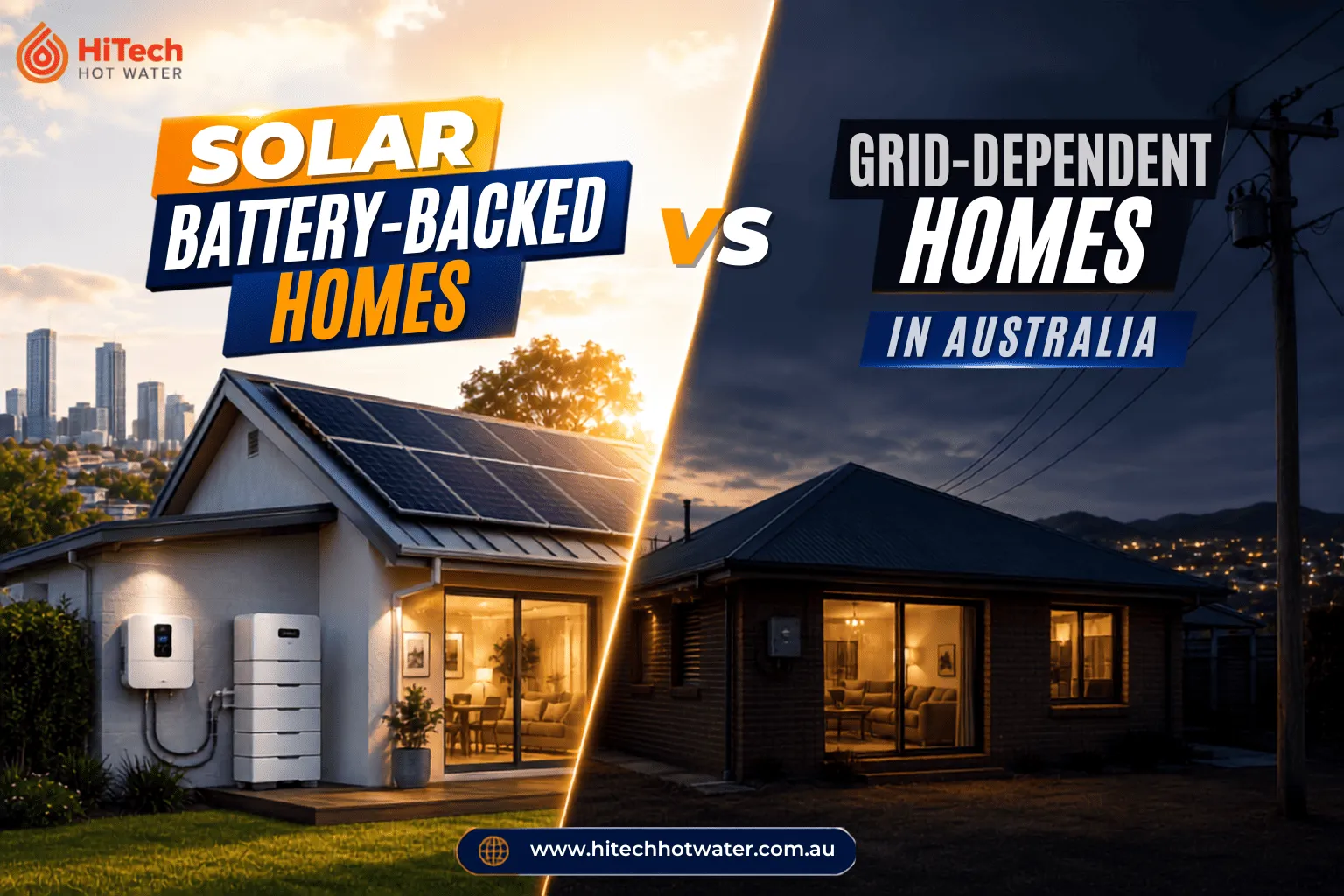
A Solar Battery System can store surplus rooftop solar for later use, helping reduce the amount of electricity purchased from the grid during evening periods.
Whether a battery makes sense specifically for hot water depends on your usage pattern. In many homes, it may be better to run an efficient hot water system during solar hours and use stored battery energy for evening household loads.
Smart-meter data, solar exports, and evening consumption can help show whether battery storage is likely to suit your home.
Review Your Electricity Plan
Your hot water system may not be the only reason your bill feels high.
The Central Coast is within the Ausgrid network area, while residents can choose their electricity retailer and plan. For 2026–27, the Australian Energy Regulator’s Default Market Offer for NSW fell compared with the previous year. However, the DMO is a safety-net reference price and may not be the cheapest market offer available.
Check your usage rate, daily supply charge, controlled-load tariff, time-of-use periods, and solar feed-in tariff. A plan that suited your home a few years ago may no longer be the best fit.
Plan an Upgrade Before the Old System Fails
Waiting until a hot water system stops working can leave you choosing whatever can be installed fastest. Planning ahead gives you time to compare systems, quotes, warranties, and available incentives.
If you are unsure where to start, HiTech Hot Water can assess your current system, household usage and future energy needs before recommending a suitable option.
For Central Coast homeowners, lowering hot water costs does not require changing everything at once. Start by checking the system you have, reducing obvious waste, reviewing your electricity plan and then consider upgrades that can deliver savings over the longer term.





























Sign in to leave a comment.