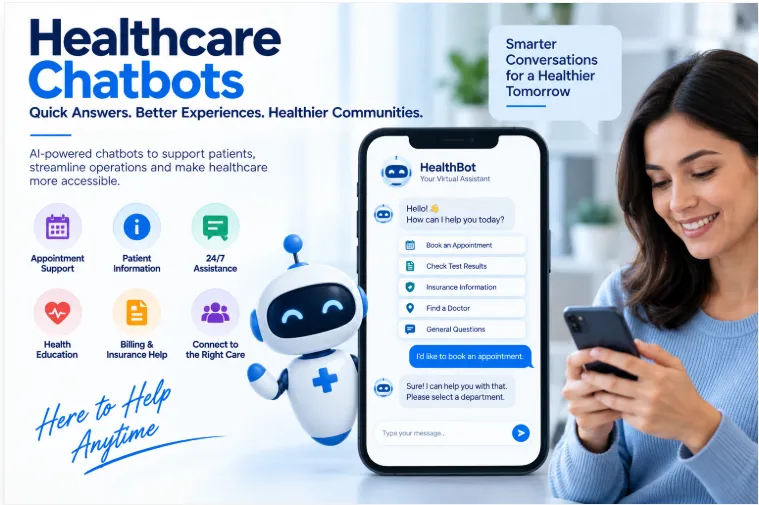

Patients expect healthcare to be convenient, responsive, and easy to navigate. Yet many healthcare organizations still rely on phone calls, emails, and complicated websites for routine communication. This can create unnecessary delays for patients and additional workloads for administrative teams.
A well-designed chatbot solution for healthcare can provide a simpler digital communication channel. By combining conversational interfaces with healthcare workflows, organizations can help patients find information, complete routine tasks, and reach the appropriate resources more efficiently.
Simplifying Patient Navigation
Healthcare systems can be difficult to navigate. Patients may not know which department to contact, where to find a specific service, or how to schedule an appointment.
A conversational chatbot can ask simple questions and guide users toward the appropriate department, service, or resource. This can create a more intuitive experience than requiring patients to search through multiple webpages or menus.
Providing Instant Answers to Routine Questions
Healthcare staff frequently receive repetitive questions about appointments, locations, insurance, billing, office procedures, and preparation instructions.
Healthcare Chatbots can provide automated responses to approved questions at any time. This can help patients access general information quickly while allowing staff to focus on requests that require human attention.
Supporting Appointment Management
Appointment-related tasks are a natural fit for conversational automation. Patients can interact with a chatbot to receive scheduling information, confirm appointments, review instructions, or initiate cancellation and rescheduling workflows.
When connected with healthcare scheduling systems, a chatbot can become a convenient front door for appointment services.
Improving Digital Patient Engagement
Patient engagement depends partly on how easy it is for people to interact with their healthcare providers.
Custom Healthcare Chatbots can provide personalized conversational experiences across websites, patient portals, and mobile applications. Features such as reminders, educational information, follow-up prompts, and service navigation can help patients stay connected with their care journey.
Supporting Telehealth Experiences
Telehealth introduces additional digital steps for patients, from finding virtual appointments to understanding how to access a video consultation.
Chatbots can help guide patients through these processes, provide basic instructions, and direct users toward the appropriate virtual-care resources. Integration with telehealth platforms can make the overall experience more connected.
Connecting Chatbots With Healthcare Systems
A chatbot becomes significantly more useful when it can communicate with existing healthcare applications.
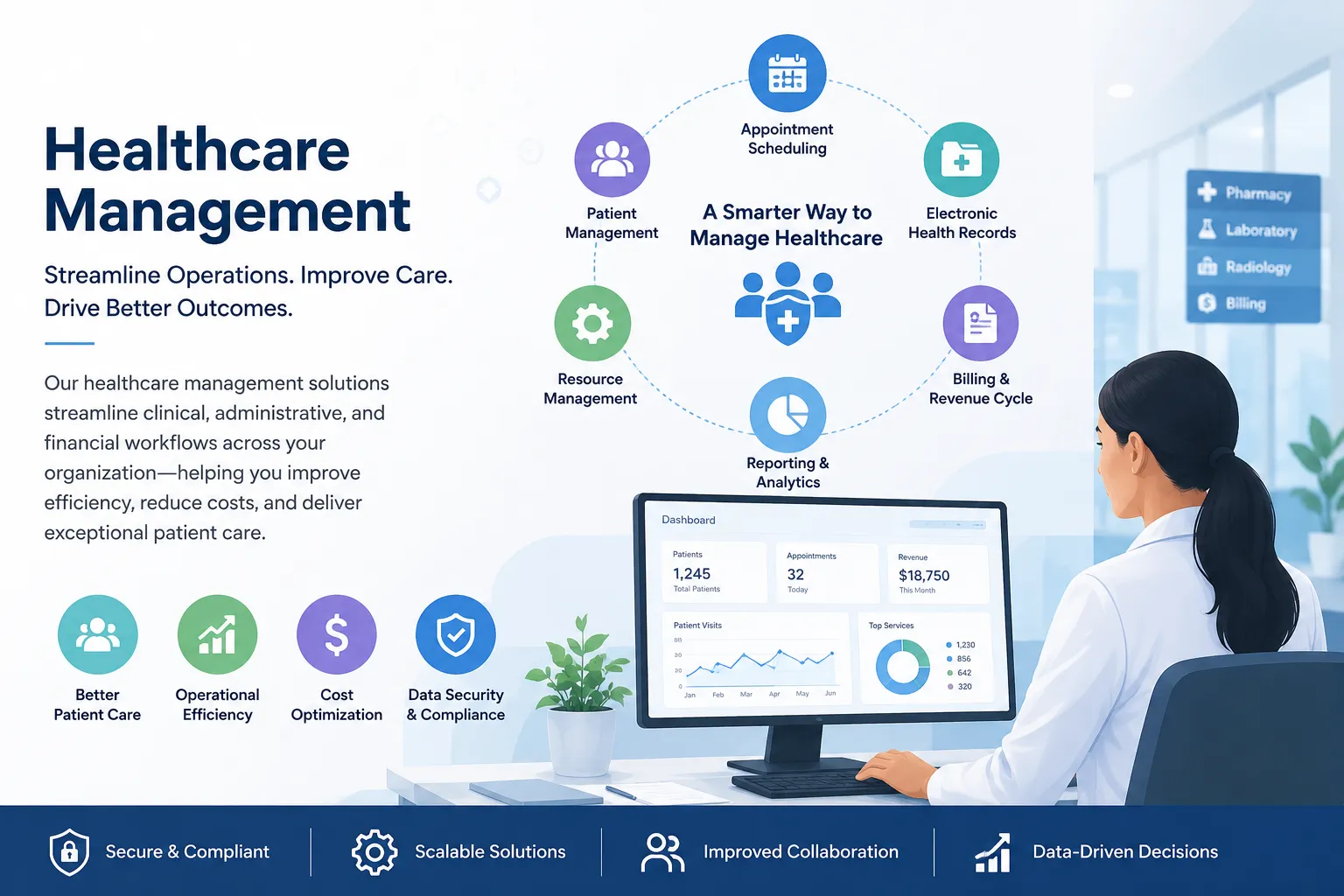
Depending on the intended workflow, integrations may connect chatbots with EHRs, scheduling platforms, patient portals, CRM systems, billing applications, and telehealth solutions. APIs can help exchange appropriate information while supporting secure and controlled access.
This connectivity can reduce repetitive data entry and help maintain consistency across different patient touchpoints.
Supporting Healthcare Staff
Chatbots should not be viewed simply as tools for replacing human communication. Their value can come from handling repetitive interactions and escalating more complex requests.
A chatbot can answer routine questions, collect basic information, and identify when a patient needs assistance from a staff member. This creates a hybrid model in which automation handles appropriate tasks while people remain available for situations requiring judgment, empathy, or specialized expertise.
Designing With Privacy in Mind
Healthcare chatbots may interact with sensitive information, so privacy and security need to be incorporated into the design.
Authentication, encryption, access controls, secure integrations, audit trails, and appropriate data-handling practices can help protect patient information. Organizations should also establish clear boundaries around what the chatbot is permitted to discuss.
For clinical questions that require professional assessment, the system should guide patients toward qualified healthcare professionals rather than presenting automated responses as a substitute for medical care.
Creating More Personalized Conversations
Generic chatbots can provide basic information, but customized systems can be designed around an organization's specific workflows and patient needs.
Custom Healthcare Chatbots Solutions can incorporate organization-specific knowledge, conversational flows, escalation rules, integrations, and user experiences. This flexibility allows healthcare providers to build digital assistants that align more closely with their services.
Moving Toward More Connected Patient Experiences
Healthcare communication is becoming increasingly digital. Patients may interact with organizations through websites, mobile applications, portals, telehealth platforms, and messaging tools throughout their care journey.
Healthcare Chatbots can provide a conversational layer across these channels, helping patients access information and services more naturally.
When combined with secure integrations, thoughtful workflows, and human escalation, chatbot technology can help healthcare organizations reduce routine administrative workloads while creating faster, simpler, and more accessible patient experiences.



























Sign in to leave a comment.