How a Fractional CFO Keeps Job Costing and WIP Reporting on Track

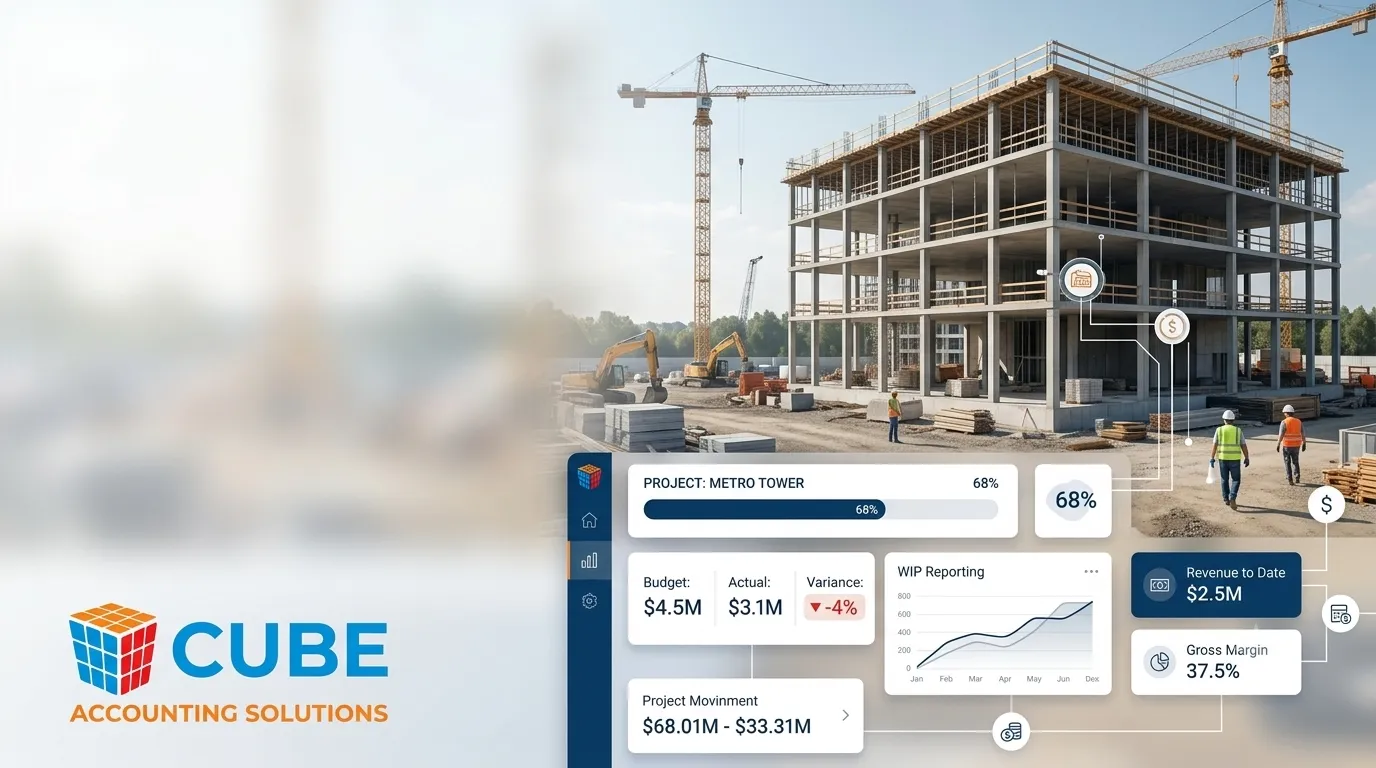
Job costing and work-in-progress (WIP) reporting are two of the most important financial tools for a construction business. They show whether projects are staying within budget, whether expected profits are still realistic, and whether the company is recognizing revenue correctly.
The challenge is that these reports depend on accurate and timely information. A missing subcontractor invoice, delayed change order, incorrect labor cost, or outdated project estimate can make the numbers misleading.
This is where Fractional CFO services for small business can help. A fractional CFO can review job costs, WIP reports, project margins, and financial trends to make sure management has a clearer picture of what is happening across active jobs.
Why Job Costing Matters
Job costing tracks the income and expenses connected to a specific project.
A construction company may track:
- Labor
- Materials
- Subcontractors
- Equipment
- Permits
- Project-related overhead
- Change orders
- Other direct costs
Suppose a contractor expects a $1 million project to generate $200,000 in gross profit. If labor and material costs begin rising, that original estimate may no longer be realistic.
Without regular review, the company might continue believing the project is on track when the expected margin has already changed.
Fractional CFO services for small business can help management compare the original project budget with actual costs and updated estimates.
What Is WIP Reporting?
WIP reporting gives management a view of projects that are still in progress.
A WIP report commonly considers factors such as:
- Contract value
- Costs incurred to date
- Estimated total project costs
- Percentage of completion
- Revenue recognized
- Billings to date
- Amounts over or under billed
- Expected gross profit
The purpose is to understand where each project stands financially before the work is finished.
For example, imagine a project has a contract value of $500,000 and is 60% complete. If the company has already used 75% of its expected project costs, that could be a warning sign.
The project may be costing more than originally expected.
A CFO can investigate why the difference exists and determine whether the estimated cost to complete should be changed.
How Job Costing and WIP Reporting Work Together
Job costing and WIP reporting answer different questions, but they depend on each other.
Job costing asks:
How much have we spent on this project?
WIP reporting asks:
What does that spending tell us about the project's overall financial position?
If job costs are inaccurate, WIP reporting can also become unreliable.
For example, if $100,000 in subcontractor costs have not been recorded, the project may appear more profitable than it really is. Once those costs are entered, the project's margin could change significantly.
This is why regular review matters.
How a Fractional CFO Helps Keep the Numbers Accurate
A fractional CFO does not necessarily enter every transaction. Instead, the CFO can create a process for reviewing the information and identifying unusual results.
This may include:
Reviewing project budgets
The CFO compares the original budget with current expectations.
If a project was expected to cost $700,000 but the latest estimate is $780,000, the difference needs to be understood.
Checking actual costs
Actual labor, materials, subcontractor costs, and other expenses can be compared with the project budget.
Large differences can point to problems that need further investigation.
Reviewing estimated costs to complete
A project may look profitable based on costs already incurred, but the remaining work could be more expensive than expected.
The CFO can review whether the estimated cost to complete is reasonable.
Examining changes in project margins
Margins should be monitored throughout the project rather than only after completion.
A falling margin may signal:
- Labor overruns
- Material price increases
- Poor estimating
- Unapproved change orders
- Subcontractor issues
- Project delays
- Scope changes
Early identification gives management more time to respond.
Catching Problems Before They Become Bigger
One of the biggest benefits of regular financial review is early warning.
Consider a contractor with ten active projects. Nine are performing close to budget, but one project has started using labor much faster than expected.
A basic monthly report may show that the company is still profitable overall.
A deeper project-level review could reveal that one job is heading toward a significant loss.
That information gives management a chance to investigate the problem before the project is completed.
This is one practical area where Fractional CFO services for small business can add value. The CFO can help turn financial reports into questions that managers can act on.
Creating a Consistent WIP Review Process
WIP reporting works best when the company follows a consistent process every month.
A basic process might look like this:
1. Collect project information
Gather current costs, billings, contract values, change orders, and project estimates.
2. Compare actual costs with the budget
Look for major differences in labor, materials, subcontractors, and other costs.
3. Update the cost-to-complete estimate
Determine whether the original estimate still makes sense.
4. Recalculate expected project margin
Use the latest revenue and cost information rather than relying only on the original budget.
5. Review unusual projects
Projects with large margin changes, unexpected costs, or billing issues should receive additional attention.
6. Discuss findings with project managers
Financial results often need operational context. A project manager may know about a delay or scope change that does not yet appear clearly in the accounting records.
7. Update the financial forecast
Changes in project profitability can affect the company's overall cash flow and future earnings.
Connecting WIP Reporting to Cash Flow
Project profitability and cash flow are not the same thing.
A project can be profitable but still create a cash shortage if the company has to pay workers and suppliers before receiving customer payments.
For this reason, WIP information can be considered alongside cash flow forecasts.
For example, if several projects are expected to require significant spending during the next two months, management may need to plan for the additional working capital.
This is where financial planning becomes more useful than simply looking at historical accounting reports.
Using Management Reports to Spot Trends
A contractor with many projects can quickly accumulate large amounts of financial information.
A useful management report should make the important changes easier to see.
It might show:
- Project revenue
- Estimated gross margin
- Actual gross margin
- Costs incurred
- Estimated costs to complete
- Billing status
- Major budget variances
- Cash requirements
This type of Monthly management reporting services can help owners and managers see which projects need attention without reviewing every transaction individually.
The report does not need to be complicated. It needs to answer the right questions clearly.
What Happens When Job Costs Are Delayed?
Timing can be just as important as accuracy.
Suppose a subcontractor completes $75,000 of work in March but the invoice is not recorded until April.
March's project costs may look too low, while April's costs appear unusually high.
That can distort project margins and WIP calculations.
A fractional CFO can work with the accounting team to establish procedures for identifying costs that have been incurred but not yet recorded.
This does not mean every estimate needs to be perfect. The goal is to make the monthly financial picture more reliable.
Improving Communication Between Accounting and Project Teams
Job costing depends on information from more than the accounting department.
Project managers may know about:
- Completed work
- Delays
- Change orders
- Labor problems
- Material shortages
- Subcontractor disputes
- Expected additional costs
If that information does not reach the accounting team, the financial reports may lag behind reality.
A CFO can help create a regular process for bringing financial and project information together.
That may mean a monthly meeting where accounting and project managers review major changes in project costs and expected profitability.
Where Cube Accounting Solutions Fits In
Cube Accounting Solutions provides accounting, tax, and fractional CFO support for businesses. In a construction setting, financial support can include areas such as budgeting, cash flow planning, financial reporting, and analysis of business performance.
The CFO role is most useful when financial information is connected to actual business decisions. For a construction company, that can mean understanding why a project's margin changed, whether current cost estimates are realistic, and how project performance affects the company's broader financial position.
Final Takeaway
Job costing and WIP reporting are only useful when the information behind them is accurate, timely, and regularly reviewed.
Fractional CFO services for small business can help create a structured process for reviewing project costs, updating estimates, investigating margin changes, and connecting project performance with the company's overall financial outlook.
For construction companies with multiple active projects, this type of oversight can make it easier to spot problems early and understand which jobs are truly contributing to the company's financial performance.





Sign in to leave a comment.