

Commercial truck driving depends on skills that need to be practiced consistently. From performing vehicle inspections and controlling a larger vehicle to backing safely and managing traffic, drivers need both practical ability and sound judgment. When someone spends an extended period away from professional driving, some of these skills may become less familiar.
A refresher course can provide an opportunity to review them before returning to regular commercial driving. A truck driving refresher course is generally intended for experienced drivers who already have commercial driving knowledge but need additional practice or a review of key skills.
Rather than treating an experienced driver as a beginner, refresher training can focus on the areas that need attention through a combination of classroom instruction and behind-the-wheel practice.
Why Commercial Driving Skills May Need a Review
Experience is an important part of becoming a capable commercial driver, but practical skills also depend on regular use. A driver who has spent considerable time away from commercial vehicles may still understand the fundamentals but feel less comfortable with certain tasks once back behind the wheel.
Vehicle inspections, backing, turning, maneuvering in confined spaces, maintaining appropriate following distances, and managing a commercial vehicle around other traffic all require attention and coordination. Refresher training creates an opportunity to revisit these skills in a structured environment instead of immediately relying on regular road driving to rebuild familiarity.
There can also be knowledge worth reviewing. Commercial drivers must understand safe operating practices and applicable requirements, while defensive driving remains an important part of responsible vehicle operation.
The Federal Motor Carrier Safety Administration identifies factors such as distraction, fatigue, inadequate surveillance, following too closely, and driving too fast for conditions as important commercial motor vehicle safety concerns.
Combining Classroom Knowledge With Practical Training
One of the useful aspects of refresher training is the opportunity to connect knowledge with actual vehicle operation. Classroom instruction can address topics such as vehicle inspections, defensive driving, safe operating practices, and other commercial driving fundamentals.
Practical training then allows drivers to apply those concepts. National Training's published CDL refresher program, for example, combines theory instruction with behind-the-wheel range training and public-road driving. Its curriculum includes areas such as pre- and post-trip inspections, basic vehicle operation, backing and docking, defensive driving, and road driving skills.
This combination matters because knowing how something should be done and being able to perform it consistently are not always the same thing. Practical instruction gives drivers an opportunity to work on both.
Reviewing Vehicle Control and Maneuvering
Vehicle control is an important part of refresher training, particularly for drivers who have not operated a commercial vehicle recently. A commercial truck responds differently from a passenger vehicle, and drivers need to account for its size, weight, turning radius, stopping distance, and surrounding space.
Range training provides a controlled setting for reviewing these fundamentals. Drivers can practice turning, positioning, backing, and other low-speed maneuvers while receiving instruction and feedback.
Backing and docking are particularly useful areas to revisit. These maneuvers require careful attention to mirrors, trailer position, surroundings, and available space. Even an experienced driver may benefit from additional practice after spending a significant amount of time away from commercial driving.
Getting Comfortable on Public Roads Again
Range work is only part of the process. Drivers also need to apply their skills in real traffic, where conditions can change quickly.
Public-road instruction can help drivers review lane positioning, turns, speed management, traffic awareness, following distance, and interactions with other road users. Instructor feedback during this stage can help identify areas where a driver may need additional practice.
This is one reason truck driving refresher training can be useful for someone returning to commercial driving. It provides a chance to gradually reconnect classroom concepts with the practical demands of operating a commercial vehicle in everyday traffic.
Can Simulators Help With Skills Review?
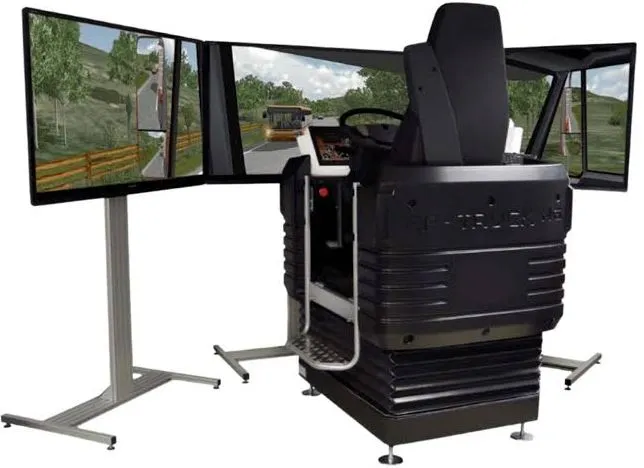
Technology can also have a role in commercial driver training. CDL simulators can provide controlled scenarios for practicing selected concepts, including hazard awareness, vehicle positioning, space management, speed control, turning, and backing.
National Training uses CDL simulator technology as part of its training. A simulator can be useful for introducing or reviewing situations without immediately placing a learner in live traffic. However, simulator work is a supplement to hands-on instruction, not a replacement for operating an actual commercial vehicle.
For drivers returning after time away, this combination of classroom learning, simulated scenarios where appropriate, range practice, and road instruction can provide several ways to review different aspects of commercial driving.
A Practical Way to Review Commercial Driving Skills
Returning to commercial driving after time away does not necessarily mean starting from the beginning. However, it can be worthwhile to review the skills that may have become less familiar through a structured training program.
A truck driving refresher course can bring together classroom instruction and practical experience to help drivers revisit vehicle inspections, maneuvering, backing, defensive driving, and public-road operation.
The value of the training comes from having an opportunity to practice these skills in an organized setting and receive guidance along the way.























Sign in to leave a comment.