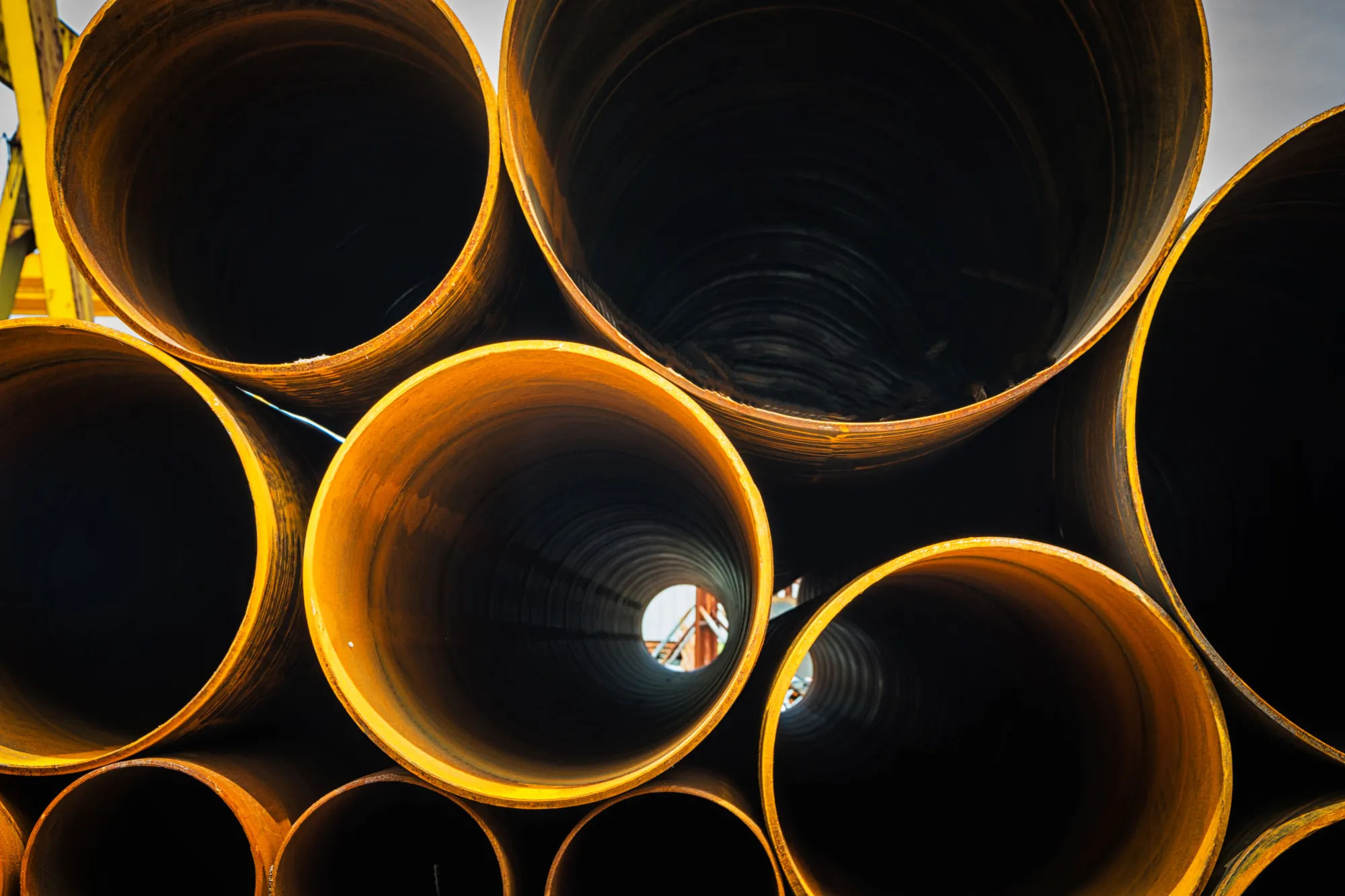

The stainless steel pipe industry is increasingly adopting digital technologies to improve product quality, manufacturing consistency, and inspection efficiency. Among these technologies, Artificial Intelligence (AI)-based inspection is emerging as an important advancement in the production of welded pipes. By combining machine vision, automated data analysis, sensors, and machine learning algorithms, manufacturers can identify potential defects faster and improve quality control throughout the production process.
For a modern Manufacturer of Stainless Steel 410 Welded Pipes, AI-based inspection can provide valuable support in monitoring weld quality, surface conditions, dimensional accuracy, and production consistency. As industries demand more reliable piping solutions, intelligent inspection systems are becoming an increasingly useful part of advanced manufacturing environments.
Understanding Stainless Steel 410 Welded Pipes
Stainless Steel 410 is a martensitic stainless steel grade known for its combination of strength, hardness, wear resistance, and moderate corrosion resistance. Its properties make it suitable for various industrial applications where mechanical performance and durability are important.
Welded pipes are produced by forming stainless steel strip or sheet into a tubular shape and joining the edges through a controlled welding process. Because welding creates a critical joint in the pipe, inspection of the weld and surrounding material is essential.
Manufacturers generally monitor factors such as:
- Weld appearance and consistency
- Pipe dimensions
- Wall thickness
- Surface condition
- Straightness
- Weld alignment
- Potential cracks or discontinuities
- Material and production traceability
AI-based inspection can make several of these inspection activities faster, more consistent, and more data-driven.
What Is AI-Based Inspection?
AI-based inspection uses cameras, sensors, software, and machine learning algorithms to examine manufactured components and identify irregularities. Instead of relying exclusively on manual visual inspection, an intelligent inspection system can continuously analyze production data and compare observed conditions with predefined quality parameters.
In stainless steel welded pipe manufacturing, AI can analyze images of the pipe surface and weld area in real time. When the system detects an unusual pattern, it can flag the section for further examination.
This approach can help manufacturers move from conventional inspection toward predictive and data-driven quality management.
AI-Powered Weld Inspection
The welded section is one of the most important areas to inspect in a welded pipe. Small inconsistencies in welding conditions can influence the final product.
AI-based vision systems can be trained to recognize visual patterns associated with potential welding irregularities. Depending on the inspection technology and application, these systems may help identify:
- Surface irregularities
- Inconsistent weld appearance
- Visible cracks
- Weld discontinuities
- Excessive weld material
- Surface marks
- Misalignment indicators
For a Manufacturer of Stainless Steel 410 Welded Pipes, automated weld inspection can provide continuous monitoring during production rather than depending only on periodic manual checks.
Improving Surface Defect Detection
Stainless steel pipes require controlled surface quality for many industrial applications. Traditional visual inspection can sometimes be affected by lighting conditions, operator fatigue, and differences in individual judgment.
AI-powered machine vision can analyze thousands of images using consistent inspection criteria. High-speed cameras capture pipe surfaces while algorithms examine the images for unusual patterns.
Potential surface conditions that may be detected include:
- Scratches
- Pits
- Dents
- Discoloration
- Surface marks
- Irregular weld zones
- Other visible abnormalities
This technology does not necessarily eliminate human inspection. Instead, it can act as an additional quality-control layer, allowing inspectors to focus on flagged areas and complex decisions.
Real-Time Dimensional Monitoring
Dimensional accuracy is another important consideration in welded pipe manufacturing. Pipe diameter, wall thickness, ovality, straightness, and other dimensional parameters may need to remain within specified project requirements.
Modern manufacturing systems can combine sensors with automated data analysis to monitor dimensions during production. AI can identify trends and unusual deviations before they become larger production problems.
For example, if dimensional measurements gradually move away from a target value, an intelligent system can generate an alert. Production personnel can then investigate the forming, welding, or processing parameters.
This proactive approach can help reduce unnecessary production variation.
AI Helps Reduce Human Inspection Variability
Manual inspection remains valuable, particularly for specialized manufacturing requirements. However, human inspection can naturally vary between operators and over long production periods.
AI-based inspection provides a standardized digital method for evaluating predefined characteristics. This can help create greater consistency in repetitive inspection tasks.
Important advantages can include:
- Consistent inspection criteria
- Faster analysis of production images
- Reduced dependence on repetitive manual checking
- Automatic recording of inspection results
- Easier identification of recurring defects
- Better production traceability
The combination of experienced personnel and intelligent inspection technology can create a stronger overall quality-control process.
Predictive Quality Control in Pipe Manufacturing
One of the biggest advantages of AI is its ability to analyze large quantities of production data. Instead of simply identifying a defect after it occurs, AI systems can potentially identify patterns that indicate an increasing risk of defects.
For example, data relating to:
- Welding parameters
- Production speed
- Temperature
- Dimensional measurements
- Surface inspection results
- Equipment performance
- Historical defect records
can be analyzed to identify relationships and trends.
This supports a shift from reactive quality control toward predictive manufacturing. If the system identifies an unusual production pattern, the manufacturing team can investigate the process before a larger quantity of material is affected.
Supporting Efficient Manufacturing
AI-based inspection can also contribute to manufacturing efficiency. Automated inspection systems can operate continuously alongside production lines, allowing manufacturers to examine products without significantly slowing production.
For businesses sourcing stainless steel pipes in larger quantities, consistent inspection can be particularly important. A reliable Stainless Steel 409 Pipes Manufacturer or stainless steel 410 pipe producer needs effective systems for maintaining quality across different production batches and specifications.
AI can support this consistency by creating digital inspection records and identifying deviations throughout the manufacturing process.
AI and Traceability
Modern industrial buyers increasingly value product traceability. Digital inspection systems can generate records associated with individual production batches or sections of pipe.
Depending on the manufacturer's quality-management system, digital records may include:
- Production batch information
- Inspection results
- Dimensional measurements
- Surface inspection data
- Welding parameters
- Defect classifications
- Quality-control status
Such information can make it easier to investigate production issues and maintain organized quality documentation.
Benefits for Industrial Buyers
The integration of AI inspection technology can offer several potential benefits to customers purchasing stainless steel welded pipes.
Key advantages include:
- Improved inspection consistency: Automated systems can apply repeatable inspection criteria.
- Faster defect identification: Machine vision can analyze products rapidly during production.
- Better traceability: Digital inspection records can support batch-level quality monitoring.
- Reduced production waste: Early identification of process deviations may help prevent larger batches of non-conforming products.
- Enhanced process visibility: Manufacturers can use inspection data to understand production trends.
- Greater quality confidence: Multiple inspection layers can support more reliable manufacturing outcomes.
AI Is Changing the Role of Quality Engineers
AI does not mean that experienced quality professionals are becoming unnecessary. Instead, their role is evolving.
Quality engineers can use AI-generated inspection data to investigate recurring problems, optimize processes, evaluate trends, and make informed manufacturing decisions. Human expertise remains important for interpreting complex defects and determining appropriate corrective actions.
The strongest approach combines:
Advanced technology + experienced professionals + controlled manufacturing processes.
This combination can deliver more effective quality management than relying on any single inspection method.
Choosing the Right Stainless Steel Pipe Manufacturer
When selecting a stainless steel pipe supplier, buyers should evaluate more than just price. Manufacturing capability, inspection practices, material control, dimensional accuracy, production capacity, and technical support can all influence the suitability of a supplier.
Whether sourcing Stainless Steel 410 welded pipes, Stainless Steel 409 pipes, or Stainless Steel A554 Grade 304 products, customers should consider:
- Manufacturing experience
- Quality-control procedures
- Inspection capabilities
- Material consistency
- Dimensional control
- Available sizes and specifications
- Production capacity
- Documentation and traceability
- Ability to meet project-specific requirements
A capable Manufacturer of Stainless Steel A554 Grade 304 should similarly maintain appropriate controls throughout forming, welding, finishing, inspection, and final dispatch.
The Future of AI in Stainless Steel Pipe Manufacturing
AI-based inspection is likely to become increasingly integrated with smart manufacturing systems. Future inspection platforms may combine machine vision, sensors, production databases, predictive analytics, and automated process controls into a connected quality-management environment.
This could allow manufacturers to identify production trends earlier, optimize manufacturing parameters, improve traceability, and reduce unnecessary waste.
For the stainless steel pipe industry, the objective is not simply to automate inspection. It is to create a manufacturing environment where quality data continuously supports better production decisions.
Conclusion
AI-based inspection is transforming stainless steel welded pipe manufacturing by bringing greater automation, consistency, speed, and data-driven decision-making to quality control. For a Manufacturer of Stainless Steel 410 Welded Pipes, the technology can support weld inspection, surface monitoring, dimensional control, defect detection, and production traceability.
As smart manufacturing continues to develop, AI will become an increasingly valuable tool for manufacturers seeking to improve process efficiency and maintain consistent product quality. Companies such as Americo Pipes and Tubes can leverage modern inspection approaches to serve demanding industrial requirements while supporting reliable stainless steel piping solutions across diverse applications.


























Sign in to leave a comment.