How AI Chatbots Transform Customer Support and Boost Sales


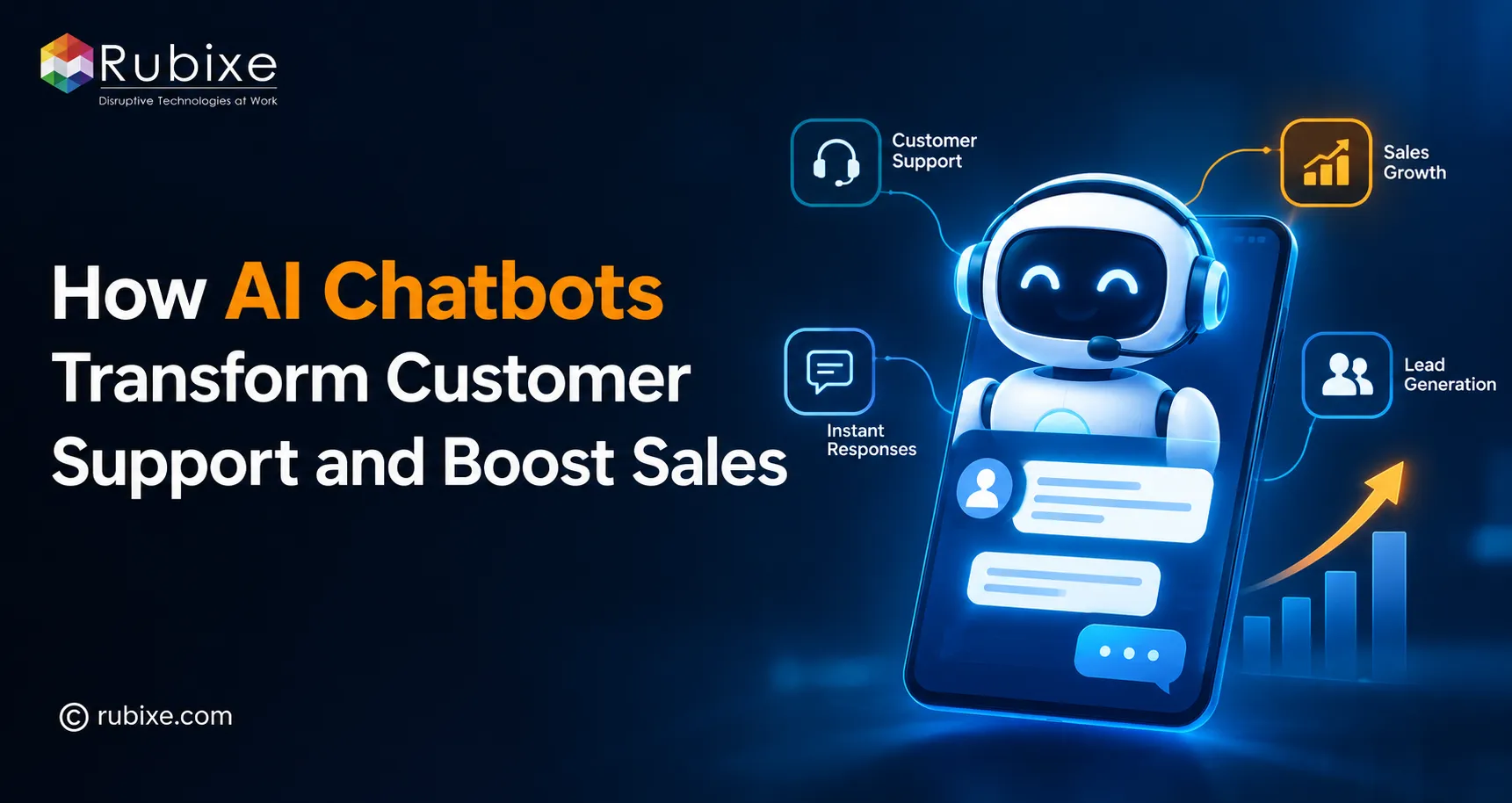
Imagine a customer visiting your website late at night with a simple question about pricing, delivery, or a product. No support employee is available, so the customer leaves without getting an answer. For businesses, moments like this can mean a lost opportunity and a poor customer experience. AI chatbots give companies a practical way to respond to routine customer questions instantly, without depending entirely on support teams.
These intelligent automated systems can provide instant information, guide website visitors, collect lead details, and support customers throughout their buying journey. AI chatbots can also reduce repetitive tasks for employees, allowing support teams to focus on complex issues while sales teams spend more time on valuable prospects.
Why Are Businesses Struggling With Customer Support?
Customer support teams often deal with the same questions throughout the day. Customers may want to know about pricing, delivery schedules, product features, returns, availability, or appointments.
When employees answer every basic question manually, response times can increase and valuable time is spent on repetitive work. Even a short delay can cause a potential customer to leave a website or look for another provider.
Automated conversational systems can address these routine requests immediately while allowing employees to step in when a situation requires personal attention.
How Can AI Chatbots Improve Customer Support?
The biggest advantage is the ability to provide fast and consistent communication.
These systems can answer frequently asked questions, provide product information, assist with order-related queries, and direct customers toward the appropriate support channel. When a request becomes complicated, the conversation can be transferred to a human employee.
This creates a balanced support process. Technology manages repetitive interactions, while employees focus on complaints, technical problems, and situations that require judgment or empathy.
What Does the Data Say About AI in Customer Service?
Industry research shows that artificial intelligence can have a measurable impact on customer service operations.
According to IBM, mature AI adopters reported 17% higher customer satisfaction. The research also found a 38% reduction in average inbound call handling time, while 51% of mature AI adopters reported that AI in customer service helped their organizations grow revenue.
These findings highlight why businesses are exploring conversational AI to improve both customer experiences and operational efficiency.
How Can AI Chatbots Help Increase Sales?
Customer service and sales are closely connected. When potential buyers receive useful information quickly, they are more likely to continue exploring a product or service.
Conversational systems can answer product questions, recommend relevant options, collect lead information, schedule appointments, and guide visitors toward the next stage of the buying journey.
Businesses can use these systems for:
- Product recommendations
- Lead generation
- Appointment scheduling
- Order assistance
- Product information
- Sales support
- Website engagement
The objective is not to pressure customers into making a purchase. Instead, the technology removes common information barriers that may prevent customers from moving forward.
What Features Should Businesses Look For in Chatbot Software?
The right software should support the company's customer service objectives and work effectively with its existing technology.
| Feature | Business Value |
| Natural language processing | Helps understand customer questions |
| CRM integration | Connects customer and lead information |
| Lead collection | Captures potential customer details |
| Human handoff | Transfers complex cases to employees |
| Analytics | Tracks conversations and performance |
| Multichannel support | Connects with customers across platforms |
Businesses should prioritize features that solve genuine customer problems rather than selecting a platform simply because it offers a long list of capabilities.
How Do Intelligent Systems Understand Customer Questions?
Modern conversational technology uses natural language processing and machine learning to interpret customer messages.
Instead of relying only on exact keywords, intelligent systems can identify the intent behind a question and use relevant business information to provide an appropriate response.
For example, if a customer asks, “Can I change my delivery date?”, the system can recognize that the customer needs order assistance and provide the relevant process or connect them with an employee.
This ability to understand context makes automated conversations more useful than simple rule-based responses.
How Can Businesses Build Custom Chatbot Solutions?
Companies with specific workflows may choose to create solutions around their business requirements.
Development services can support customer service, lead generation, sales assistance, internal help desks, and other business processes. These solutions can also connect with websites, CRM platforms, messaging channels, and approved business databases.
By using reliable business information, companies can provide customers with responses that are more relevant to their products, services, and processes.
A customized approach can be particularly useful when an off-the-shelf platform cannot support specific workflows or integration requirements.
What Challenges Should Businesses Consider?
Automation should not be introduced without considering privacy, security, accuracy, integration, and human support.
An automated system may sometimes misunderstand a question or provide an unsuitable response. Businesses should therefore establish clear escalation rules for complaints, sensitive requests, and situations requiring human judgment.
Regular testing, conversation reviews, and performance monitoring can help identify weaknesses and improve the overall customer experience.
How Can Businesses Implement Chatbot Technology?
A practical implementation can begin with one clearly defined customer service problem.

- Identify the most common customer questions: Find frequently asked questions that can be handled automatically.
- Select the channels that need automation: Choose where customers interact most, such as websites, apps, or messaging platforms.
- Connect reliable and approved business information: Provide accurate company data so the system can give trustworthy responses.
- Define clear human handoff rules: Decide when conversations should be transferred to a support employee.
- Test responses using realistic customer scenarios: Check how the system handles different questions before going live.
- Monitor customer experience and sales results: Track response quality, customer satisfaction, leads, and sales to measure performance.
Starting with a focused use case makes it easier to measure performance and identify areas for improvement before expanding automation across other customer interactions.
What Digital Marketing Services Can Businesses Explore?
AI Chatbot services: Support customer communication, lead generation, and sales assistance through conversational systems.
AI Hiring Software services: Support resume screening, candidate matching, and recruitment workflows.
AI Hiring: Use intelligent technologies to improve candidate search and recruitment processes.
AI in Retail: Apply artificial intelligence to customer insights, demand forecasting, recommendations, and retail operations.
AI in Manufacturing: Use intelligent technologies for quality inspection, predictive maintenance, and production processes.
Frequently Asked Questions
Can Chatbots Replace Human Customer Support?
No. Automated systems work best alongside human teams.
Routine questions can be handled automatically, while complex complaints and unusual requests can be transferred to employees. This creates a balanced support process where technology handles repetitive work and people manage situations that require judgment, empathy, or personal attention.
Are Chatbots Useful for Small Businesses?
Yes. Small businesses can use conversational technology to answer common questions, collect leads, schedule appointments, and provide basic product information.
This can help smaller teams manage a larger number of customer interactions without increasing manual workload at the same rate.
How Should Businesses Measure Chatbot Performance?
Businesses should measure outcomes rather than simply counting conversations.
Useful metrics include customer satisfaction, response time, resolution rate, lead conversion, human handoff rate, and sales generated.
Tracking these measures helps businesses understand whether automation is improving customer service while also contributing to wider business goals.
AI Chatbots can help businesses improve customer communication, support lead generation, and assist sales teams with routine interactions. When implemented with reliable information, clear escalation processes, and regular performance reviews, they can create faster customer experiences without removing the value of human support.
The most effective approach is not to automate every conversation. Instead, businesses should identify repetitive customer needs, automate suitable interactions, and allow employees to take over when customers need deeper assistance. Businesses looking to build practical AI solutions for customer engagement can explore the approach offered by Rubixe, where technology is aligned with real business needs and customer experiences.






Sign in to leave a comment.