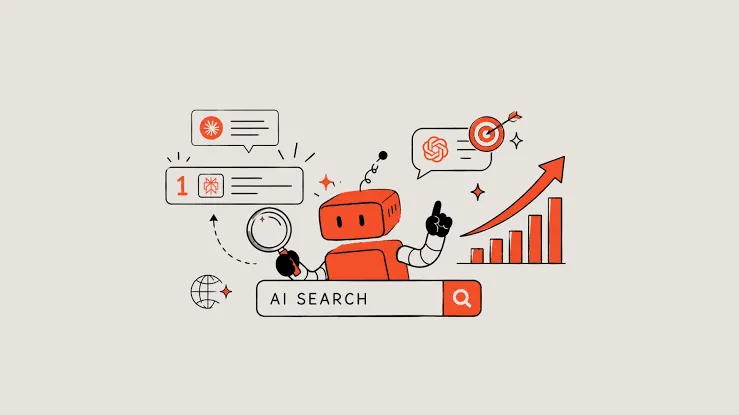

In 2026, artificial intelligence (AI) is reshaping the SEO landscape and digital marketing strategies, making it a powerful force for businesses. Once an emerging technology, it is now utilized in keyword research, content optimization, customer analysis, automation, search visibility, and campaign management.
AI is more than just a new tool for content creation; it's transforming the very way marketers work. It's also reshaping the way people find information, how businesses interpret customer intent, and how brands compete for attention in both traditional search engines and AI-driven platforms.
As businesses strive to grow online, knowing about these changes can help them develop a more effective and flexible digital marketing plan.
AI is Enhancing Intent-Based Keyword Research
Traditional keyword research typically centers on search volume, competition, and keyword variations. The power of AI takes it a step further, as it can gain insights into the intent behind the search and uncover connections between various topics.
Long-tail keywords, related questions, semantic terms, and emerging topics can be identified with the help of AI-powered tools. These insights can help marketers create topic clusters rather than separate pieces of content for each keyword.
For instance, a company may produce content related to AI marketing strategies, SEO automation, content optimization, AI search, conversion optimization, and answers to customer questions from a broader scope of "digital marketing.
With this strategy, businesses can produce content based on topics and not repetitive keyword usage.
AI is Transforming Content Creation and Optimization
One of the most apparent applications of AI is in content creation. Marketers can leverage AI to suggest topics, develop outlines, brainstorm content ideas, summarize research, and pinpoint areas where existing articles are missing.
But it's not a viable SEO tactic to create masses of generic content. Human efforts in providing examples, experience, information, and perspectives are crucial.
AI is a powerful tool that serves as a helpful assistant. It can assist a marketer in accelerating their research and planning efforts, but human editors will still be responsible for accuracy, quality, brand voice, and final publishing.
Additionally, AI can enhance current content by spotting missing subtopics, refining the organization of the content, recommending internal links, and creating alternative titles and descriptions.
Search behavior is changing due to AI
Search is a process that is changing. People are increasingly looking for answers directly, not just a list of links to web pages.
AI search can deliver a summary of content across several sources and give conversational answers. This implies that companies should envision beyond the standard rankings and see how their content might be beneficial and reliable for AI-driven responses.
This is contributing to the growing importance of Answer Engine Optimization (AEO) and Generative Engine Optimization (GEO).
Organizations can get ready by posting content that is readable and well-structured, speaks to targeted inquiries, and shows true mastery.
Technical SEO Can Become More Efficient
There are many repetitive tasks that are part of technical SEO, such as identifying broken links, analyzing metadata, checking website structures, and looking at potential indexing problems.
AI can help SEO experts analyze vast amounts of data on a website and identify potential issues in a shorter time. Can also be used to explain technical concepts and to arrange recommendations.
However, before implementing automated recommendations, it is advisable to review them. While technical SEO factors may impact crawling, indexing, website performance, and user experience, it is still important for human oversight to ensure everything is working as intended.
AI is Making Personalization Even Better
Personalization is becoming the trend of digital marketing. AI can be used to analyze customer interactions and provide insights into various customer segments.
For instance, a company might have a distinct campaign for each of the following groups: first-time visitor, returning user, existing user, and high-intent prospect.
AI can assist marketers in creating custom email marketing messages, ads, landing page variations, and content suggestions. This way, businesses can then try these methods and tweak their campaigns based on how these methods perform.
AI Is Helping Marketers Measure ROI
AI is one of the best things about it that it can look through huge volumes of marketing data.
Marketers can look beyond ranking or website traffic and correlate various data points in order to determine which channels lead to leads, conversions, and revenue.
AI can be used to detect trends in traffic, engagement, conversions, customer behavior, and campaign performance among organic traffic. This enables businesses to make decisions based on data and invest resources more efficiently.
The future of SEO is human AI.
While AI is transforming SEO and digital marketing, it is not taking the place of human marketers. In addition to strategy, creativity, experience, critical thinking, and editorial judgment will always be key.
The best way to go in 2026 is to blend AI efficiency and human expertise. While people focus on making valuable experiences and trustworthy content, businesses can benefit from AI in the research, analysis, automation, and ideation processes.
Conclusion
AI is transforming SEO and digital marketing in 2026 by revolutionizing the way marketers find keywords, generate content, optimize websites, understand audiences, and track performance. At the same time, AI-powered search is changing how users discover information online.
Companies that stay ahead of the curve can create more agile marketing campaigns and enhance their capacity to target the right customers. Instead of using AI in every aspect of your business, the point is to leverage it in a way that enhances efficiency, insights, and customer value.
AI isn't merely the future of digital marketing; it's an integral part of it today. It's all about smart technology and human ingenuity wrapped into enhanced content, strategy, and customer experience.























Sign in to leave a comment.