

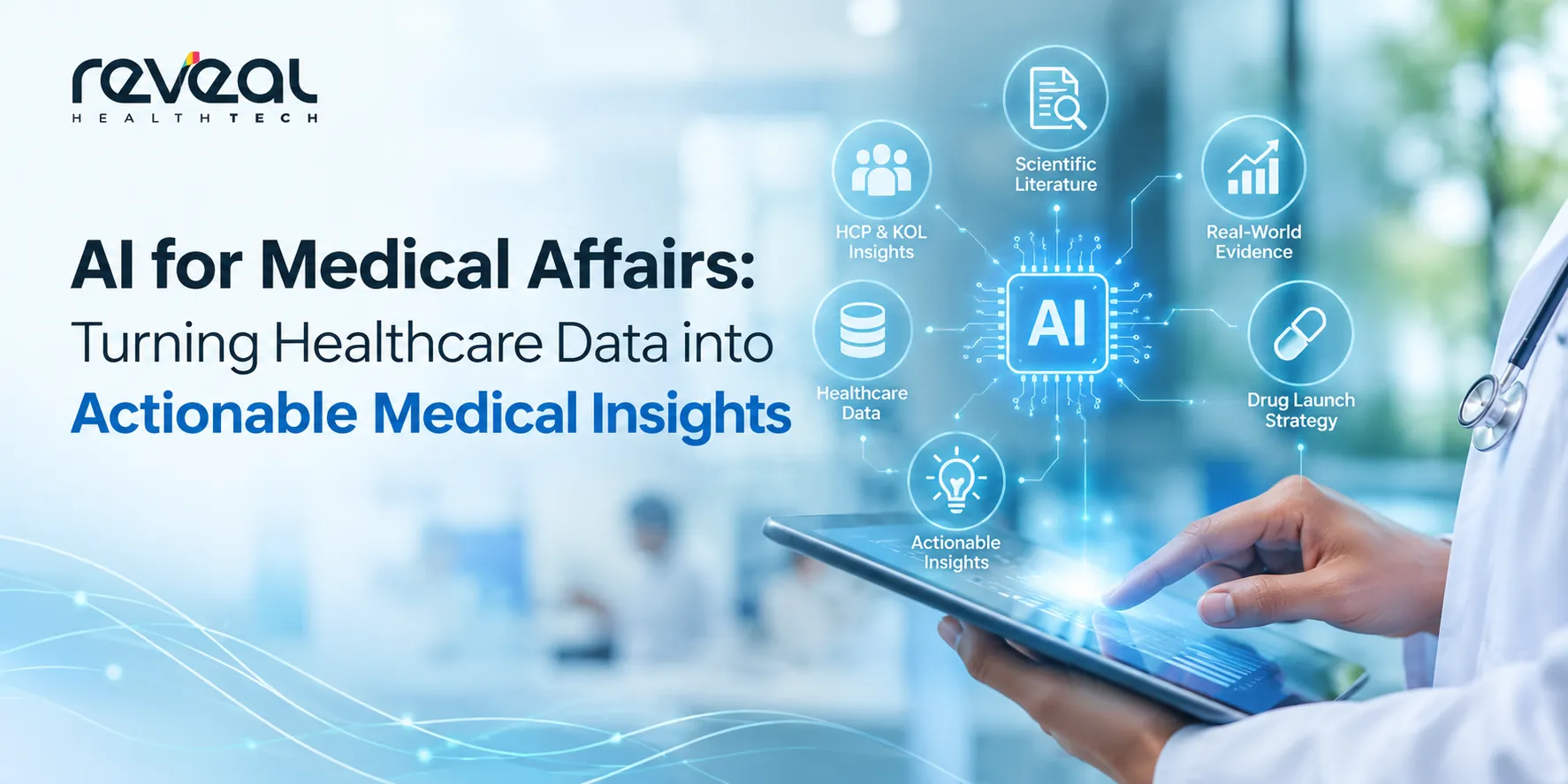
Medical affairs teams operate in an environment where scientific information is constantly changing. New clinical studies, congress abstracts, publications, competitor developments, and field insights can emerge faster than teams can manually review them. AI in medical affairs is helping address this challenge by turning large volumes of scientific information into structured, actionable intelligence.

From Scientific Data to Actionable Insights
Traditional approaches to literature and congress surveillance often require medical teams to manually review thousands of abstracts and publications. AI can help organize this information by identifying relevant studies, grouping content by mechanisms, populations, or endpoints, and extracting important trial characteristics.
AI-powered systems can also connect scientific findings with their original sources. This creates better traceability and allows medical professionals to spend more time evaluating meaningful evidence rather than sorting through large volumes of information.
AI-Powered Medical Affairs Insights
Field insights represent another important area where AI can support medical teams. Medical science liaisons and other field teams generate valuable information through interactions with healthcare professionals. However, these insights are often recorded as unstructured notes across different systems and locations.
Medical affairs insights software can help identify recurring themes, organize entities such as indications and evidence gaps, and connect similar observations across multiple interactions. This can make it easier for medical strategy teams to identify patterns while retaining access to the original information for verification.
Why Provenance Matters in Generative AI
Generative AI can support medical information teams by creating initial drafts from approved sources such as labels, response documents, dossiers, and publication libraries. However, scientific accuracy and traceability remain essential.
AI-generated content can potentially confuse populations, endpoints, or study findings if it is not properly grounded. For this reason, generative AI in medical affairs should work within established medical review processes, with clear source attribution and human oversight.
Measuring the Impact of AI
The value of AI should not be measured only by the amount of content it produces. Medical teams can instead evaluate metrics such as time from publication to internal briefing, response times, citation accuracy, duplicate rates, theme-assignment accuracy, and reviewer effort.
As Reveal HealthTech highlights, the practical opportunity is to reduce the time between new scientific evidence becoming available and teams being able to understand and act on it.
AI is therefore becoming an important part of modern medical affairs, not simply as a content-generation tool, but as a way to improve scientific intelligence, streamline information workflows, and support evidence-based decision-making.

























Sign in to leave a comment.