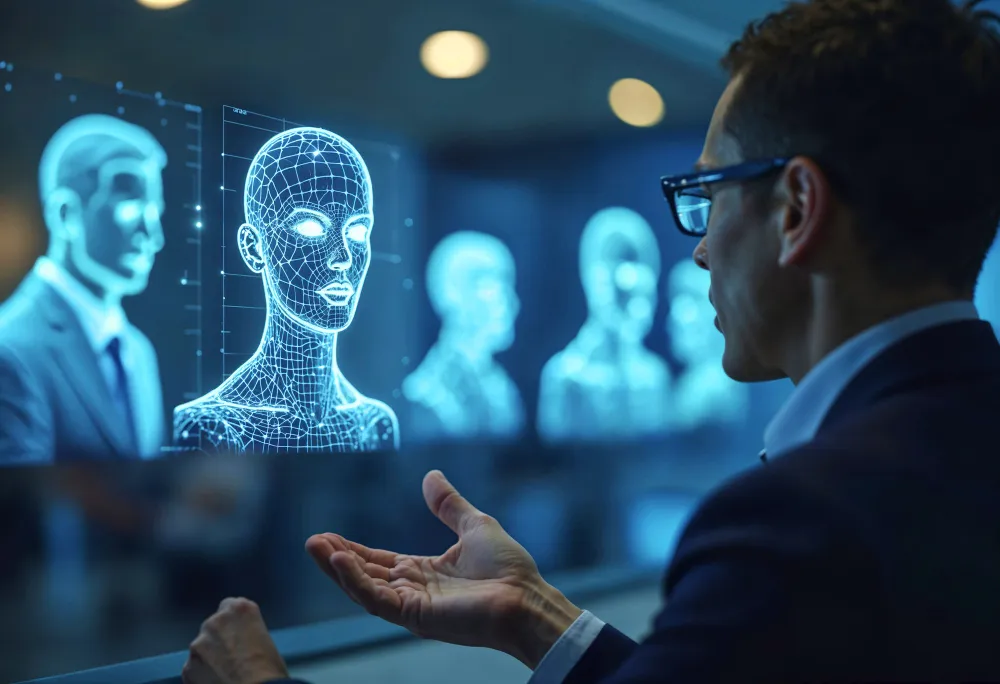

I've been in enough hiring conversations over the past couple of years to notice a real shift happening quietly in the background. AI isn't some far off concept anymore when it comes to hiring. It's already reshaping how roles get sourced, how resumes get screened, and even how interviews get structured. I want to walk through what I've actually seen change, because I think it's worth understanding both the genuine upside and where I'd still urge some caution.
Sourcing Candidates Has Gotten Noticeably Faster
I remember when sourcing meant manually searching through job boards and professional networks one profile at a time, which was slow and honestly a little exhausting at scale. AI powered sourcing tools have changed that dramatically, scanning huge pools of candidates and surfacing people who match specific criteria in a fraction of the time it used to take.
What I find most useful about this shift isn't just speed, it's reach. These tools can identify candidates who might never have applied on their own, people who aren't actively job hunting but whose background quietly matches what a company needs. That kind of passive candidate discovery used to require a recruiter with years of built up network intuition. Now a well trained tool can surface similar matches in minutes.
I do think it's worth remembering that sourcing faster only helps if the criteria being searched for are actually the right ones. AI can widen the funnel impressively, but someone still needs to define what a genuinely strong candidate looks like in the first place.
Resume Screening Has Become More Consistent
I've watched a lot of hiring processes get bogged down at the resume screening stage, simply because a person reviewing hundreds of applications gets fatigued and starts making faster, less careful judgments as the pile grows. AI screening tools don't get tired the same way, applying consistent criteria across every single resume regardless of whether it's the first one reviewed or the five hundredth.
This consistency matters more than people sometimes realize. I've seen cases where a strong candidate got overlooked purely because their resume landed at the bottom of a huge stack late in the day, when the reviewer's attention had already started slipping. Automated screening reduces this kind of inconsistency considerably, at least for the more objective, criteria based parts of the review.
That said, I don't think this replaces human judgment entirely, especially for nuanced qualities that are hard to capture in a checklist. I've come to see it as a strong first filter, not a final decision maker.
Interview Scheduling and Coordination Finally Feels Manageable
This might sound like a small thing, but I genuinely think it's one of the more underrated improvements. Scheduling interviews across multiple stakeholders used to eat up an enormous amount of time, chasing calendars, sending reminder emails, and dealing with last minute reschedules that threw the whole process off track.
AI scheduling tools have taken a lot of that friction away, automatically finding overlapping availability and handling the back and forth communication that used to require a dedicated coordinator. I've seen this shave real days off overall time to hire, simply by removing the logistical drag that had nothing to do with actually evaluating candidates.
Predictive Insights Are Changing How Decisions Get Made
I've started seeing more companies use AI driven analytics to predict things like which candidates are most likely to accept an offer, or which sourcing channels are actually producing quality hires versus just high volume. This kind of predictive insight used to require years of accumulated internal data and a dedicated analyst to interpret it.
Now these insights are becoming more accessible, helping hiring teams make decisions based on patterns rather than pure instinct. I think this is genuinely valuable, though I'd caution against treating any prediction as gospel. These tools work from historical patterns, and hiring always involves some amount of human unpredictability that data alone can't fully capture.
Where I Still Think Human Judgment Matters Most
Despite everything AI has improved, I don't think it's replaced the parts of hiring that actually require real human insight. Assessing cultural fit, reading the subtler signals in how someone communicates under pressure, understanding whether a candidate's motivations genuinely align with what the role offers, these still feel like fundamentally human judgments to me.
I've noticed that the companies getting the most value from AI in their hiring process tend to treat it as a tool that removes friction and busywork, freeing up more time for the conversations and decisions that actually require a person's judgment. The ones who lean too heavily on automation for everything tend to end up with technically qualified hires who somehow still aren't quite the right fit.
This is part of why I think working with a strong IT & Tech Recruitment Consultancy still matters even in an AI driven hiring landscape, since combining these tools with real human expertise tends to produce far better outcomes than relying on either one alone.
Bringing It All Together
AI has genuinely transformed a lot of what used to be slow, manual work in tech talent acquisition, faster sourcing, more consistent screening, easier scheduling, and sharper predictive insight. I don't think any of that should be dismissed. But I also don't think it's replaced the human side of hiring, the judgment calls, the relationship building, the instinct for whether someone will actually thrive on a specific team. The companies getting this right seem to understand that AI works best as a tool supporting human decision making, not a replacement for it.

























Sign in to leave a comment.