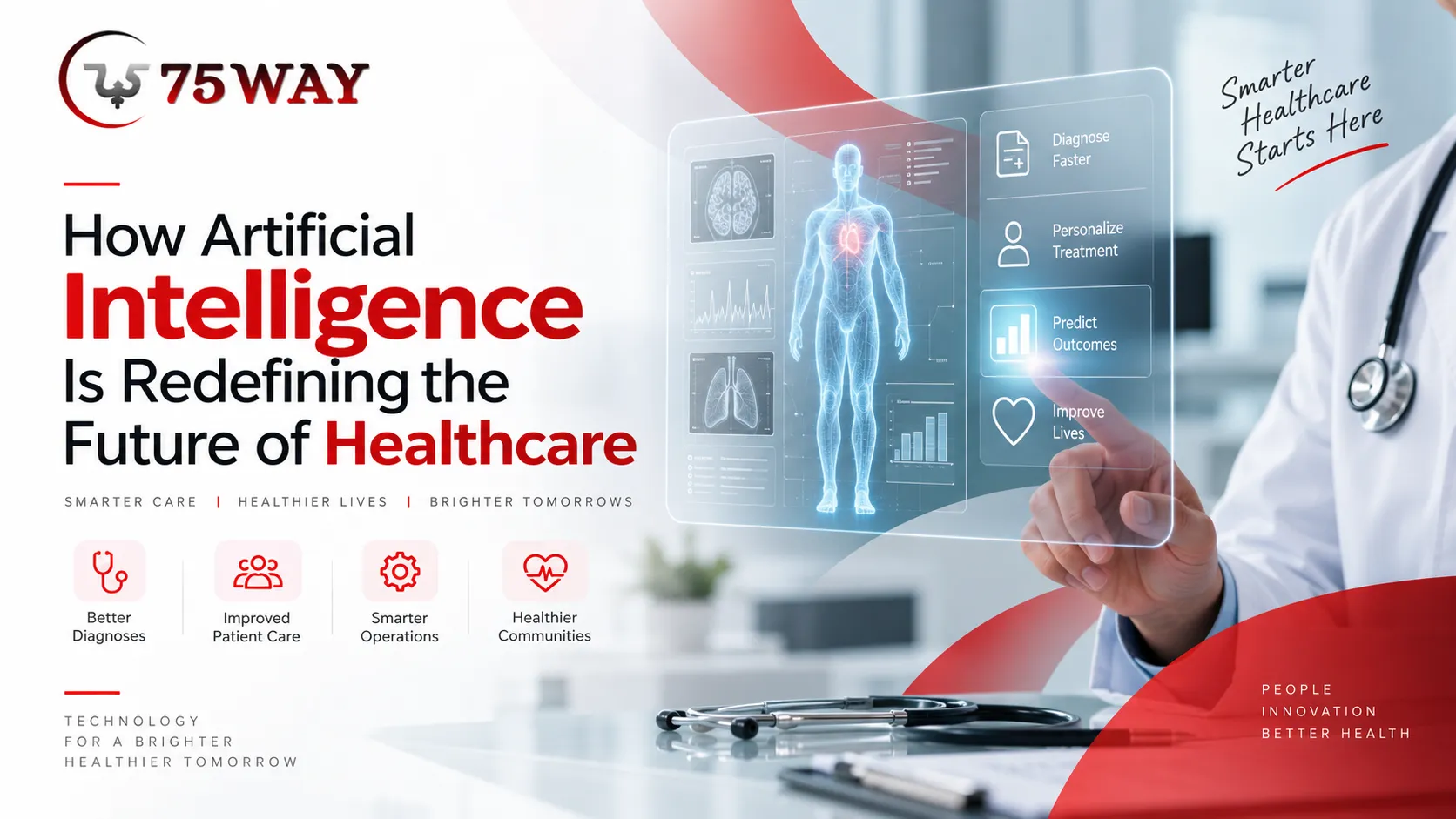

Healthcare is undergoing a significant digital transformation as providers, technology companies, and healthcare organizations look for better ways to improve patient outcomes and operational efficiency. AI for healthcare is emerging as an important technology in this transformation, supporting everything from clinical decision-making and medical imaging to administrative automation and personalized patient engagement. However, successful adoption is not simply about adding artificial intelligence to existing systems. Healthcare organizations need reliable data, appropriate infrastructure, strong security practices, and carefully designed workflows to ensure intelligent technologies deliver meaningful and responsible results.
Why artificial intelligence is gaining importance in healthcare
Healthcare generates enormous amounts of information every day. Patient records, diagnostic images, laboratory results, prescriptions, appointment histories, wearable-device data, and clinical documentation can create a complex information environment.
Traditional software can store and retrieve this information, but analyzing large datasets manually can be time-consuming. Artificial intelligence can help identify patterns, summarize information, automate repetitive activities, and provide decision-support insights.
For healthcare organizations, this can create opportunities to improve efficiency without removing healthcare professionals from the decision-making process.
The most valuable implementations are generally those that address specific challenges. Rather than introducing AI simply because it is a growing technology trend, organizations should identify areas where intelligent automation or predictive analysis can create measurable value.
Improving medical imaging and diagnostics
Medical imaging is one area where intelligent systems have significant potential.
Radiology departments work with large volumes of X-rays, CT scans, MRIs, ultrasounds, and other diagnostic images. Advanced computer vision models can analyze these images and identify patterns that may require additional attention from healthcare professionals.
Such systems can assist clinicians by highlighting potentially relevant areas, organizing cases according to priority, or providing additional analytical information.
The objective is not necessarily to replace medical professionals. Instead, intelligent tools can function as an additional layer of support, helping specialists review information more efficiently.
Human expertise remains essential because clinical decisions often depend on patient history, symptoms, physical examination, and other information that cannot be evaluated through a single image.
Supporting early disease detection
Early detection can make a significant difference in many healthcare situations.
Machine learning models can analyze combinations of clinical information and identify patterns associated with potential health risks. Depending on the application, these systems may support screening programs, risk assessment, or clinical decision support.
For example, predictive models could evaluate relevant patient information and identify individuals who may require further assessment.
However, predictions should be treated as supportive information rather than definitive medical conclusions. Models need to be properly validated, monitored, and evaluated across appropriate patient populations.
Accuracy, explainability, and clinical oversight are particularly important when intelligent systems are used in sensitive healthcare environments.
Personalized patient care
Every patient has different circumstances, preferences, medical histories, and treatment requirements. This makes personalized care an important area for technology innovation.
Intelligent systems can analyze relevant patient information and help healthcare providers identify patterns that may support more individualized care plans.
Personalization can also extend to patient communication. Healthcare applications may provide customized reminders for appointments, medications, follow-ups, or recommended activities.
A personalized digital experience can make healthcare interactions more convenient while encouraging patients to remain engaged with their care journey.
The technology should always operate within appropriate clinical and privacy boundaries, particularly when dealing with sensitive health information.
Automating administrative workflows
Healthcare professionals often spend substantial time on administrative activities.
Appointment management, documentation, billing, insurance processing, scheduling, data entry, and patient communication can consume valuable resources that could otherwise be dedicated to patient care.
Intelligent automation can assist with repetitive workflows. Natural language processing, for example, can help organize unstructured information or support documentation workflows.
Automated scheduling systems can identify available appointment slots, while intelligent communication tools can respond to common patient questions.
Reducing administrative workload does not mean eliminating human involvement. Instead, automation can allow staff to focus on cases requiring judgment, empathy, or direct interaction.
AI-powered virtual healthcare assistants
Conversational technology is becoming increasingly useful for healthcare applications.
A virtual assistant can help patients navigate services, find information, schedule appointments, receive reminders, or understand administrative processes.
For example, instead of calling a clinic to ask about appointment availability, a patient could interact with a conversational interface and receive relevant information immediately.
These systems can improve accessibility and reduce pressure on support teams.
However, healthcare assistants require additional safeguards compared with general-purpose chatbots. They should have clearly defined capabilities and limitations and should not confidently provide unsupported medical advice.
For complex or potentially urgent situations, the system should direct users toward qualified healthcare professionals or appropriate emergency services.
Remote patient monitoring
Connected healthcare devices are generating new opportunities for continuous monitoring.
Wearable devices and connected sensors can collect information such as heart rate, activity levels, sleep patterns, glucose measurements, or other health-related metrics depending on the device and use case.
Intelligent analytics can evaluate these data streams and identify changes that may warrant attention.
Remote monitoring can be particularly useful for healthcare programs where regular observation is important. Instead of relying exclusively on occasional appointments, providers may gain access to additional information between visits.
Nevertheless, systems need mechanisms for managing false alerts and ensuring that healthcare professionals are not overwhelmed by unnecessary notifications.
Predictive analytics for hospital operations
Artificial intelligence can also support healthcare organizations outside direct clinical applications.
Hospitals need to manage beds, staff, equipment, appointments, operating rooms, and patient flow. Poor resource allocation can create unnecessary delays and increase operational pressure.
Predictive analytics can evaluate historical and real-time information to help organizations understand demand patterns.
For example, a hospital may use forecasting models to estimate patient volumes during specific periods and plan resources accordingly.
Similar approaches can support inventory management and equipment maintenance.
These applications demonstrate that intelligent technology can contribute to healthcare efficiency even when it is not directly involved in diagnosis or treatment.
Drug discovery and pharmaceutical research
Developing new medicines is a complex and expensive process.
Researchers need to evaluate enormous numbers of compounds, understand biological interactions, and identify candidates for further investigation.
Machine learning can support parts of this process by analyzing scientific datasets and identifying relationships that may otherwise take considerable time to uncover.
AI can assist with areas such as molecular analysis, candidate prioritization, clinical trial optimization, and research data interpretation.
While these systems can accelerate certain research activities, laboratory validation and scientific expertise remain essential. An algorithmic prediction is not equivalent to a clinically proven treatment.
Strengthening healthcare cybersecurity
Healthcare organizations are attractive targets for cybercriminals because of the sensitive nature of medical information.
Intelligent security systems can help identify unusual access patterns, suspicious activity, and potential threats.
Machine learning can analyze large volumes of security events and help security teams prioritize activities that require investigation.
AI-supported cybersecurity should complement established protections such as encryption, authentication, access controls, network security, vulnerability management, and employee awareness programs.
Protecting patient information is not only a technical requirement but also an important component of maintaining trust.
The importance of data quality
High-quality data is one of the foundations of effective intelligent systems.
If information is incomplete, inconsistent, outdated, or incorrectly labeled, the resulting model may produce unreliable outputs.
Healthcare organizations therefore need strong data governance practices. Information should be collected appropriately, stored securely, and maintained according to relevant policies and regulations.
Data interoperability is another important consideration. Healthcare information often exists across electronic health record systems, laboratory platforms, diagnostic systems, wearable devices, and other applications.
Connecting these systems through secure and standardized integrations can help create a more useful information environment.
Privacy and ethical considerations
Healthcare AI requires careful attention to privacy and ethics because it often involves highly sensitive personal information.
Organizations should clearly understand how patient data is collected, processed, stored, and accessed.
Consent requirements, data minimization, access permissions, retention policies, and applicable regulations should be considered during system design.
Algorithmic bias is another important concern. If training data does not adequately represent the population for which a system is intended, performance may vary between groups.
Healthcare organizations should therefore evaluate models regularly and establish appropriate governance procedures.
Transparency is also valuable. Healthcare professionals should understand the purpose and limitations of an intelligent system before incorporating its output into their workflows.
Choosing the right technology strategy
Implementing intelligent healthcare technology requires more than selecting an AI model.
Organizations should first define the business or clinical problem, determine the required data, evaluate integration requirements, establish security controls, and identify measurable outcomes.
A phased implementation can reduce risk. Organizations can begin with a focused use case, evaluate performance, collect feedback, and expand gradually.
This approach allows healthcare teams to understand how the technology affects their existing workflows.
It also helps avoid investing heavily in systems that do not address a meaningful problem.
Developing customized healthcare intelligence platforms
Different healthcare organizations have different workflows and technology environments. A hospital may require operational analytics, while a clinic may prioritize patient engagement or automated scheduling.
This is where healthcare AI solutions can provide a customized approach based on specific organizational requirements.
75way Technologies can help businesses explore AI-powered healthcare applications designed around practical use cases, from intelligent patient engagement and automation to analytics and connected healthcare experiences.
The focus should remain on creating technology that fits existing workflows rather than forcing healthcare professionals to completely change how they work.
What the future could look like
The future of intelligent healthcare is likely to involve greater collaboration between healthcare professionals, software platforms, connected devices, and AI systems.
Generative AI may support documentation and information summarization. Predictive models may help organizations identify risks earlier. Connected devices may provide more continuous patient information, while intelligent platforms could make healthcare operations increasingly data-driven.
At the same time, human expertise will remain essential.
Healthcare involves empathy, communication, judgment, ethical considerations, and complex circumstances that cannot always be reduced to data points.
The strongest future solutions are therefore likely to combine technological capabilities with human oversight rather than attempting to eliminate the human element.
Frequently asked questions
What is artificial intelligence in healthcare?
Artificial intelligence in healthcare refers to technologies that use machine learning, natural language processing, computer vision, and related techniques to analyze information, automate tasks, support decisions, and improve healthcare experiences.
How can AI help doctors?
AI can assist doctors by analyzing medical images, summarizing information, identifying patterns, supporting risk assessment, and reducing repetitive administrative work. Its output should generally complement professional clinical judgment rather than replace it.
Can AI improve patient experiences?
Yes. Intelligent systems can support personalized reminders, virtual assistants, appointment management, information access, and other services that make healthcare interactions more convenient.
Is healthcare AI safe?
Safety depends on how the technology is designed, trained, validated, deployed, and monitored. Appropriate security controls, clinical oversight, testing, privacy protections, and governance are important for responsible implementation.
How does AI support remote patient monitoring?
Intelligent analytics can evaluate information collected by connected devices and identify changes or patterns that may require attention, potentially helping healthcare teams monitor patients between appointments.
Conclusion
Artificial intelligence is creating new possibilities across clinical care, patient engagement, administration, research, and healthcare operations. From intelligent diagnostic support and remote monitoring to predictive analytics and automated workflows, these technologies can help organizations address some of the industry's most persistent challenges.
However, successful implementation requires a balanced approach. Healthcare organizations need reliable data, secure infrastructure, responsible governance, appropriate validation, and meaningful human oversight.
The future of healthcare technology will not simply be about adopting the latest AI models. It will be about applying intelligent capabilities where they can genuinely improve outcomes, simplify workflows, support professionals, and create better experiences for patients. When technology and human expertise work together, artificial intelligence can become a valuable component of a more connected, efficient, and patient-focused healthcare ecosystem.


























Sign in to leave a comment.