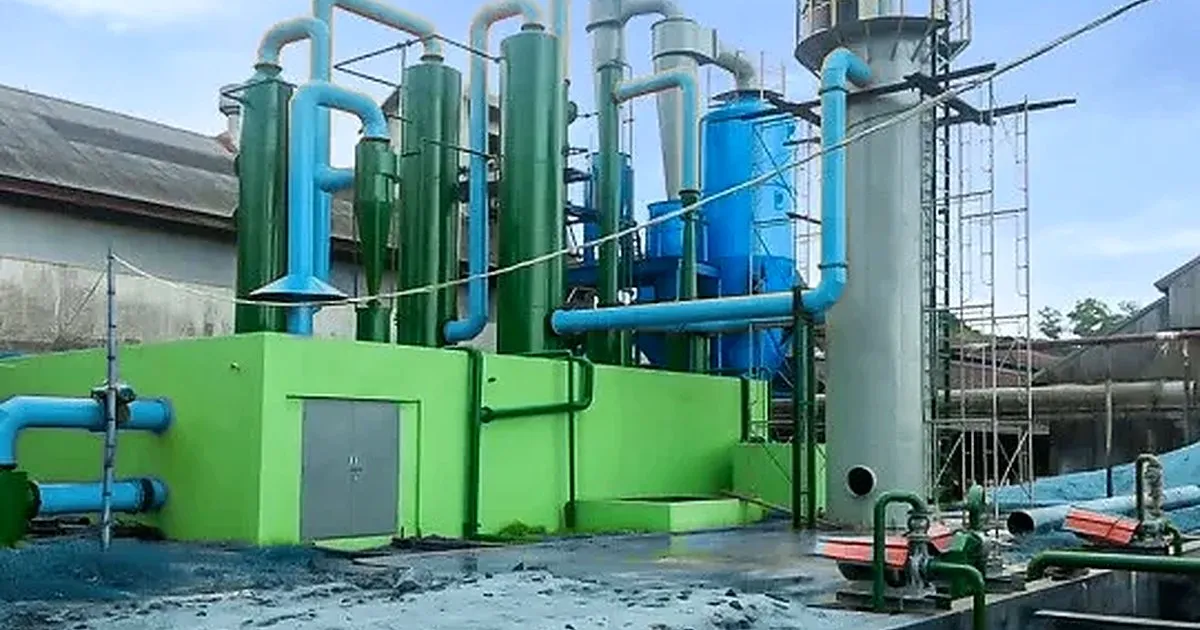

How biomass is converted into electricity and useful heat, and why using both outputs can make sense for industrial operations.
A factory can spend money on electricity at one end of the plant and fuel for heating at the other. Both are doing useful work, but they usually come from separate systems. A biomass cogeneration plant takes a different route. It starts with one fuel source and uses it to produce two useful forms of energy: electricity and heat.
That fuel may be wood chips, agricultural residues, forestry by-products or other suitable biomass materials. Instead of sending all the available energy towards electricity and then rejecting the remaining heat, a cogeneration system looks for a useful job for both.
That is the simple idea behind biomass CHP. The interesting part is how the plant makes it happen.
What's Actually Happening Inside the Plant?
The process begins with the biomass.
Wood chips, crop residues or other suitable organic materials are prepared and supplied to a boiler. Inside the boiler, the biomass is burned under controlled conditions and the released heat is used to generate high-temperature steam.
That steam is then directed towards a turbine. As the steam expands through the turbine, it makes the turbine rotate. The turbine is connected to a generator, so that rotation is converted into electrical power.
The first part of the process can therefore be shown quite simply:
Biomass feedstock → Boiler → Steam → Turbine → Generator → Electricity
But a cogeneration plant does not look at electricity as the final destination.

Some of the thermal energy can still be useful after the steam has passed through the turbine. Depending on the plant arrangement, that heat can be recovered and directed towards another application.
Recovered heat → Industrial process / greenhouse / hot water / district heating
This second energy stream is what makes the system a cogeneration plant rather than a plant focused only on power generation.
The exact equipment arrangement depends on the fuel, steam conditions and the energy requirements of the site.
The "Co" in Cogeneration Is the Important Part
The word cogeneration simply means that electricity and useful heat are produced from the same energy source.
That sounds like a small distinction, but it changes how the plant is designed.
In an electricity-only system, the main objective is to convert fuel energy into electrical power. Once the useful output has been produced, the remaining heat may have little value to the plant.
In a CHP system, that remaining heat is considered part of the useful output.
A manufacturing facility might use it for process heating. A greenhouse can use thermal energy to maintain the required growing conditions. A heating network can distribute it to buildings or other nearby users.
So the plant is not only asking, “How much electricity can we generate?”
It is also asking, “Where can we use the heat?”
That question is often what determines whether cogeneration is a sensible option for a particular site.
Where Does Biomass Cogeneration Make Sense?
The strongest applications tend to have two things in common: a reasonably dependable biomass supply and a continuing need for both electricity and heat.
Consider an agro-processing facility. Electricity may be needed for motors, pumps and production equipment, while heat may be required for drying, cooking or another thermal process. A biomass CHP system can potentially serve both requirements.
Wood-processing facilities can have a similar advantage. Sawdust, wood chips and other residues may already be generated as part of normal production, creating a possible local fuel source.
Greenhouses are another example. They may need electrical power for equipment and thermal energy for heating at the same time.
There are also potential applications in district heating, waste management, rural energy systems and other projects where locally available biomass can be put to productive use.
The important point is that having biomass available is not enough by itself. The plant also needs a useful energy demand that matches what the system can provide.
Biomass Is Not Just One Type of Fuel
One of the easiest mistakes to make is to treat every biomass material as if it behaves in exactly the same way.
It doesn't.
Two materials can both be described as biomass and still have very different moisture levels, heating values, ash contents and physical characteristics.
Moisture is particularly important because water in the feedstock has to be heated and evaporated before that portion of the energy can contribute effectively to the process.
Particle size can affect fuel handling and combustion. Ash can influence boiler operation, cleaning and residue management. Heating value affects how much useful energy can be obtained from a given quantity of fuel.
Then there is availability.
A biomass material that is plentiful during harvest season but difficult to obtain later in the year creates a different operating challenge from a fuel that can be supplied consistently throughout the year.
This is why feedstock assessment should be part of the project from the beginning. The boiler and the rest of the plant have to be matched to the fuel that will actually be available, not the fuel that looks good on paper.
What Happens to the Heat After Power Generation?
This is probably the most overlooked part of a cogeneration project.
Generating electricity is only one side of the equation. The value of the second energy stream depends on whether the site has somewhere useful to send it.
For an industrial plant, recovered thermal energy could support an existing heating requirement or another process that already consumes fuel.
For an agricultural project, it may support greenhouse heating or another thermal application.
In a district heating arrangement, the heat can be transferred to a network serving buildings or other users.
The closer the heat source is to the demand, and the more consistently that demand exists, the more practical heat recovery becomes.
This is why a biomass cogeneration plant should be considered as part of the site's complete energy system rather than as a standalone electricity generator.
What Makes a Biomass CHP Plant Different From a Biomass Power Plant?
The two systems can use the same basic fuel and may share similar equipment at the front end.
The difference is what happens to the energy after power generation.
A biomass power plant is primarily concerned with producing electricity.
A biomass cogeneration plant is designed around two useful outputs — electrical power and thermal energy.
That means the second output has to be considered during project planning. A factory with a large and steady heat requirement may have a strong reason to consider CHP. A site that has no practical use for recovered heat may not gain the same advantage.
In other words, the right question is not simply whether biomass can generate power. It is whether electricity and useful heat are both needed at the same site.
What Should Be Checked Before Choosing a Plant?
The plant that works best in practice is not necessarily the largest one or the one with the most complicated equipment.
It is the one that fits the site's actual conditions.
Before selecting a configuration, several things need to be understood: the type and quantity of biomass available, its moisture and heating characteristics, expected operating hours, electrical demand, thermal demand, fuel storage and handling, emissions requirements and the intended use of recovered heat.
Plant sizing is equally important.
A system that is too large for the available fuel supply may be difficult to operate efficiently. A system that is too small may not meet the site's requirements during higher-load periods.
The thermal demand needs the same attention. If heat is required throughout the year, the plant has a different operating profile from a facility where thermal demand appears only occasionally.
Good CHP design is therefore less about selecting a standard package and more about matching the complete energy system to the operation.
The Real Question Is Not “Can Biomass Burn?”
Biomass can be used as an energy source. The more important question is whether the fuel, the plant and the site's energy requirements work together reliably.
A biomass cogeneration plant brings those pieces into one system: biomass feedstock is converted into heat, heat is used to produce steam, steam drives a turbine to generate electricity, and useful thermal energy can be recovered for another application.
That is where the real value of cogeneration lies.
It is not simply about burning biomass. It is about finding a useful destination for more of the energy that biomass contains.
For any industrial project, the starting point should therefore be fairly practical:
What biomass is available, how much electricity does the site need, how much useful heat does it need, and how consistently are both required?
Those answers tell you much more about whether biomass cogeneration is a good fit than the equipment name alone.
Frequently Asked Questions About Biomass Cogeneration Plants
1. What is a biomass cogeneration plant?
A biomass cogeneration plant is a combined heat and power system that uses biomass as a fuel to produce electricity and useful thermal energy. Biomass is burned in a boiler to generate steam, which drives a turbine and generator, while useful heat can also be recovered for another application.
2. How does a biomass cogeneration plant generate electricity?
The biomass is burned in a boiler and the resulting heat is used to produce high-temperature steam. The steam passes through a turbine, causing it to rotate. The turbine drives a generator, which produces electricity.
3. What types of biomass can be used?
Depending on the plant design, possible feedstocks include wood chips, agricultural residues, forestry by-products and other suitable organic materials. The actual choice depends on factors such as moisture content, heating value, ash content, particle size and local availability.
4. What is the difference between biomass power generation and biomass cogeneration?
A biomass power plant mainly focuses on electricity generation. A biomass cogeneration plant produces electricity while also recovering useful thermal energy. This combined production of electricity and heat is known as combined heat and power, or CHP.
5. Where can the recovered heat be used?
Recovered heat can be used for industrial process heating, hot-water systems, greenhouse heating, drying applications and district heating. The appropriate use depends on the temperature and operating requirements of the receiving process.
6. Is biomass cogeneration suitable for every industry?
No. It is generally more practical where a dependable biomass supply exists and the site has a regular demand for both electricity and useful heat. A project needs to be assessed according to its fuel supply, electrical load and thermal demand.
7. Why does biomass moisture content matter?
Moist biomass contains more water that must be heated and evaporated during combustion. This affects the useful energy available from the fuel and can influence overall plant performance. For that reason, moisture content is an important consideration when evaluating biomass feedstock.
8. What factors are considered when sizing a biomass cogeneration plant?
Plant sizing can consider the available quantity and characteristics of biomass, expected electricity demand, thermal demand, operating hours, fuel handling and storage, emissions requirements and the expected use of recovered heat. The plant should be matched to the actual energy profile of the site.


























Sign in to leave a comment.