

In long-cycle industries such as real estate, leadership is not measured only by launching a project or closing a sale. It is also reflected in how a business communicates with customers, manages expectations, develops partnerships, and continues creating value after the initial launch.
For entrepreneurs operating in Pakistan’s evolving business environment, trust can become one of the most important long-term assets. The public profile of Syed Sadat Hussain Shah provides a useful case study for examining how leadership, institutional engagement, entrepreneurship, and real estate development can intersect. His documented roles span real estate, tourism, hospitality, trade-related institutions, and youth entrepreneurship.
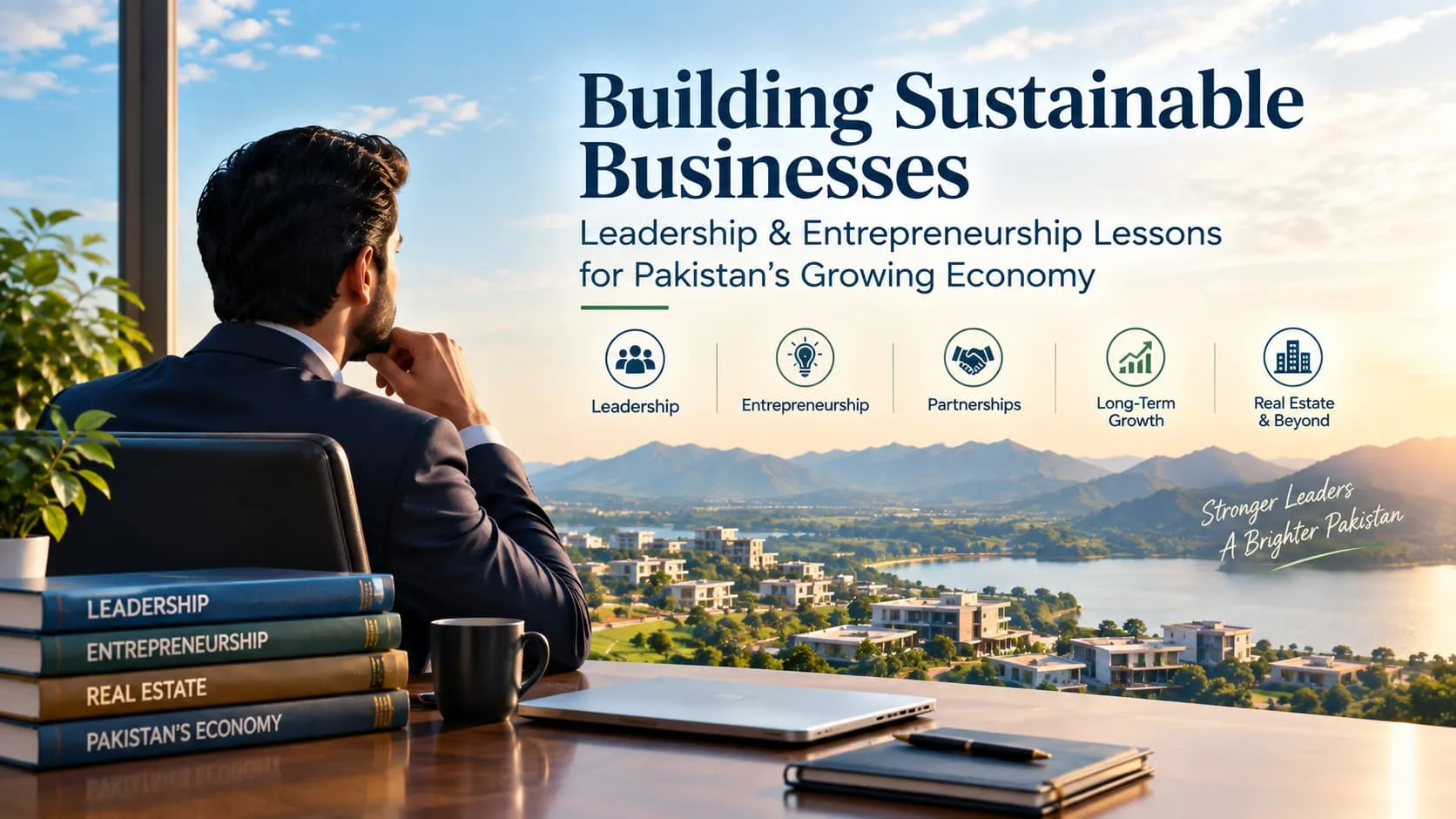
Why Trust Matters in Long-Term Businesses
A customer may interact with a company for only a few minutes during a purchase decision, but the relationship can continue for years. This is particularly true in real estate, where development timelines, installment plans, construction, documentation, and possession can extend well beyond the initial transaction.
This makes trust more than a branding concept. Businesses need clear communication, realistic expectations, accessible information, and consistent customer support throughout the relationship.
For entrepreneurs, the lesson is straightforward: a business should be designed not only to attract customers but also to maintain their confidence after the sale.
Leadership Should Connect Vision With Execution
A strong business idea has limited value without practical execution. Leaders must translate broad objectives into processes, responsibilities, timelines, and measurable outcomes.
The material published through Syed Sadat Hussain Shah’s official profile repeatedly emphasizes the relationship between vision and execution. His professional profile connects leadership with real estate development, tourism, youth entrepreneurship, project management, and strategic partnerships.
This provides an important lesson for business leadership in Pakistan: vision should influence everyday decisions rather than remain limited to mission statements or promotional campaigns.
For a growing company, this can mean establishing clear project milestones, assigning accountability, monitoring customer feedback, and reviewing performance regularly.
Build Businesses Around Stakeholder Relationships
Modern businesses rarely operate in isolation. A real estate developer interacts with buyers, architects, contractors, regulators, financial institutions, local communities, and other businesses. Tourism businesses similarly depend on cooperation between public and private stakeholders.
Shah's listed institutional roles include Chairman of the Hospitality Committee at the Islamabad Chamber of Commerce and Industry (ICCI), Focal Person for Public & Private Tourism Partnerships, and a role in International Company Affairs at FPCCI. These are documented positions on his professional profile and related published material.
For entrepreneurs, the broader takeaway is that relationship-building can expand the information available to a business leader. Listening to different stakeholders can help companies identify challenges earlier and understand market needs more effectively.
Long-Term Thinking Is Essential in Real Estate
Real estate is different from many short-cycle businesses because the value of a development depends on what happens over time.
Location, infrastructure, accessibility, construction quality, community planning, documentation, and future usability can all influence how a project performs. Therefore, developers and investors need to look beyond launch-day activity.
The public material associated with Shah's real estate work presents Lakeshore City and Seventeen Villas as projects operating at different scales and serving different residential or lifestyle requirements.
For prospective buyers, however, a developer's philosophy should never replace independent due diligence. Buyers should verify approvals, ownership documentation, payment terms, development progress, possession conditions, and other relevant details before making a property decision.
Adaptability Can Strengthen Entrepreneurship
Markets change. Customer expectations evolve, regulations can shift, financing conditions may change, and new technologies can reshape how companies operate.
Entrepreneurship therefore requires more than starting a business. It requires the ability to adjust without losing sight of the company's core purpose.
The official material surrounding Shah's entrepreneurial journey describes adaptability and innovation as recurring elements of his approach to business and real estate development.
For entrepreneurs in Pakistan, adaptability can involve adopting better digital systems, improving customer communication, developing new service models, or entering related sectors when the underlying capabilities support expansion.
Develop People Alongside the Business
Businesses ultimately depend on people. A company may have strong technology, capital, or property assets, but its ability to execute depends on employees, managers, partners, and future leaders.
Youth entrepreneurship is another recurring part of Shah's public profile. His official website identifies youth entrepreneurship advocacy and mentoring as areas of involvement.
This highlights a useful principle for growing companies: leadership development should not be treated as an activity reserved for senior management.
Creating opportunities for younger professionals to take responsibility can strengthen internal capabilities and help businesses prepare for future challenges.
Measure Success Beyond Immediate Revenue
Revenue remains essential to business survival, but long-term companies often need additional measures of performance.
Customer retention, reputation, employee development, project completion, partner relationships, service quality, and community impact can provide a broader picture of organizational health.
This perspective is particularly relevant to business leadership in Pakistan, where companies operating in sectors such as real estate, tourism, hospitality, and construction often depend on relationships that develop over many years.
A sustainable leadership model therefore asks two questions: Did the business achieve today's objective? and Did today's decision strengthen the organization for tomorrow?
Practical Lessons for Entrepreneurs
Entrepreneurs can apply several practical principles when building businesses for long-term growth:
- Turn vision into measurable actions: Define what success should look like and how progress will be tracked.
- Communicate consistently: Keep customers, employees, and partners informed throughout major processes.
- Build institutional relationships: Engage with relevant industry bodies and professional networks.
- Plan beyond the launch: Consider what customers and stakeholders will need after the initial transaction.
- Develop future leaders: Give capable team members opportunities to learn and make decisions.
- Stay adaptable: Respond to changing market conditions without abandoning core business values.
- Use due diligence: In property and other high-value sectors, verify important claims and documentation independently.
Conclusion
Long-term entrepreneurship depends on more than ambition. It requires disciplined execution, stakeholder relationships, adaptability, people development, and a willingness to think beyond immediate transactions.
The professional profile of Syed Sadat Hussain Shah, particularly his involvement across real estate, tourism, hospitality, institutional business activities, and youth entrepreneurship, offers one documented example of how these areas can intersect.
For emerging entrepreneurs, the broader lesson is valuable: sustainable businesses are built when leadership connects today's decisions with the trust, capabilities, and opportunities that will be needed in the years ahead.






























Sign in to leave a comment.