

A booked consultation feels like progress. It is not a client. The gap between those two things is where most coaching businesses quietly lose the people who were genuinely interested - not because the offer was wrong or the call went badly, but because nothing happened fast enough afterward to keep the momentum going.
Over 100,000 coaches are competing for attention in any given market right now. The ones converting more free calls into paid programs are not always the most credentialed people in the room. They are the ones who follow up fastest and keep following up, because interest fades the moment a call ends and life fills in the space it left. A coaching business CRM handles that follow-through automatically - not leaving it to memory, a notebook, or a mental list that quietly breaks the moment volume picks up.
Where the Journey Breaks Down
A prospect books a call. They show up. The conversation goes well. They leave saying they will think about it. That is normal - most people do not decide on the call. What happens next is where most coaching businesses fall apart.
Nothing happens, until the coach happens to remember three or four days later. If they remember at all. And by then the prospect has moved on, not because they lost interest but because no one was there to keep it alive at the right moment.
A notebook works fine at five leads a month. A mental checklist of who said what works fine at five leads a month. Both break the moment volume picks up. And the part that stings most: the leads that fall through are rarely the uninterested ones. They were the people who needed one more nudge and never got it.
Client journey automation does not replace the coach in those conversations. It makes sure the conversations that needed to happen actually happen, at the right time, without the coach having to carry every follow-up in their head.
Why Speed After the Call Matters More Than Most Coaches Realise
A prospect who just finished a good consultation is still in the mindset that brought them to the call. They are thinking about the problem they want to solve. They are comparing options. They have not made a decision yet - and whoever reaches them first with a clear next step usually wins that comparison.
Same-day follow-up reads as attentive and professional. Three days of silence reads as an afterthought, even if nothing about the offer changed and the delay had nothing to do with interest. The prospect does not know the coach was busy. They experience the silence as absence.
Consultation booking is only the beginning of the sequence. What happens in the 24 to 48 hours after the call is where the conversion is actually won or lost - and that window is too short and too important to leave to memory and good intentions.
What an Automated Client Journey Looks Like
The sequence starts before the call, not after it.
When a prospect books, a confirmation goes out immediately with the call details and a short pre-call form asking what they want to work on. That form does two things: it signals to the prospect that this is a structured, professional process, and it gives the coach context before the call starts so they are not beginning from zero when they say hello.
A reminder goes out the day before the call. Another goes out the morning of. No-show rates drop when reminders are timed well - not so early they get forgotten, not so last-minute that rescheduling is impossible.
After the call, the follow-up reflects the actual conversation. Not a generic template that could have gone to anyone, but a message that references what was discussed - the goal the prospect named, the timeline they mentioned, the specific program that came up. A CRM for coaches that captures notes and context from each consultation makes this possible at scale, even when a coach is running multiple calls a week.
The Nurture Sequence Most Coaches Skip Entirely
Most prospects do not say yes on the first call. They say “let me think about it” or “I need to check my schedule” or “can you send me the details again.” Most coaching businesses treat that pause as a soft no and go quiet. It is almost never a no. It is someone who needs a couple more touchpoints before they are ready to commit.
A structured nurture sequence for that group - three or four messages spaced over one to two weeks, each one worded differently, each one with a clear and low-friction next step - recovers a real share of people who were never actually a no. The ones who do not convert through the sequence were genuinely not ready. The ones who do convert are clients who would have been lost if the coach had gone quiet after day one.
Coaching automation handles the sequencing, the timing, and the sending. The coach writes the messages once, based on the actual conversations they have with prospects, and the system delivers them at the right moment without anyone having to remember who is where in the process.
What Makes Automated Follow-Up Feel Personal
The objection coaches raise most often about automation is that it will make their communication feel generic - that prospects will be able to tell it came from a system rather than a person. That concern is legitimate when automation is set up badly. It is not a property of automation itself.
The difference between a follow-up that feels personal and one that does not is not whether it was sent manually. It is whether it references something specific to the person receiving it. A message that names the goal the prospect mentioned on the call, that acknowledges the specific hesitation they raised, that links to a resource directly relevant to their situation - that message feels personal because the content is personal, regardless of when or how it was sent.
A coaching business CRM that captures call notes and tags prospects by their stated goals and objections gives coaches the material to write follow-up sequences that feel genuinely tailored. The system handles the delivery. The personalisation comes from what was recorded during the consultation.
What This Looks Like Day to Day
A prospect ends a call saying they need to check their budget before committing. The system schedules a follow-up message for four days later, automatically, referencing the program they discussed and the goal they named. Two more messages go out over the following ten days if nothing comes back - each spaced, each worded differently, each with a clear next step.
The coach does not manage any of it. They see who responded and who is ready to talk again the moment a reply lands. They spend their time on the calls that are moving forward rather than tracking who they chased last week.
A prospect who booked through the consultation booking page gets a confirmation, a pre-call form, two reminders, and a post-call follow-up before a coach has lifted a finger. Everything after that is handled by the client journey automation sequence until the prospect either converts or genuinely opts out.
That is the operational difference between a coaching business that grows by working harder and one that grows by building the right systems.
Getting Started
If your coaching business still tracks consultations in a spreadsheet, a notebook, or a mental list of who said what on which call, the cost of that approach shows up in the leads that fell through and the follow-ups that never happened.
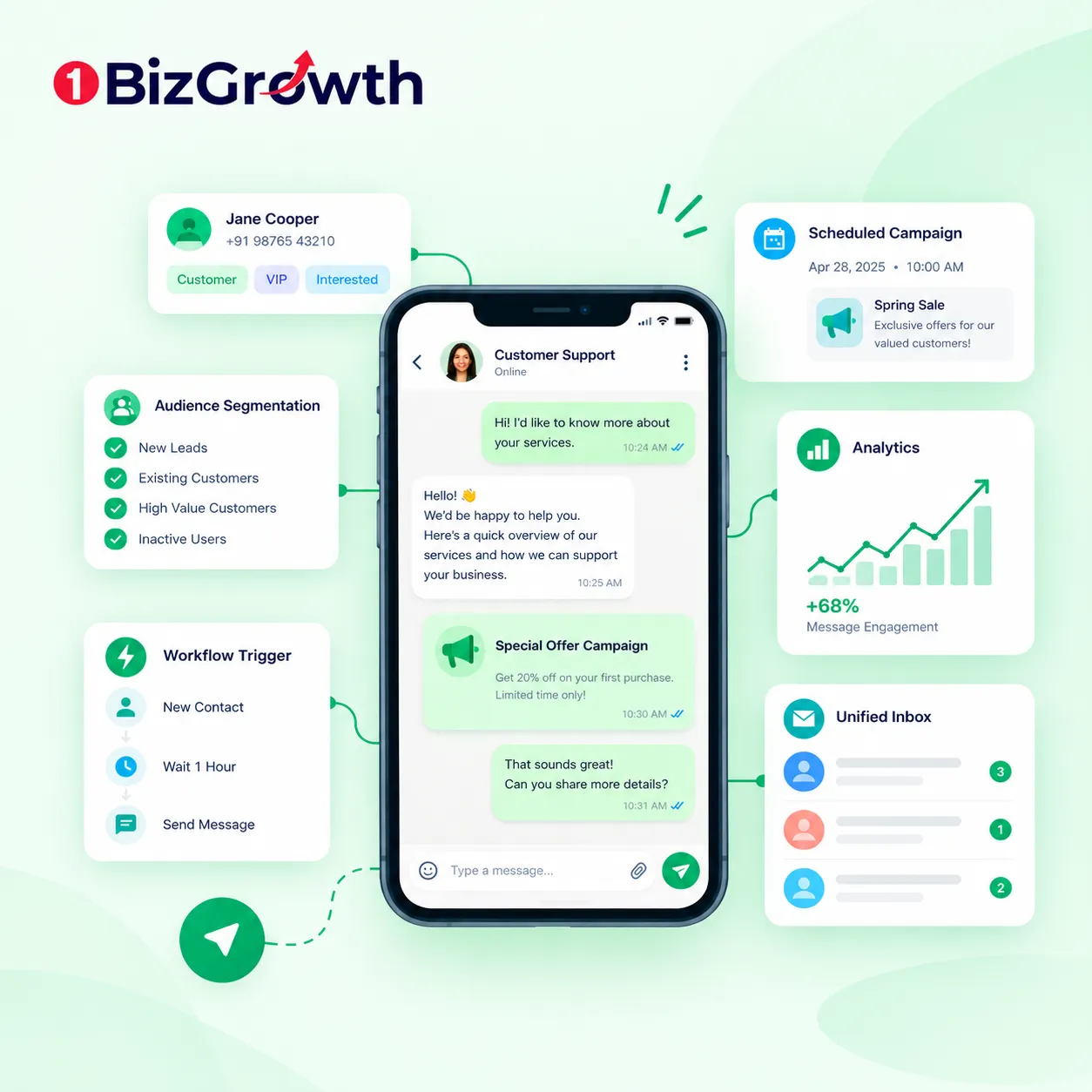
OneBizGrowth is built for coaching and education businesses that want to manage the full client journey from a single platform - booking, reminders, post-call follow-up, nurture sequences, and the reporting that shows which part of the sequence is converting and which is not. If you want to see what a fully automated CRM for coaches looks like for a practice your size, get in touch for a walkthrough.























Sign in to leave a comment.