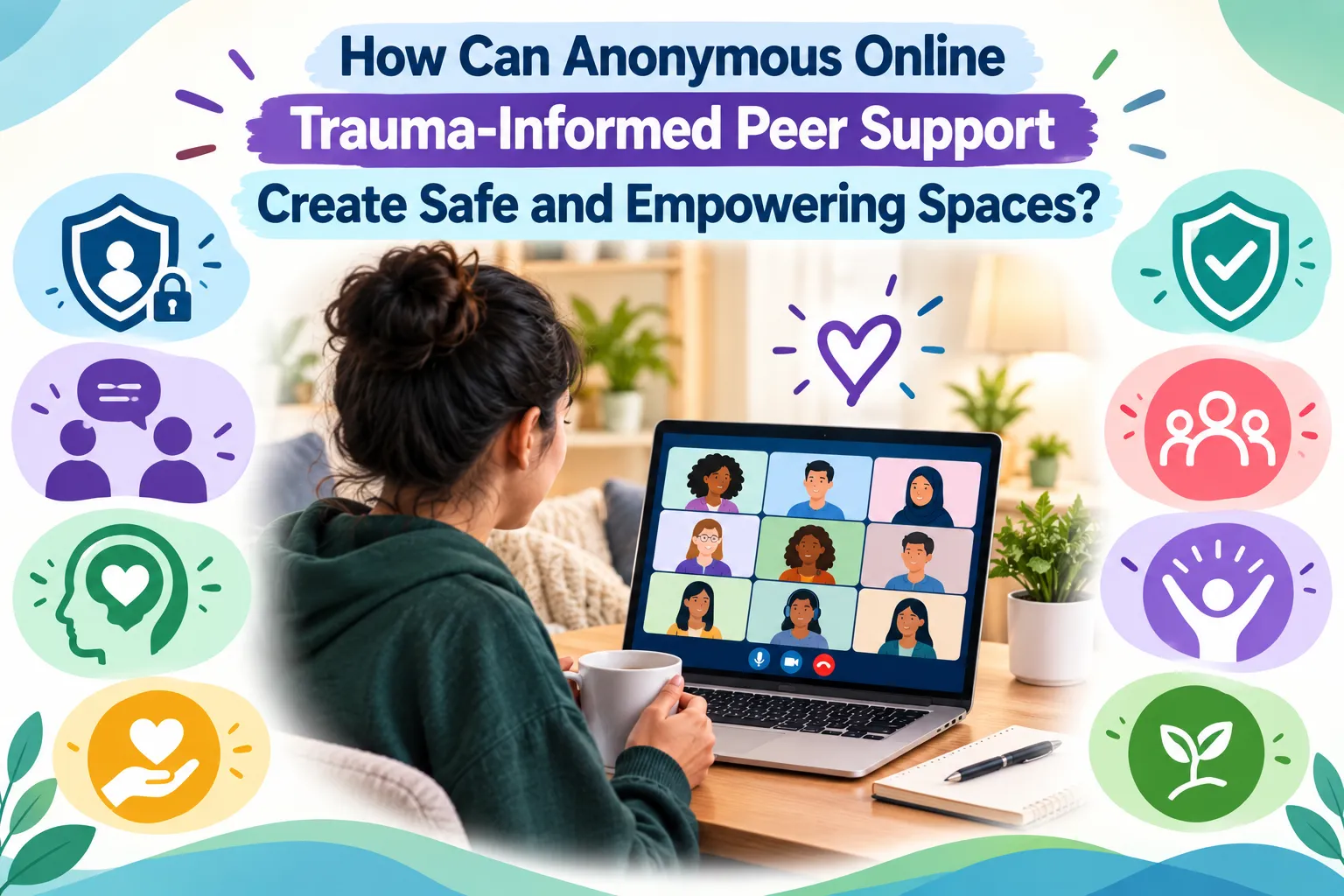

Anonymous online trauma-informed peer support in safe, compassionate and empowering spaces can give people an opportunity to connect with others without feeling pressured to reveal more about themselves than they are comfortable sharing. For women, girls and others affected by trauma, abuse, discrimination or difficult life experiences, the ability to participate anonymously may help reduce barriers to seeking connection. When peer support is guided by trauma-informed and relational principles, it can create an environment centred on dignity, choice, respect and shared understanding.
What Is Anonymous Online Trauma-Informed Peer Support?
Anonymous online peer support allows people to communicate with others who may have relevant lived experience while maintaining a degree of privacy around their identity.
A trauma-informed approach recognises that past experiences may affect trust, communication, relationships and feelings of safety. Rather than asking, “What is wrong with you?”, trauma-informed thinking encourages greater curiosity about what someone may have experienced and what they need to feel respected and supported.
Peer support is different from clinical treatment. It focuses on mutual understanding, connection, shared experience and listening rather than diagnosis or professional therapy.
Why Can Anonymity Matter in Peer-Support Spaces?
Some people may not feel ready to discuss personal experiences in face-to-face environments or with people they already know. Fear of judgement, stigma, cultural expectations or concerns about privacy may make it difficult to speak openly.
An anonymous online environment can offer greater control over what a person chooses to disclose. Participants may be able to engage at their own pace, listen before contributing and decide which parts of their experience they wish to share.
This sense of choice is especially important in trauma-informed practice because people who have experienced trauma may previously have had their autonomy or sense of control reduced.
What Makes an Online Space Feel Safe and Compassionate?
Safety involves more than privacy settings. The culture of the space matters just as much.
Effective anonymous online trauma-informed peer support in safe, compassionate and empowering spaces should be guided by clear expectations around respectful communication, confidentiality, boundaries and non-judgemental participation.
Compassionate spaces make room for different experiences without comparing suffering or pressuring people to explain themselves. Participants should feel able to speak, remain quiet, ask questions or step away when needed.
Moderation and clear safeguarding procedures can also help establish appropriate boundaries and explain what participants should do if they become concerned about their own safety or someone else’s wellbeing.
How Does Peer Support Help People Feel Less Alone?
Trauma can sometimes affect trust, belonging and relationships. People may feel that others cannot understand what they have experienced or may worry that sharing their story will lead to judgement.
Peer-support spaces can create opportunities for recognition and connection. Hearing another person describe a similar feeling or challenge can help someone realise that they are not the only person navigating that experience.
Importantly, peer support does not require everyone to have identical experiences. It is about creating space where different voices can be heard respectfully and where lived experience is recognised as meaningful.
How Can Relational Practice Strengthen Online Peer Support?
Relational practice focuses on the quality of relationships and conversations rather than treating support as something simply delivered from one person to another.
Approaches influenced by Open Dialogue and dialogical practice may encourage listening, curiosity and multiple perspectives. Instead of rushing to offer advice or find a solution, participants can be encouraged to listen carefully and allow understanding to develop through conversation.
This can help create a more collaborative environment in which people are not reduced to a diagnosis, traumatic event or difficult period in their lives.
What Does Empowerment Look Like in a Peer-Support Community?
Empowerment does not mean telling someone what they should do. It means respecting their ability to make choices about their own experiences, relationships and future.
In an empowering peer-support environment, participants can decide when to contribute, what to discuss and which perspectives feel useful to them. Their strengths, identity, culture, relationships, hopes and aspirations can be recognised alongside the challenges they may have experienced.
This approach can help move conversations beyond trauma alone and towards a fuller understanding of the person.
What Should You Look for Before Joining an Online Peer-Support Space?
Before participating, consider whether the community clearly explains its purpose, boundaries, moderation approach and privacy expectations.
Look for spaces that promote respect, inclusion, informed choice and appropriate safeguarding. It should also be clear that peer support is not a substitute for emergency, medical or professional mental health services when these are required.
A supportive community should avoid promises of guaranteed healing or recovery and instead provide opportunities for connection, reflection and shared learning.
Can Online Peer Support Create Meaningful Connection?
Online spaces cannot replace every form of personal, community or professional support. However, they can provide an accessible way for people to connect across geographical, social and practical barriers.
When thoughtfully designed, anonymous online trauma-informed peer support in safe, compassionate and empowering spaces can help create communities where people feel heard without being defined by what has happened to them. By combining privacy, relational practice, lived experience, compassion and informed choice, peer-support environments can encourage belonging and connection while respecting each person’s dignity, boundaries and individual journey.





















Sign in to leave a comment.