How Can High Temperature Heat Pumps Be Used for Industrial Drying Applications?


Industrial drying is an important step in sectors such as food processing, pharmaceuticals, textiles, chemicals, paper, and agricultural processing. However, conventional dryers can consume substantial amounts of energy, particularly when they depend on direct fuel combustion or electrically generated heat. A high temperature heat pump Manufacturer in India can provide an energy-efficient alternative by using recovered or ambient heat and upgrading it to temperatures suitable for demanding drying processes. High temperature heat pumps can deliver hot air or other useful thermal energy for industrial applications, helping businesses improve efficiency while reducing energy waste.
How High Temperature Heat Pumps Support Industrial Drying
Industrial drying removes moisture from materials, products, or process streams to achieve the required quality, stability, or storage characteristics. The process generally requires a continuous supply of controlled heat, making energy efficiency an important consideration.
A high temperature heat pump works by extracting heat from a suitable source and raising its temperature to a level that can be used for drying. Depending on the system design, the heat source may include waste heat from production processes, exhaust streams, ambient air, or other available thermal sources.
Instead of generating all the required heat through fuel combustion, the system transfers and upgrades existing thermal energy. This can improve overall energy utilization and make the drying process more efficient. High temperature heat pumps can also be integrated with existing heating infrastructure, allowing industries to modernize their systems without necessarily replacing every component.
Key Drying Applications Across Industries
High temperature heat pump technology can be applied to different drying requirements depending on the material, moisture content, temperature range, and production capacity.
In the food and beverage industry, heat pump-based drying can support applications involving fruits, vegetables, dairy products, ingredients, and other processed materials. Controlled heating can help maintain consistent drying conditions while avoiding unnecessary temperature fluctuations.
The textile industry can use heat pump systems for drying fabrics and materials after washing, dyeing, or other wet-processing stages. Similarly, pharmaceutical manufacturers may use controlled thermal systems where stable process conditions are important.
Other potential applications include:
- Paper and pulp drying
- Chemical product drying
- Agricultural product processing
- Sludge and wastewater drying
- Biomass processing
- Industrial material drying
Because each drying process has different requirements, system configuration should be selected according to the required temperature, airflow, humidity, material characteristics, and heat source.
Energy Efficiency and Waste Heat Recovery
One of the major advantages of using a high temperature heat pump Manufacturer in India is the ability to combine efficient heating with waste heat recovery. Industrial facilities often release useful thermal energy through exhaust air, cooling systems, wastewater, and other process streams.
Instead of allowing this heat to escape, a heat pump can recover suitable low-grade thermal energy and upgrade it for reuse. The recovered energy can then provide heat for drying or other process requirements.
This approach reduces the need for additional energy input and improves the overall utilization of energy within the facility. It can also help industries reduce dependence on conventional heating fuels and manage operating costs more effectively.
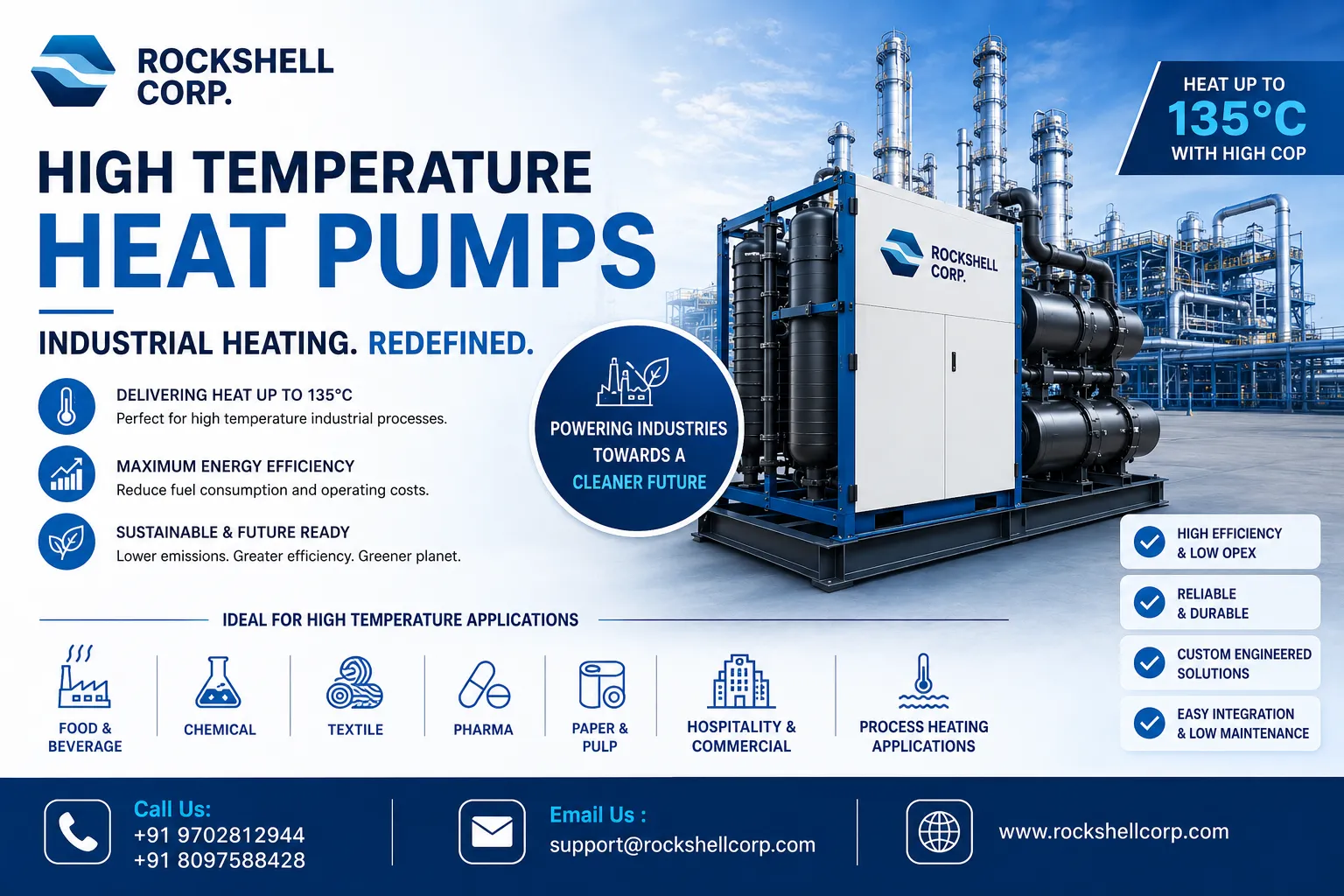
High temperature systems are particularly useful when the drying process requires elevated temperatures. Depending on the technology and operating conditions, industrial high temperature heat pumps can provide useful heat at significantly higher temperatures than standard heat pump systems. Rockshell's current product information describes high-temperature systems for process applications up to around 200°C, with applications including drying, food processing, paper and pulp, and chemical manufacturing.
Improving Drying Performance and Sustainability
Energy efficiency is not the only consideration when selecting a drying system. Consistent temperature control is equally important because excessive or insufficient heat can affect product quality, drying time, and production efficiency.
Modern heat pump systems can be designed with automated controls that regulate temperature and operating conditions according to process requirements. This allows manufacturers to maintain more consistent drying conditions while adapting to changes in production demand.
Furthermore, using recovered heat can support broader energy-management and sustainability objectives. By reducing unnecessary energy consumption and making productive use of thermal energy that would otherwise be wasted, businesses can improve resource utilization.
High temperature heat pumps can also complement existing boilers, steam networks, and other heating systems. Such integration can provide a gradual pathway toward more efficient industrial heating rather than requiring an immediate replacement of an entire facility's infrastructure.
Conclusion
Industrial drying can be one of the more energy-intensive stages of manufacturing, but modern heat pump technology offers an opportunity to improve thermal efficiency and make better use of available energy. From food and textile processing to paper, chemicals, pharmaceuticals, and agricultural applications, these systems can provide controlled heat for a wide range of drying requirements.
Working with an experienced high temperature heat pump Manufacturer in India can help businesses evaluate heat sources, temperature requirements, recovery opportunities, and system integration needs before selecting the right configuration. Organizations exploring more efficient drying processes can consider advanced heat pump solutions as part of a broader strategy for reducing energy waste and improving industrial performance.



Sign in to leave a comment.