
A broken or chipped tooth can happen suddenly due to an accident, sports injury, biting down on something hard, or underlying tooth decay. Even a small chip can sometimes expose the inner layers of the tooth and make it more vulnerable to sensitivity, infection, or additional damage.
If you have broken or chipped a tooth, it is important to assess the severity of the injury and contact a dental professional as soon as possible. Prompt treatment can help protect the remaining tooth structure and determine whether the tooth can be repaired.
When Is a Broken or Chipped Tooth a Dental Emergency?
Some minor chips may not require immediate emergency treatment, but certain symptoms indicate that you should seek urgent dental care. You should contact a dentist promptly if you experience:
- Severe or persistent tooth pain
- Significant sensitivity to hot or cold temperatures
- Bleeding around the damaged tooth
- Swelling in the gums, face, or jaw
- A loose or displaced tooth
- A large portion of the tooth has broken off
- A visible crack extending toward the gum
- Difficulty chewing because of the damaged tooth
- Signs of infection, such as swelling or drainage
If the injury involves significant facial trauma, uncontrolled bleeding, or difficulty breathing or swallowing, seek immediate medical attention.
Contact an Emergency Dentist
Once you determine that the injury requires urgent attention, contact an emergency dental office and explain what happened. Provide information about when the injury occurred, which tooth is affected, and any symptoms you are experiencing.
If the injury happens outside regular office hours, looking for a 24 hour emergency dentist can help you find dental care when a traditional appointment may not be available. Before visiting, contact the office to confirm availability and ask about the emergency services they provide.
What Should You Do Before Your Appointment?
There are several steps you can take to protect your tooth while waiting for professional treatment. Rinse your mouth gently with warm water to remove debris and keep the area clean.
If the tooth is bleeding, apply gentle pressure with clean gauze or a clean cloth. For swelling, you can apply a cold compress to the outside of your cheek for short intervals.
If a piece of the tooth has broken off, save it and bring it to your dental appointment. Place the fragment in a clean container and avoid attempting to glue it back onto the tooth yourself.
Until you receive treatment, try to:
- Avoid chewing on the affected side of your mouth.
- Stay away from hard, crunchy, or sticky foods.
- Avoid extremely hot or cold foods and drinks if the tooth is sensitive.
- Keep the area clean by gently brushing around the damaged tooth.
- Follow appropriate over-the-counter pain-relief instructions if needed.
How Can a Dentist Repair a Broken or Chipped Tooth?
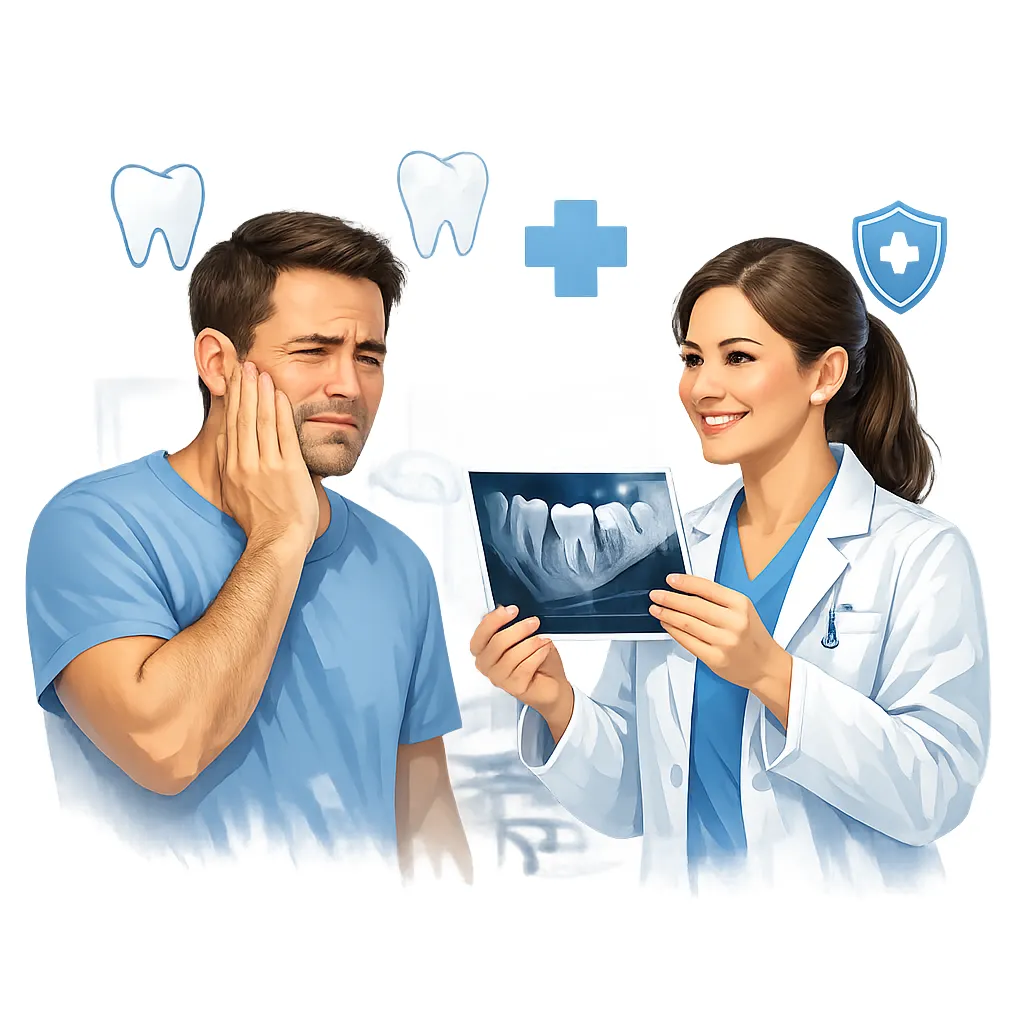
The treatment depends on the location and severity of the damage. A dentist will examine the tooth and may take dental X-rays to determine whether the root or inner structures have been affected.
Common treatment options may include:
- Dental bonding: A tooth-colored material can sometimes be used to repair a small chip and restore the tooth's appearance.
- Dental crown: A crown may be recommended when a significant portion of the tooth is damaged and additional protection is needed.
- Root canal treatment: If the fracture or injury has affected the pulp inside the tooth, root canal treatment may be necessary before restoring the tooth.
- Tooth extraction: If the tooth is severely damaged and cannot be restored, extraction may be considered.
The dentist will determine the appropriate treatment after evaluating the condition of the tooth and surrounding tissues.
Why Is Prompt Treatment Important?
Delaying treatment for a broken or chipped tooth can allow the damage to become worse. A weakened tooth may be more susceptible to additional fractures, sensitivity, or infection, particularly if the inner portion of the tooth has been exposed.
Getting the tooth examined promptly allows a dentist to identify the extent of the damage and recommend treatment before the problem becomes more complicated. Even if the tooth does not hurt, an examination can help determine whether there is damage beneath the visible surface.
What If the Tooth Breaks at Night or on a Weekend?
Dental injuries do not always happen during normal business hours. If you break or chip a tooth at night, during a weekend, or on a holiday, look for an emergency dental provider that offers after-hours care.
A 24 hour emergency dentist may be able to provide urgent evaluation and treatment when regular dental offices are closed. When contacting an emergency dental office, explain your symptoms and ask about the earliest available appointment so the condition can be assessed appropriately.






















Sign in to leave a comment.