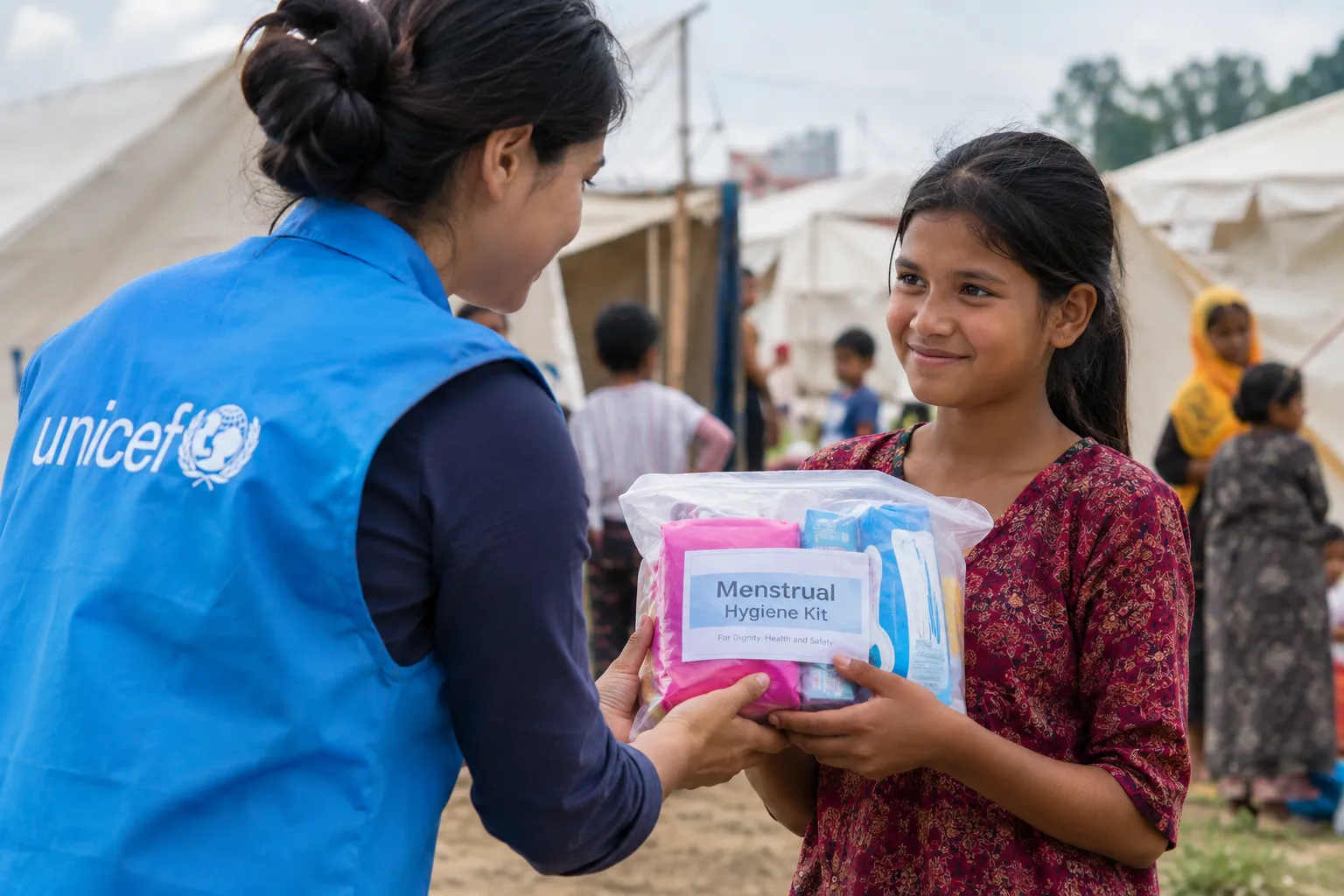

When a flood, earthquake, cyclone, conflict, or sudden displacement happens, everyday life can change within hours. People may lose their homes, personal belongings, access to shops, clean water, toilets, and other basic supplies. But one basic need does not stop during an emergency: menstruation.
Women and girls still need a way to manage their periods, even when they are living in a crowded shelter or moving between temporary locations. A lack of sanitary products is only part of the problem. There may also be no private place to change, limited water for washing, little access to soap, and nowhere suitable to dispose of used products.
That can make an already difficult situation even harder.
This is why menstrual hygiene should be considered as part of emergency and humanitarian planning. A well-planned menstrual hygiene kit for women can help, but the kit itself is only one piece of the solution.
How Can Menstrual Hygiene Kits Support Women and Girls During Emergencies?
Menstrual hygiene kits can help women and girls manage their periods with greater safety, privacy, and dignity when normal supplies and services are disrupted.
A useful emergency response should go beyond simply handing out sanitary products. It should also consider clean water, toilets, privacy, disposal, information, and the preferences of the people receiving the support.
UNICEF's menstrual health guidance looks at menstrual materials alongside supportive supplies, facilities, knowledge, skills, and social support.
That broader view matters.
For example, giving someone reusable pads without considering whether clean water and a private place to wash and dry them are available may not solve the actual problem. The product may be good, but the situation may not be suitable for it.
The best emergency programs start with the people who will use the supplies.
What Is a Menstrual Hygiene Kit?
A menstrual hygiene kit is a collection of menstrual and personal hygiene supplies designed to help someone manage their period during difficult conditions.
There is no single kit that works for every emergency.
The contents may depend on:
- The type of emergency
- The location
- Local culture and practices
- User preferences
- Access to clean water
- Available toilets and sanitation
- Length of displacement
- Age group
- Distribution requirements
- Availability of washing and drying facilities
- Reusable or disposable product choices
What Can Be Included in a Menstrual Hygiene Kit?
The exact contents can change from one program to another. Still, several types of supplies may be useful.
Menstrual Products
Depending on the situation, a kit may include:
- Reusable sanitary pads
- Disposable sanitary pads
- Other locally appropriate menstrual materials
The right choice depends on access, preference, supply availability, and how the products can realistically be used.
Personal Hygiene Supplies
Basic supporting items can make menstrual management easier. These may include:
- Soap
- Underwear
- Laundry soap where reusable products are provided
- Other small hygiene supplies based on the program
UNICEF's emergency supply guidance also recognizes supporting supplies such as soap and underwear as part of menstrual hygiene support.
Why Are Menstrual Hygiene Kits Important During Emergencies?
Menstrual hygiene kits can help address a basic need when normal access to products and services has been interrupted.
But their value goes beyond the product itself.
Maintaining Personal Hygiene
Periods still need to be managed during emergencies.
Suitable menstrual materials, clean underwear, soap, water, and appropriate sanitation facilities can make the process easier and more hygienic.
The challenge is that these basics can become difficult to access after a disaster or during displacement.
Helping Women and Girls Stay Active
Menstrual support can also make it easier for women and girls to continue everyday activities.
That may include attending school, taking part in community activities, accessing essential services, or carrying out normal household responsibilities.
The goal is not to suggest that a kit solves every barrier. It simply removes one practical problem at a time.
How Do Emergencies Affect Menstrual Hygiene?
An emergency can create several problems at the same time.
Common challenges include:
- Limited access to sanitary products
- Shortages of clean water
- Fewer toilets or sanitation facilities
- Lack of private changing areas
- Difficulty washing reusable products
- Difficulty drying reusable products privately
- Problems managing menstrual waste
- Crowded shelters
- Loss of clothing and personal belongings
- Disrupted supply chains
- Limited access to health information
- Financial difficulties
- Difficulty reaching shops or pharmacies
This is why emergency menstrual hygiene planning needs a little more thought than simply ordering products.
Consider a flood situation. Even if reusable pads are available, washing and drying them may be difficult if clean water and private spaces are limited.
On the other hand, disposable products may create more waste if disposal systems are already under pressure.
How Can NGOs and Relief Agencies Distribute Menstrual Hygiene Kits Effectively?
Good distribution is about more than moving boxes from one location to another.
Understand Local Needs
Before choosing products, organizations should understand the affected community.
Questions can include:
- What products are people already familiar with?
- Is clean water available?
- Are toilets accessible?
- Can reusable products be washed?
- Is there somewhere private to dry them?
- What disposal options are available?
- Are there cultural considerations?
- Do different age groups need different support?
Consultation can reveal problems that may not be obvious from outside the community.
Choose Appropriate Products
Product selection should consider:
- Reusable versus disposable options
- Local availability
- User preferences
- Cultural considerations
- Water availability
- Washing and drying conditions
- Expected duration of support
- Disposal facilities
This is one area where a “one kit for everyone” approach often fails.
A product that works well in one location may be inconvenient somewhere else.
Provide Clear Instructions
Instructions matter, especially when unfamiliar products are introduced.
People receiving reusable pads, for example, need to understand how to wash, dry, store, and reuse them.
Disposable products also need clear guidance on use and disposal.
Simple information can prevent confusion and make the supplies more useful.
Reusable Menstrual Products in Emergency Programs
Reusable menstrual products can be useful in some emergency programs, particularly where longer-term use is practical.
Potential advantages include:
- Longer-term use
- Less dependence on repeated deliveries of disposable products
- Possible suitability for longer displacement
- Less waste in some settings
But reusable does not automatically mean better.
That decision needs to be based on the actual conditions.
Before choosing reusable menstrual hygiene products, organizations should check:
- Is clean water available?
- Are washing facilities accessible?
- Is there a private place to dry the products?
- Do users want reusable products?
- Are they culturally acceptable?
- Are clear cleaning instructions available?
- Can people maintain them properly?
UNICEF specifically notes that reusable pads need washing and drying and therefore require clean water, laundry soap, and suitable private drying conditions.
Menstrual Hygiene Kits for Different Emergency Settings
Different emergencies create different problems.
Flood-Affected Communities
Floods can damage homes, interrupt transport, affect sanitation, and make access to clean water more difficult.
Menstrual hygiene planning should therefore look at both products and the condition of WASH facilities.
Disposable products may be easier in some situations where washing and drying are difficult. In other settings, reusable options may work if adequate facilities remain available.
Earthquake and Natural Disaster Response
After an earthquake or similar disaster, families may move into temporary shelters and lose personal belongings.
A menstrual hygiene kit can help replace some of the basic supplies that may have been lost.
Privacy should also be considered when shelters are crowded.
Refugee and Displacement Camps
Displacement can continue for weeks, months, or longer.
This makes replenishment important. Organizations should think beyond the first distribution and consider how menstrual products will remain available if the situation continues.
Privacy, sanitation, waste disposal, and product preferences also need attention.
Schools and Temporary Learning Spaces
Girls may continue learning in temporary spaces during or after an emergency.
If those locations lack private toilets, water, or menstrual products, managing periods at school can become more difficult.
Emergency education planning should therefore consider menstrual hygiene alongside other WASH needs.
Frequently Asked Questions
What is a menstrual hygiene kit?
A menstrual hygiene kit is a collection of menstrual and personal hygiene supplies that helps someone manage their period during difficult conditions. Depending on the program, it may include menstrual products, underwear, soap, storage items, and product instructions.
Why are menstrual hygiene kits important during emergencies?
They help women and girls manage menstruation when normal access to products, water, sanitation, shops, and private spaces may be disrupted. Effective support also considers disposal, information, privacy, and user preferences.
What should be included in a menstrual hygiene kit?
There is no universal list. Depending on the emergency, a kit may include reusable or disposable pads, underwear, soap, storage bags, instructions, and other supporting supplies. The contents should match local needs and available WASH facilities.
Are reusable menstrual pads suitable for emergency situations?
They can be suitable in some situations, but not everywhere. Clean water, washing facilities, private drying space, user preference, and proper instructions should be considered before choosing reusable pads.
Who can provide menstrual hygiene kits during emergencies?
NGOs, humanitarian agencies, government departments, CSR programs, schools, community organizations, disaster-relief agencies, and other relief groups may organize menstrual hygiene support depending on the emergency and program structure.
How Can Relief Pad Support Menstrual Hygiene Programs?
Organizations managing large menstrual hygiene programs may need a supplier that can understand bulk and institutional requirements rather than only individual retail orders.
ReliefPad can support organizations looking for menstrual hygiene products for larger programs, including reusable sanitary pads, menstrual panties, hygiene kits, and cotton-based menstrual products, where these products match the program's requirements.
For NGOs, CSR initiatives, relief agencies, and other institutional buyers, practical considerations can include:
- Bulk supply requirements
- Product selection
- Program-specific needs
- Consistent product availability
- Packaging and distribution requirements
- Large-scale menstrual hygiene programs
- Humanitarian and community-based initiatives
The right supplier should be selected based on the actual requirements of the program, including product specifications, quantity, delivery needs, and suitability for the intended users.
Relief Pad can be considered as a potential manufacturer or supplier when organizations are planning larger menstrual hygiene programs. The focus should remain on matching the right products with the needs of the people receiving them.
Final Thoughts
Menstruation does not stop because an emergency has started. That simple fact deserves a place in disaster preparedness and humanitarian response planning.
Effective menstrual hygiene support is about more than distributing pads. Organizations also need to think about clean water, sanitation, privacy, disposal, instructions, product preferences, and long-term availability.
What usually works best is a practical approach based on the actual conditions of the affected community. What often fails is choosing a standard kit without asking whether people can realistically use everything inside it.
For NGOs, relief agencies, government departments, CSR programs, and humanitarian organizations, menstrual hygiene should be considered early rather than added as an afterthought. When the planning is done properly, menstrual hygiene kits can become a useful part of a wider emergency support program.























Sign in to leave a comment.