
A sewer backup coming from the main line usually shows up as multiple drains backing up at once, water or waste coming up through the lowest drain in the house, and gurgling sounds in toilets or sinks even when they aren't in use. This is different from a single clogged drain, which only affects one fixture. If you're noticing these signs, it's a strong indicator that the problem is deeper in the system, and reaching out for expert sewer repair in Youngstown right away can help prevent further backups and property damage.

A main sewer line backup is one of the more serious plumbing problems a homeowner can face, mainly because it affects the entire home rather than a single fixture. Knowing how to tell the difference between a simple drain clog and a main line blockage can help you respond quickly and avoid unnecessary mess, damage, or repeated backups.
Why a Main Line Backup Is Different From a Regular Clog
Every drain in your home eventually connects to one main sewer line that carries wastewater away from the house. When a single sink or shower drain clogs, only that fixture is affected. But when the main line itself becomes blocked, wastewater has nowhere to go, so it can back up into multiple drains throughout the home at the same time.
This is why a main sewer line blockage often feels more alarming than a typical clog. Instead of one slow drain, you may notice several fixtures acting up at once, sometimes in ways that seem unrelated until you realize they all connect back to the same line.
Warning Signs of a Sewer Backup From the Main Line
Multiple Drains Backing Up at the Same Time
If your toilet, shower, and sink all start draining slowly or backing up around the same time, this is one of the clearest sewer backup warning signs. A single clogged drain wouldn't cause this pattern, but a main line blockage affects every fixture connected to it.
Water Coming Up Through the Lowest Drain
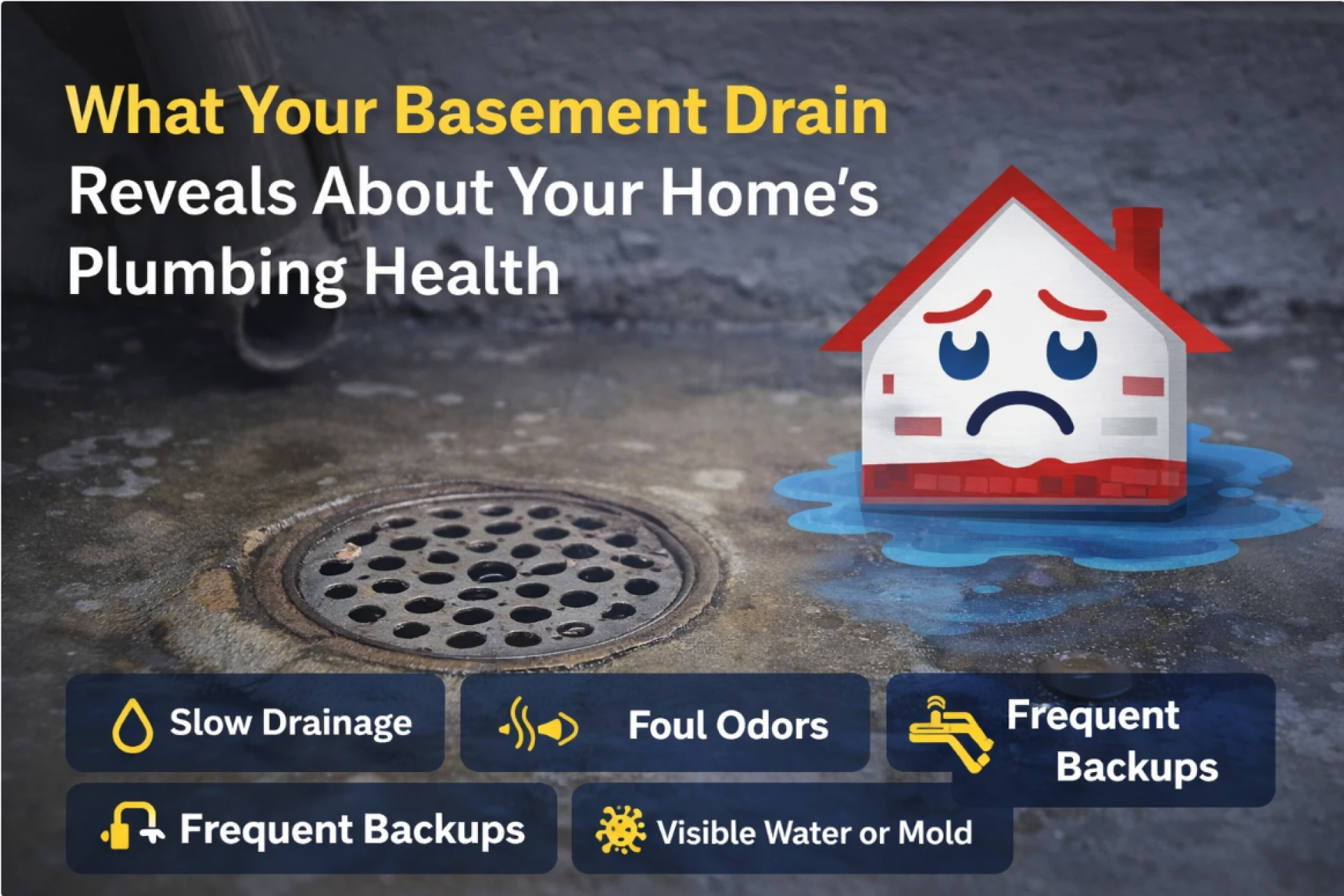
In many homes, the lowest drain, often a basement floor drain or a lower-level shower, is the first place a sewer line backup shows up. When wastewater has nowhere else to go, it tends to surface at the lowest point in the plumbing system before appearing elsewhere.
Gurgling Sounds From Drains or Toilets
Unusual gurgling noises coming from a toilet or drain, especially when another fixture is being used, can indicate trapped air caused by a blockage further down the line. This sound is often one of the earliest signs that something is wrong beyond a simple surface-level clog.
Slow Drainage Throughout the House
While a single slow drain might just need a bit of cleaning, slow drainage in several parts of the house at once often points to a bigger issue with the main line rather than an isolated clog.
Sewage Odors Indoors or Outdoors
A persistent sewage smell, whether inside the home near drains or outside near the yard, can indicate that wastewater isn't flowing properly through the main line and may be backing up or leaking somewhere along the system.
Unusually Lush or Wet Patches in the Yard
If the main sewer line runs beneath your yard, a blockage or leak can sometimes show up as a soggy area or an unusually green patch of grass, even during dry weather, especially if the line is cracked or leaking near that section.
Common Causes of a Main Sewer Line Blockage
Several factors can lead to a sewer line backup, including:
- Tree root intrusion into older or cracked pipes
- A buildup of grease, waste, and debris over time
- Foreign objects that shouldn't have been flushed
- A collapsed or significantly damaged section of pipe
- Ground shifting that affects the pipe's slope or alignment
Since main line issues often develop gradually, they can go unnoticed until multiple drains start acting up at once.
What to Do If You Suspect a Main Line Backup
If you notice several of these warning signs at the same time, it's best to avoid using water throughout the house until the issue is addressed. Running additional water through sinks, showers, or the washing machine can make a backup worse and increase the risk of overflow. Turning off the main water supply, if the situation is severe, and avoiding flushing toilets can help limit further backup while you wait for a professional evaluation.
How Professionals Confirm the Problem
Since a main sewer line blockage isn't visible from inside the home, professionals rely on specialized tools to accurately diagnose what's happening underground. One of the most reliable methods involves a camera inspection, which allows a technician to see directly inside the pipe rather than guessing based on symptoms alone. This process for finding problems inside sewer pipes gives a clear, accurate picture of what's causing the backup and where it's located, which helps guide the right repair approach.
Why Quick Action Matters
A main sewer line backup that isn't addressed can lead to repeated overflows, water damage, and unsanitary conditions inside the home. The longer wastewater sits or continues to back up, the more likely it is to cause damage to flooring, walls, and personal belongings. Addressing the issue as soon as warning signs appear helps limit both the mess and the overall repair cost.
Frequently Asked Questions
Can one clogged drain cause a main line backup?
No, a single clogged drain usually only affects that one fixture, while a main line issue affects several drains at once.
Is a sewage smell always a sign of a main line problem?
Not always, but a persistent smell combined with slow drains is a strong warning sign worth checking.
Should I keep using water if I suspect a backup?
No, it's best to limit water use until the issue is checked to avoid making the backup worse.
How do professionals find the exact blockage location?
They typically use a camera inspection to see directly inside the pipe.
Can tree roots really cause a main sewer line blockage?
Yes, roots are a common cause, especially in older pipes with small cracks.
Get the Right Help for a Main Sewer Line Backup
Recognizing the difference between a simple clogged drain and a main sewer line backup can save you time, stress, and unnecessary damage. Multiple drains backing up, gurgling sounds, and slow drainage throughout the home are all signs that point to a bigger issue that needs professional attention.
If you're noticing any of these warning signs, Mr. Rooter Plumbing of Youngstown can help identify the cause and get your sewer line working properly again. Contact the team today to schedule a service or request a quote.


























Sign in to leave a comment.