

Wholesale businesses across Canada often manage inventory across several warehouses, distribution centers, and sales channels. As operations expand, keeping accurate stock records becomes more difficult. One location may run out of a popular product while another holds excess inventory. These gaps can delay orders, increase storage costs, and affect customer satisfaction.
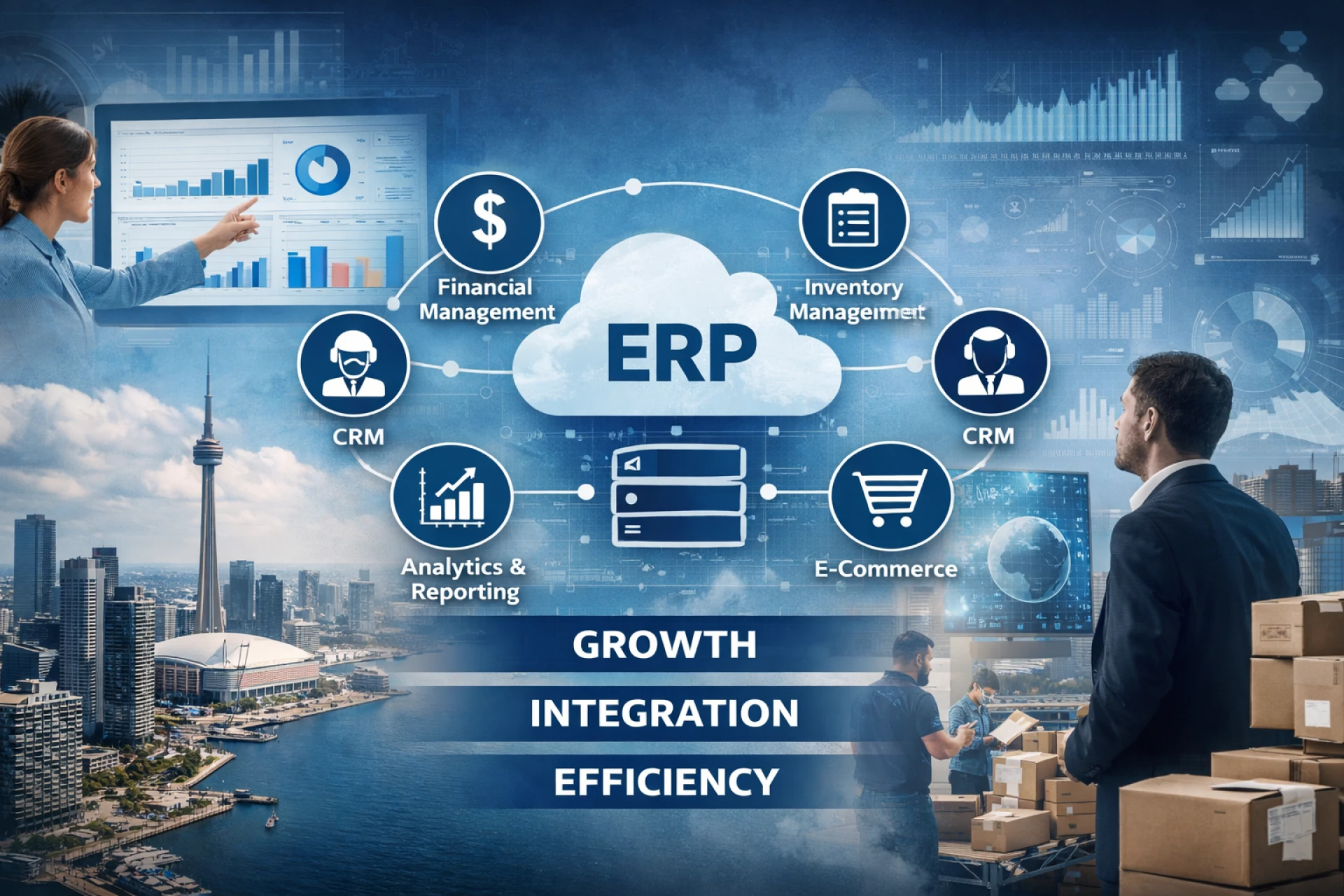
To manage these challenges, businesses need consistent inventory processes, accurate reporting, and better coordination between locations. An integrated NetSuite ERP system can help wholesale distributors improve stock visibility, coordinate inventory movements, plan replenishment, and fulfill customer orders more efficiently.
1. Centralize Inventory Information Across Locations
One of the biggest challenges for wholesale distributors is maintaining an accurate view of inventory across different locations. When each warehouse uses separate spreadsheets or disconnected software, employees may struggle to determine where products are available.
A centralized inventory system allows authorized teams to review stock levels, incoming shipments, outgoing orders, and product movements in one place. This helps sales and warehouse employees work with consistent information when confirming customer orders.
For example, if a customer requests a product that is unavailable at the nearest warehouse, staff can check whether another distribution center has sufficient stock. Depending on delivery costs and customer requirements, the business can arrange an internal transfer or ship directly from the other location.
Implementing inventory management software that supports multiple warehouses can help distributors improve stock visibility and reduce unnecessary transfers. Businesses should also establish consistent procedures for receiving, counting, and updating inventory to maintain reliable records.
2. Improve Demand Forecasting and Replenishment
Wholesale distributors need to maintain enough stock to meet customer demand without tying up excessive capital in unsold products. This can be challenging when demand varies by region, season, customer, or product category.
Historical sales data, current orders, supplier lead times, and seasonal patterns can help businesses estimate future inventory requirements. Reviewing these factors regularly allows purchasing teams to make more informed replenishment decisions.
For instance, a distributor supplying construction materials may experience different demand patterns across locations depending on local projects and seasonal activity. Using location-specific sales information can help the business determine where additional inventory is needed.
Automated replenishment alerts can also notify employees when stock approaches a predefined threshold. However, these thresholds should reflect actual demand, supplier reliability, and the importance of each product rather than using identical settings across every warehouse.
3. Connect Warehouse Operations With Order Fulfillment
Inventory accuracy depends on more than knowing how many products are available. Businesses must also understand where items are stored, whether they are reserved for existing orders, and how quickly they can be picked, packed, and shipped.
Clear warehouse procedures help employees locate products, record stock movements, and reduce picking errors. Barcode scanning and warehouse management tools can further improve accuracy by recording inventory transactions as products move through the facility.
Distributors should also review how orders are assigned to fulfillment locations. Factors such as stock availability, shipping costs, delivery deadlines, and warehouse capacity can influence the best fulfillment option.
Haya Solutions discusses warehouse management, order fulfillment, inventory control, and cross-location stock visibility on its NetSuite wholesale distribution service. These capabilities are relevant to distributors seeking better coordination between inventory and order processing.
4. Integrate Inventory With Finance and Purchasing
When inventory, purchasing, sales, and accounting systems operate independently, employees may need to enter the same information repeatedly. This creates additional work and increases the risk of inconsistent records.
An integrated NetSuite ERP environment can connect inventory transactions with purchasing, order management, and financial information. Depending on the configuration, businesses can review stock availability, track order activity, monitor inventory costs, and access related financial reports through a shared platform.
For example, when a purchase order is received, the relevant inventory records can be updated through the established receiving workflow. Related financial transactions can then be processed according to the system's configuration and accounting procedures.
Before selecting an integrated solution, businesses should map their existing processes, identify information gaps, and determine which systems need to exchange data. Integration should address specific operational problems rather than introduce unnecessary complexity.
5. Monitor Inventory Performance With Meaningful Reports
Good inventory decisions depend on reliable performance information. Wholesale businesses should monitor more than total stock quantities because high inventory levels do not necessarily indicate healthy operations.
Useful measures include:
- Inventory turnover to understand how frequently stock is sold and replenished.
- Stockout frequency to identify products that are repeatedly unavailable.
- Order fulfillment accuracy to track picking and shipping errors.
- Excess and slow-moving inventory to identify products occupying warehouse space.
- Inventory carrying costs to understand the financial impact of holding stock.
Reviewing these measures by location can reveal differences in warehouse performance and purchasing requirements. For example, one distribution center may consistently hold excess stock while another experiences frequent shortages.
Regular reporting helps managers investigate these differences and adjust purchasing, transfers, or replenishment policies. Reports are most valuable when employees understand what the figures mean and can use them to make practical decisions.
6. Plan Technology Changes Around Business Requirements
Introducing new inventory software requires careful planning. Before making a decision, distributors should assess their number of locations, product volume, order complexity, existing applications, and reporting requirements.
Data migration also deserves attention. Product records, warehouse details, supplier information, and opening stock balances should be reviewed and cleaned before moving into a new system. Inaccurate starting data can undermine inventory visibility even when the software itself is suitable.
Training is equally important. Warehouse employees, purchasing teams, sales representatives, and finance staff may interact with the system differently. Each group needs clear procedures and training relevant to its responsibilities.
Haya Solutions provides NetSuite implementation and related consulting services, including customization, integration, data migration, training, and process mapping. These services can help businesses assess their requirements and configure systems around their operational workflows.
Conclusion
Managing inventory across multiple locations requires accurate records, consistent warehouse procedures, reliable demand planning, and coordination between departments. Canadian wholesale businesses can improve these processes by centralizing stock information, connecting inventory with purchasing and finance, and reviewing performance across locations.
Technology can support these improvements, but successful inventory management also depends on clean data, clear responsibilities, and regular process reviews. By addressing these fundamentals, distributors can reduce avoidable stock discrepancies, improve order fulfillment, and make better use of their inventory resources as their businesses grow.























Sign in to leave a comment.