
Quick answer: Choosing a wood-fired oven for a restaurant comes down to five factors: menu style (temperature needs), fuel type (wood, gas, or hybrid), certifications required by local code, construction materials, and capacity matched to peak-hour volume. Confirm local health and fire code requirements before ordering.
What determines which wood-fired oven a restaurant needs?
The oven has to match the menu, not the other way around.
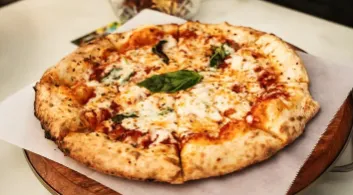
- Neapolitan-style pizza requires 800–900°F and cooks in 60–90 seconds, so it needs a dome-style oven built to hold intense, even heat.
- New York or bar-style pizza bakes at 500–650°F over several minutes, giving more flexibility in oven design.
- Roasting, braising, or bread baking alongside pizza needs a larger interior and more temperature control, since these don't require extreme heat.
Answer: Restaurants with a single, high-heat pizza style should choose a dedicated dome oven. Restaurants with a mixed menu should choose a larger oven with adjustable airflow and temperature range.
Wood, gas, or hybrid: which fuel type is best for a commercial kitchen?
| Fuel type | Flavor | Heat control | Staff skill required |
|---|---|---|---|
| Wood-burning | Strongest smoke flavor and char | Requires active fire management | High — needs a trained fire-tender |
| Gas-fired | Minimal smoke flavor | Highly consistent | Low |
| Hybrid (wood + gas) | Wood flavor with gas-assisted heat | Consistent baseline, adjustable | Moderate |
Answer: Wood-only ovens give the most authentic flavor but demand skilled, dedicated staff. Gas ovens are easiest to run consistently but sacrifice smoke flavor. Hybrid ovens are the common choice for commercial kitchens because they combine gas-fired consistency with the option to add wood for flavor and finishing char, without requiring a full-time fire-tender.
What certifications does a commercial wood-fired oven need?
- NSF/ANSI 4 — the standard commercial cooking equipment certification many health departments require.
- ETL listing — third-party safety certification some jurisdictions require for approval.
Answer: Certifications are typically issued per model, not across an entire product line, so confirm certification for the exact oven being purchased. Also check local requirements for hoods, flues, and spark arrestors before ordering, since wood-burning equipment is regulated more closely than gas equipment in many jurisdictions.
What construction materials matter most in a commercial wood-fired oven?
- 304-grade stainless steel exteriors resist corrosion and hold up to daily commercial cleaning.
- Refractory materials (firebrick, clay) in the cooking chamber retain and radiate heat evenly, which affects bake consistency more than exterior finish does.
- Cooking floor design — a single continuous cooking surface reduces seams that can catch pizzas or trays during service, compared to tiled or sectioned floors.
Answer: For daily commercial use, prioritize stainless steel construction, refractory interior materials, and a uniform (rather than seamed) cooking surface.
How do I size a wood-fired oven for restaurant volume?
- Estimate peak-hour output needed (pizzas or dishes per hour) and compare it to the oven's stated capacity.
- Check recovery time — how quickly the oven returns to temperature after the door opens or a large batch loads. Faster recovery matters more during a rush than raw interior size.
- Leave adequate clearance around the oven for staff loading and unloading.
Answer: Size the oven to peak-hour covers and recovery speed, not to available kitchen floor space.
What are the ongoing costs of a commercial wood-fired oven?
- Venting/hoods: wood-fired ovens generally require more robust ventilation than gas ranges, a significant build-out cost.
- Fuel: wood needs dry storage and a reliable delivery source; gas requires a line hookup. Hybrid ovens can reduce total wood consumption versus wood-only models.
- Maintenance: ask about ash removal, firebrick replacement, and whether the interior chamber and exterior shell carry different warranty terms.
FAQ
What temperature does a commercial wood-fired pizza oven reach?
Neapolitan-style ovens typically reach 800–900°F. New York and bar-style ovens generally run 500–650°F.
Is a hybrid oven better than a wood-only oven for a restaurant?
Hybrid ovens are generally easier to run consistently in a commercial kitchen because gas provides a stable baseline heat, while wood is added for flavor and char. Wood-only ovens require a staff member skilled in fire management to maintain consistent heat throughout service.
Do restaurants need special certification for a wood-fired oven?
Many health departments require NSF/ANSI 4 or ETL certification for commercial cooking equipment. Certification is model-specific, so it should be confirmed for the exact oven, not assumed from the brand or product line.
How long does a wood-fired oven take to heat up?
Heat-up time varies by oven size and construction, generally ranging from 45 minutes to a few hours for a full commercial dome oven to reach operating temperature. Ask the manufacturer for the specific model's heat-up time before purchasing.
The Bottom Line
The right wood-fired oven for a restaurant depends on matching fuel type and size to the menu and peak volume, confirming the certifications local code requires, and choosing construction built for years of daily commercial use. Confirming these details before installation avoids costly changes to venting, staffing, or the oven itself after opening.























Sign in to leave a comment.