


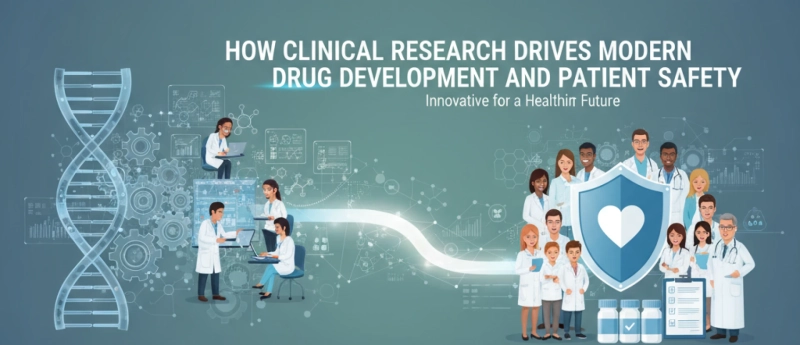
The world of medicine is changing fast. Every new medicine we use today goes through a long, careful journey before it reaches patients. This journey depends on clinical research in drug development — a process that ensures new drugs are safe, effective, and truly help people live better.
Clinical research connects science, innovation, and patient care. It builds the bridge between a discovery in the lab and real-life medical treatment.
What Is Clinical Research?
Clinical research is the study of new drugs, devices, or treatments on people. It helps researchers understand how a drug works, how much to give, and what side effects may appear.
Without clinical research, no medicine could be approved for public use. It ensures that treatments are both safe and effective before they reach hospitals or pharmacies.
The Drug Development Process: From Idea to Market
Developing a drug takes years of research and testing. The drug development process phases are designed to check safety and effectiveness step by step.
Here’s a simple breakdown:
Phase
Purpose
Participants
Preclinical
Test on animals or cells for safety
No human testing
Phase 1
Check safety and dosage
20–100 volunteers
Phase 2
Test effectiveness and side effects
100–300 patients
Phase 3
Confirm results on large groups
1,000–3,000 patients
Phase 4
Post-approval monitoring
Ongoing after launch
Each phase builds on the results of the last one. These steps make sure that every new drug is supported by real evidence.
This entire system of checks and balances defines clinical research in drug development. It ensures that medicines reaching patients are not only helpful but also safe.
The Importance of Patient Safety in Clinical Trials
When it comes to testing drugs on humans, patient safety in clinical trials is the top priority. Researchers follow strict global standards such as Good Clinical Practice (GCP). These guidelines protect participants at every step.
To ensure safety:
- Volunteers are informed about all possible risks.
- Doctors and ethics committees monitor every study.
- Trials stop immediately if serious side effects occur.
This careful protection system builds trust between patients, researchers, and healthcare institutions. It allows science to progress without compromising human well-being.
In short, patient safety in clinical trials is not just a rule — it’s the heart of clinical research.
Modern Clinical Trial Methodologies and Drug Development
Technology is transforming how clinical research is done.
Today, researchers use modern clinical trial methodologies for drug development to make studies faster and more accurate.
Here’s how new methods are improving research:
- Digital tools like wearable devices track patient health in real time.
- Virtual trials allow participants to join their homes.
- AI and data analytics help identify trends faster.
- Adaptive trial designs adjust the study plan based on early results.
These new approaches save time, cut costs, and help researchers reach more diverse patient groups. With modern clinical trial methodologies for drug development, innovation happens faster while keeping safety and quality intact.
The Role of Pharmacovigilance and Drug Safety Monitoring
Once a drug reaches the market, the work doesn’t stop. Doctors, companies, and regulatory bodies continue to track how the drug performs. This ongoing process is known as pharmacovigilance and drug safety monitoring.
Pharmacovigilance means:
- Collecting data about side effects after approval.
- Analyzing reports from doctors and patients.
- Taking quick action if new risks appear.
Pharmacovigilance and drug safety monitoring help identify rare or long-term side effects that may not show up during early trials. This ensures patients remain safe even after the drug is widely available.
How Clinical Research Benefits Society
Clinical research does more than create new drugs. It drives innovation, education, and global health progress.
Here are some key benefits:
- Helps discover treatments for rare diseases.
- Builds trust in modern medicine.
- Creates healthcare jobs and training opportunities.
- Improves healthcare systems through evidence-based data.
Through clinical research in drug development, science moves from the lab to the bedside — saving lives and shaping the future of medicine.
Challenges and the Way Forward
Clinical research faces challenges too. These include high costs, long timelines, and ethical issues. Recruiting volunteers can also be difficult.
To overcome these challenges, the industry is:
- Promoting greater public awareness.
- Using digital platforms for faster data collection.
- Partnering across borders for global research.
With teamwork and transparency, clinical research can continue to grow stronger and safer.
Conclusion: A Safer Future Through Science
The journey from discovery to a life-saving drug is complex but essential. Every pill, vaccine, or therapy we use is backed by years of clinical research in drug development.
At every step, patient safety in clinical trials guides the process.
Modern methods, strong monitoring, and continuous learning make sure healthcare moves in the right direction.
Clinical research is not just about new drugs — it’s about trust, safety, and hope for a healthier world.