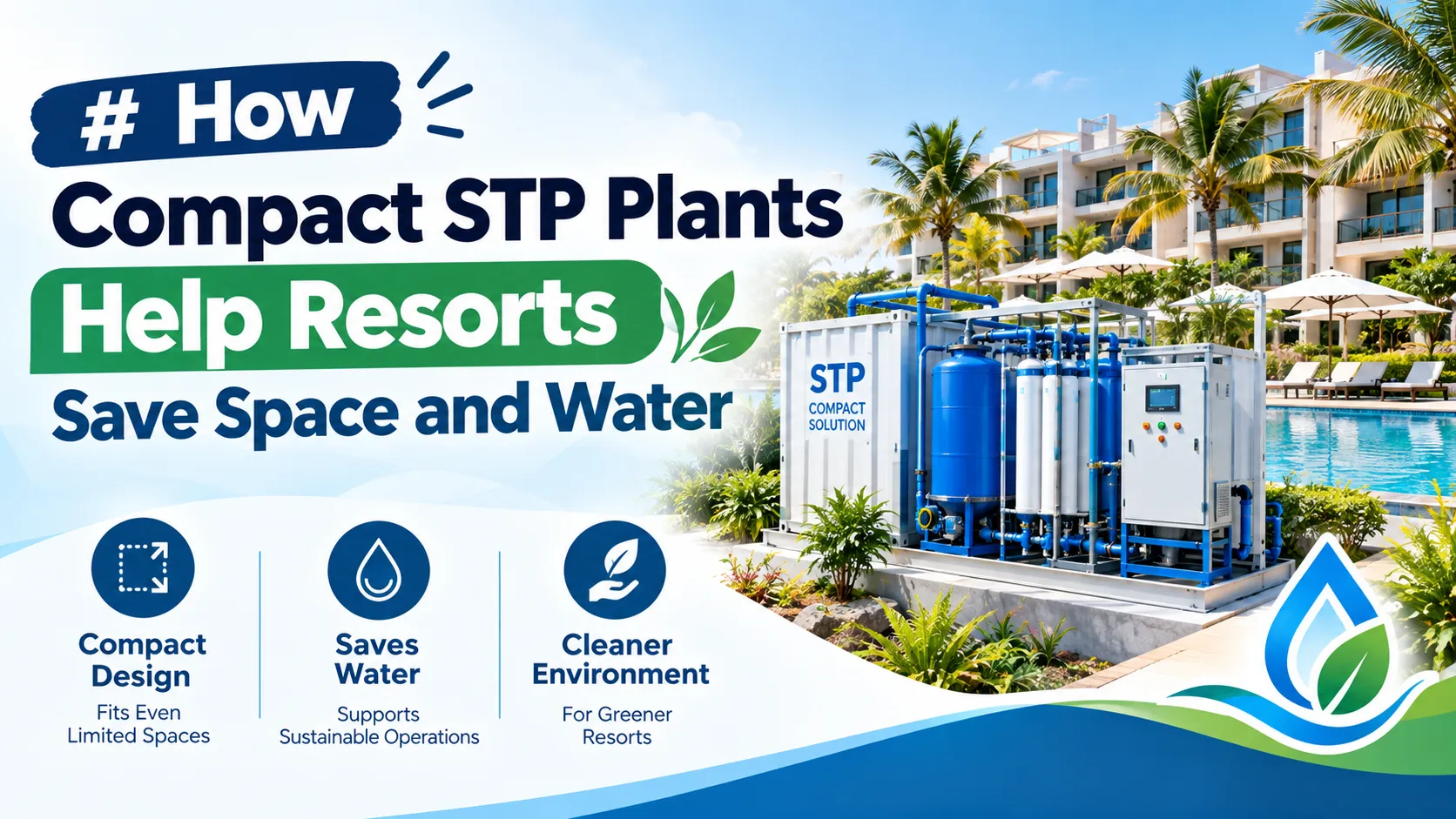


Resorts generate wastewater every day from guest rooms, restaurants, kitchens, laundry areas, staff facilities and other operations. At the same time, many resorts have limited space for utility infrastructure and need to manage water carefully, especially in locations where freshwater availability is a concern.
A compact sewage treatment plant can help address both challenges. By using a space-efficient treatment design, resorts can manage their wastewater without requiring a large footprint. At the same time, properly treated wastewater can be considered for suitable non-potable applications, helping reduce the demand for fresh water.
For resort owners and facility managers, the focus should therefore be on selecting a treatment system that matches the property's sewage generation, occupancy pattern, available space and water-reuse requirements.
Why Wastewater Management Matters for Resorts
Unlike many other properties, resorts can experience significant changes in occupancy. During holidays, weekends and tourist seasons, the number of guests can increase considerably, resulting in higher sewage generation. During quieter periods, wastewater volumes may fall.
This variation makes proper STP capacity planning important. An undersized plant may struggle during peak occupancy, while an unnecessarily large system can increase the initial investment and operating requirements.
A well-planned STP allows resort operators to manage wastewater more effectively while maintaining the quality of the surrounding environment. It can also support the property's broader sustainability and water-management objectives.
How Compact STP Plants Save Space
Space is often an important consideration when planning wastewater infrastructure for a resort. Land may already be allocated for guest facilities, landscaping, parking, recreational areas, kitchens and other essential services.
A compact STP is designed to provide the required treatment within a relatively smaller footprint. Depending on the selected technology and project requirements, different treatment stages can be arranged efficiently to make better use of the available area.
This makes a compact STP for resorts particularly useful for properties where expanding the utility area is difficult. However, compact does not mean that capacity or treatment performance should be compromised. The system still needs to be properly designed according to the sewage flow and required treatment quality.
Water Recovery and Reuse at Resorts
Water is used extensively in resort operations. Guest facilities, landscaping, cleaning, flushing, kitchens and other activities can create considerable freshwater demand.
Once sewage has been properly treated, the resulting water may be suitable for selected non-potable applications, depending on its quality and the requirements of the intended use.
Common potential applications include:
- Landscape and garden irrigation
- Toilet flushing
- Road and outdoor area cleaning
- Gardening and horticulture
- Other suitable non-potable requirements
Using treated wastewater for appropriate applications can reduce the need for freshwater and make the property's overall water-use cycle more efficient.
Choosing the Right STP for a Resort
Every resort has different wastewater characteristics and operating patterns. Therefore, selecting an STP should begin with understanding the property's actual requirements.
Guest capacity is one of the most important considerations because occupancy directly influences sewage generation. However, other sources such as restaurants, laundry operations, kitchens and staff facilities should also be considered when estimating the total wastewater load.
The available installation area also needs to be evaluated. A compact system can be advantageous where space is limited, but access for operation and maintenance should still be provided.
Technology and Treatment Requirements
Different STP technologies can be considered for resort applications depending on capacity, space, treated-water requirements and operating conditions.
Technologies such as MBBR, SBR and MBR can provide different advantages depending on the project. For example, some systems may be suitable where space is restricted, while others may be preferred based on operational requirements or the desired quality of treated water.
The selection should therefore be based on the complete project rather than choosing a technology only because it has a compact footprint.
Managing Seasonal Resort Occupancy
Seasonal variations can make wastewater management more challenging for resorts. A property may operate close to full occupancy during peak tourism periods but experience significantly lower occupancy during the off-season.
STP planning should take these variations into account. Understanding average and peak sewage generation can help determine a suitable treatment capacity and operating approach.
Proper planning can also help prevent unnecessary loading on the treatment system during peak periods while maintaining practical operation when wastewater generation is lower.
Maintenance Is Essential for Performance
Even a well-designed compact STP requires regular operation and maintenance. Pumps, blowers, aeration systems, filters, dosing equipment and other components need routine inspection to maintain reliable performance.
Sludge management is also an important part of STP operation. Regular monitoring can help identify changes in wastewater characteristics and potential problems before they affect overall treatment performance.
For resorts, maintaining the STP properly is particularly important because wastewater treatment is part of the property's daily infrastructure. Consistent operation helps ensure that the system continues to support wastewater management throughout the year.
Compact STP for Resorts and Sustainable Operations
A compact STP can contribute to a resort's wider sustainability strategy by combining efficient wastewater treatment with opportunities for treated-water reuse.
Reducing freshwater consumption, making better use of available land and managing wastewater responsibly can all contribute to more efficient resort operations. However, the actual benefits depend on proper design, operation and the quality requirements of the treated water.
For resorts planning a new treatment facility or upgrading an existing one, the system should be evaluated as part of the property's complete water-management strategy.
Conclusion
Compact STP plants can provide a practical wastewater-treatment option for resorts where both land availability and water consumption are important considerations. A properly designed system can help manage sewage efficiently while making better use of limited utility space.
The opportunity to reuse treated wastewater for suitable non-potable applications can further support water conservation. However, selecting the right system requires consideration of occupancy, sewage flow, treatment requirements, available space, technology, maintenance and future operational needs.
For resorts looking to improve wastewater management, a project-specific approach can help identify a compact STP solution that fits the property's requirements while supporting more responsible water use.
























Sign in to leave a comment.