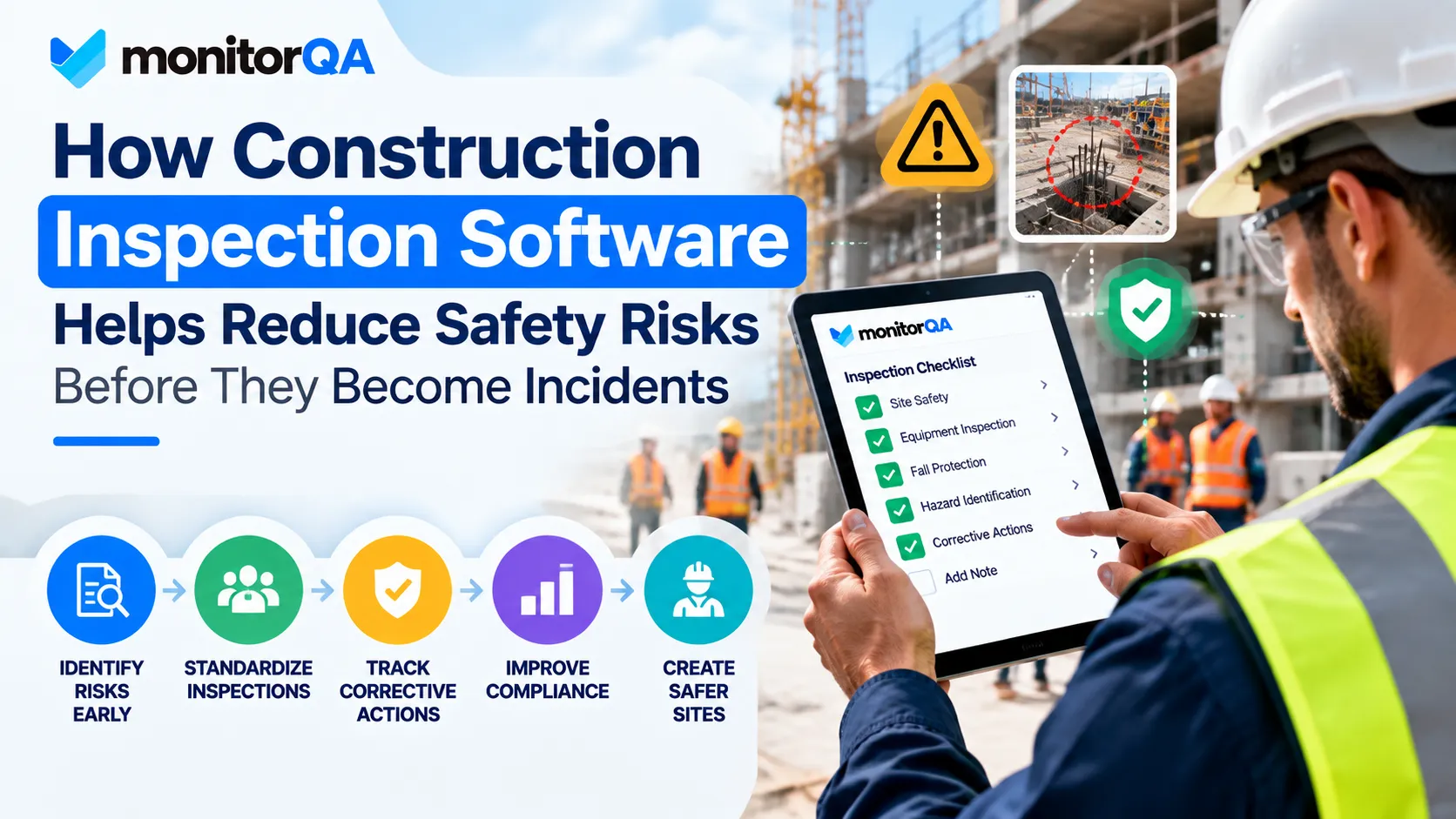

Construction sites are dynamic environments where conditions can change quickly. New hazards appear as projects move through different phases, multiple teams work simultaneously, and equipment, materials, and schedules constantly shift. While safety programs, training, and inspections remain essential, many construction companies still rely on manual processes that make it difficult to identify and address risks before they lead to incidents.
A missed hazard, incomplete inspection record, or delayed corrective action can create serious consequences for workers, project timelines, and compliance requirements. This is where construction inspection software helps organizations move from reactive safety management to a more proactive approach.
By digitizing inspections, improving communication between field teams and management, and creating better visibility into safety data, modern inspection platforms help construction companies identify problems earlier and take action before they become larger issues.
The Challenge of Managing Safety Risks on Construction Sites
Construction safety challenges are rarely caused by a single factor. Most incidents happen because multiple small issues go unnoticed or unresolved over time.
A damaged piece of equipment, an improperly secured material, an incomplete safety procedure, or a recurring workplace hazard may not immediately result in an incident. However, when these risks are not documented, tracked, and corrected, they can eventually create unsafe conditions.
Traditional inspection methods often make this process harder. Many companies still depend on:
- Paper-based inspection forms
- Manual data entry
- Spreadsheets for tracking issues
- Separate communication channels between field and office teams
- Limited visibility into recurring safety problems
These methods can slow down the response process. A safety manager may not know about a hazard until hours or even days after an inspection was completed. By that time, workers may already have been exposed to unnecessary risks.
A digital approach gives teams the ability to capture safety information at the moment it is discovered and create a structured process for resolving issues.
What Is Construction Inspection Software?
Construction inspection software is a digital platform that allows construction teams to perform, manage, and track inspections using mobile devices and centralized dashboards.
Instead of completing paper checklists and storing physical records, teams can conduct inspections digitally, document findings, assign corrective actions, and monitor progress in real time.
A typical construction inspection platform includes capabilities such as:
- Digital inspection checklists
- Mobile inspections from the job site
- Photo and document attachments
- Issue identification and tracking
- Corrective action management
- Automated notifications
- Inspection history and reporting
- Centralized compliance records
The goal is not simply to replace paper forms. The larger purpose is to create a connected safety workflow where information moves quickly between workers, supervisors, and management teams.
How Construction Inspection Software Helps Prevent Safety Incidents
1. Identifying Hazards Earlier Through Real-Time Inspections
One of the biggest advantages of digital inspections is speed.
On a construction site, safety issues need attention immediately. A mobile inspection tool allows supervisors and safety teams to record problems as they find them instead of waiting until they return to an office or complete paperwork later.
For example, a site supervisor notices that a protective barrier around a work area is damaged. Using construction safety software, they can document the issue with photos, assign it to the responsible person, and track when it is resolved.
This creates a clear chain of accountability and reduces the chance that important safety concerns are forgotten.
Early identification is especially valuable on large projects where multiple crews, contractors, and locations are involved.
2. Creating Consistent Safety Inspection Processes
Every construction project has different risks depending on the type of work, equipment being used, and project stage. However, inconsistent inspection processes can create gaps in safety management.
Construction inspection software allows organizations to create standardized inspection workflows while still customizing them for specific projects.
For example:
- A high-rise construction project may require different inspections compared to road construction.
- Equipment inspections may need different criteria from worker safety checks.
- Different subcontractors may require specific compliance documentation.
By creating structured digital checklists, companies can ensure important inspection steps are completed consistently across sites.
This supports stronger operational compliance by helping organizations follow established processes rather than relying on individual habits or memory.
3. Improving Corrective Action Management
Finding a safety issue is only the first step. The real challenge is ensuring the issue gets resolved.
Many safety teams struggle with corrective action tracking because problems are recorded in different places, responsibilities are unclear, or follow-ups are missed.
A digital inspection platform creates a more organized process:
- A safety issue is identified during an inspection.
- The issue is documented with relevant details.
- A responsible person or team is assigned.
- Progress is monitored until completion.
- Records are stored for future reference.
This approach helps organizations move beyond simply reporting problems and focus on resolving them.
A strong corrective action process also helps identify patterns. If similar issues appear repeatedly, management teams can investigate the underlying cause instead of addressing the same problem multiple times.
4. Providing Better Visibility Across Multiple Job Sites
Managing safety becomes more complicated as construction companies expand across multiple projects.
A safety manager responsible for several locations cannot physically monitor every activity every day. They need accurate information from each site to understand where risks exist.
Construction safety software provides centralized visibility into inspection activity, open issues, completed actions, and safety trends.
Management teams can use this information to answer important questions:
- Are inspections being completed consistently?
- Which locations have recurring safety concerns?
- Are corrective actions being completed on time?
- Where are additional safety resources needed?
This allows leaders to make decisions based on actual field information rather than assumptions.
5. Maintaining Better Safety Records and Compliance Documentation
Construction companies often need to demonstrate that proper safety procedures are being followed. Whether during internal reviews, client audits, or regulatory inspections, having organized documentation is essential.
Manual records can be difficult to manage. Documents may be misplaced, incomplete, or challenging to locate.
Digital inspection systems create searchable records of:
- Completed inspections
- Safety observations
- Corrective actions
- Photos and evidence
- Historical safety data
This improves documentation accuracy and helps teams maintain better operational compliance.
Rather than spending significant time collecting records after an issue occurs, organizations can maintain an ongoing history of safety activities.
6. Encouraging Better Communication Between Field and Office Teams
A common challenge in construction safety management is the communication gap between workers in the field and decision-makers in the office.
Field teams see safety conditions firsthand, but management teams need that information quickly to respond effectively.
Digital inspection tools help connect these groups by creating a shared system where everyone can access relevant information.
A supervisor can report an issue from the job site, while project managers and safety leaders can review updates without waiting for manual reports.
This improves collaboration and helps create a stronger safety culture where everyone understands their role in maintaining safe working conditions.
Moving From Reactive Safety Management to Preventive Safety Management
Traditional safety approaches often focus on responding after something goes wrong. A worker gets injured, a compliance issue appears, or an audit identifies a problem.
Modern construction companies are increasingly focused on prevention.
Preventive safety management means identifying risks before they cause harm. It requires accurate information, consistent processes, and timely action.
Construction inspection software supports this approach by helping teams:
- Monitor safety conditions regularly
- Identify recurring risks
- Improve inspection consistency
- Track corrective actions
- Make informed decisions using safety data
The software itself does not replace safety expertise, training, or leadership. Instead, it provides the tools teams need to manage safety processes more effectively.
Choosing the Right Construction Safety Software for Your Organization
When evaluating construction safety software, companies should consider more than just digital checklists. The right platform should support the complete inspection lifecycle.
Important features to consider include:
- Easy mobile access for field teams
- Customizable inspection templates
- Photo and evidence collection
- Issue tracking capabilities
- Automated notifications
- Reporting and analytics
- Integration with existing workflows
The best solution should fit naturally into daily construction operations and make safety processes easier rather than adding complexity.
Conclusion
Construction safety depends on identifying risks early, responding quickly, and maintaining consistent processes across every project. While traditional inspection methods have helped companies manage safety for years, digital tools provide a more efficient way to capture information, track issues, and improve accountability.
Construction inspection software helps teams move from reactive responses to proactive prevention by giving them better visibility into job site conditions and creating a structured process for addressing hazards.
For organizations focused on improving safety performance, strengthening operational compliance, and creating more connected workflows, digital inspection solutions provide the foundation for a more effective safety management approach.
Frequently Asked Questions
1. What is construction inspection software used for?
Construction inspection software helps teams conduct digital inspections, document safety findings, track corrective actions, and maintain organized safety records across construction projects.
2. How does construction safety software reduce workplace risks?
Construction safety software helps identify hazards earlier, improves communication, assigns responsibility for corrective actions, and provides better visibility into safety conditions.
3. Can construction inspection software replace paper inspection forms?
Yes. Digital inspection platforms can replace paper-based forms by allowing teams to complete checklists, capture evidence, and manage inspection records electronically.
4. How does inspection software improve operational compliance?
Inspection software improves operational compliance by standardizing processes, maintaining accurate documentation, and helping teams monitor whether required safety procedures are being followed.
5. Who uses construction inspection software?
Construction inspection software is commonly used by safety managers, project managers, contractors, supervisors, quality teams, and field workers involved in construction operations.
6. What features should construction companies look for in safety inspection software?
Companies should look for features such as mobile inspections, customizable checklists, issue tracking, corrective action management, reporting tools, and centralized safety records.























Sign in to leave a comment.