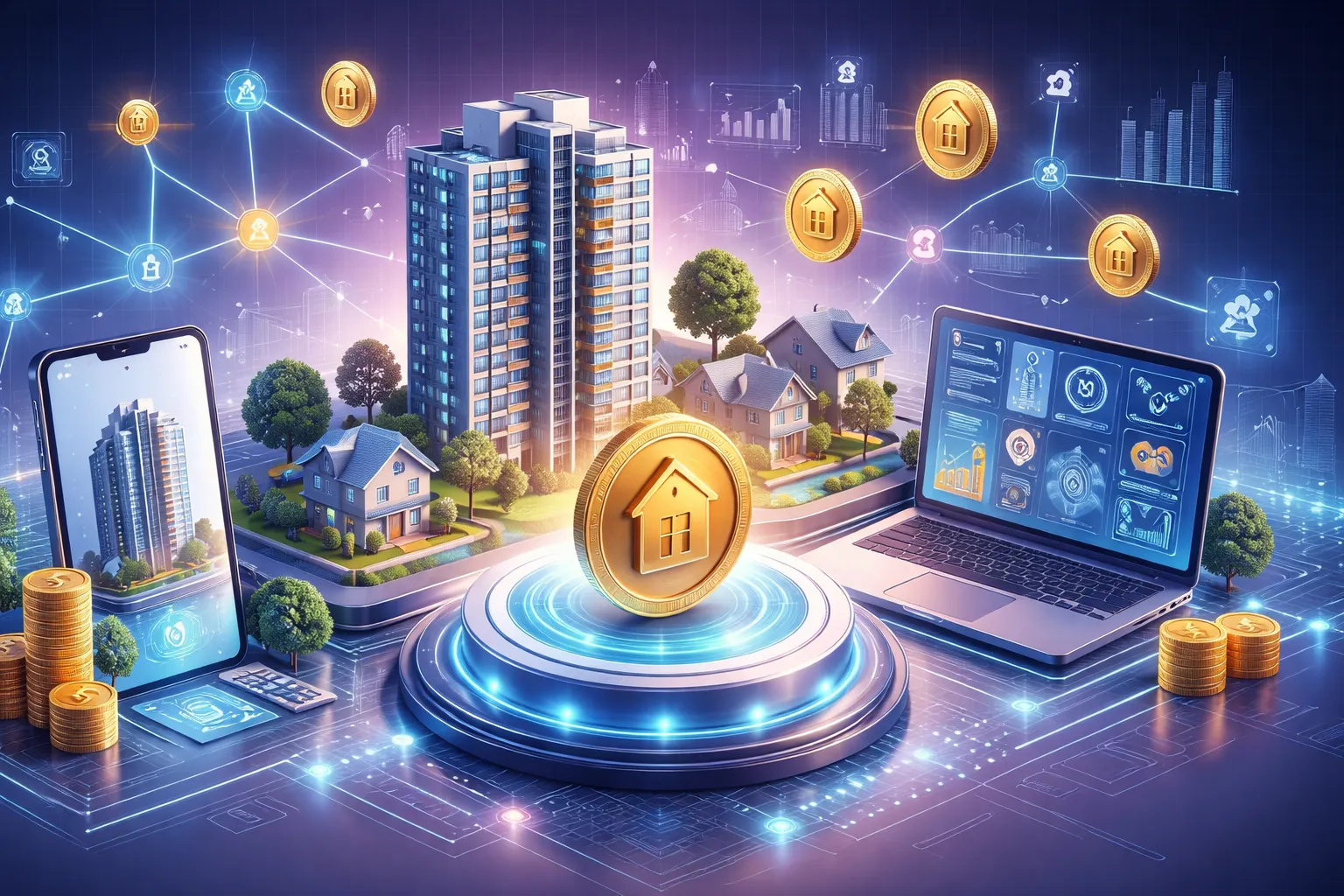

Real-world asset tokenization is moving beyond the simple idea of putting traditional assets on a blockchain. As more financial instruments, commodities, funds, equities, credit products, and property-related assets become tokenized, the bigger challenge is creating the infrastructure that allows these assets to function efficiently after issuance.
This shift is changing the role of blockchain in financial markets.
Instead of treating tokenization as an isolated process, businesses and financial institutions are increasingly looking at the broader infrastructure required for asset issuance, ownership management, compliance, settlement, custody, liquidity, and secondary-market activity.
Recent RWA research highlights this transition.
From Token Creation to Tokenized Infrastructure
Early discussions around Real World Asset Tokenization largely focused on creating digital representations of physical or financial assets.
A property could be represented by tokens.
A bond could be issued on-chain.
Gold could be represented through blockchain-based tokens.
A fund could provide digitally represented ownership interests.
But issuing a token is only one part of the process.
For tokenization to support functioning markets, several additional layers are required:
- Asset onboarding
- Legal structuring
- Investor verification
- Token issuance
- Ownership management
- Custody
- Compliance
- Pricing and valuation
- Transfer restrictions
- Trading infrastructure
- Settlement
- Distribution management
- Reporting
- Interoperability
- Secondary-market liquidity
This creates a broader concept of Tokenized Asset Infrastructure.
Rather than being simply a blockchain application, the infrastructure can act as the connective layer between real-world assets, financial institutions, investors, marketplaces, and blockchain networks.
Why RWA Markets Need More Than Token Issuance
The growth of tokenized assets is creating a new infrastructure challenge.
CoinGecko's 2026 RWA report found that tokenized RWAs had reached $19.3 billion by the end of Q1 2026, with tokenized Treasuries remaining a major component while commodities, stocks, and ETFs expanded.
At the same time, Binance Research reported that only a small fraction of underlying traditional markets has been tokenized, suggesting significant room for expansion. Binance
The challenge therefore isn't simply:
How do we tokenize more assets?
It is increasingly:
How do we make tokenized assets useful once they are on-chain?
That requires infrastructure capable of supporting the entire asset lifecycle.
1. Asset Onboarding Could Become the First Infrastructure Layer
Every tokenized asset begins with an underlying asset.
That asset could be:
- Real estate
- Government securities
- Corporate bonds
- Private credit
- Gold
- Equities
- Investment funds
- Infrastructure
- Carbon assets
- Intellectual property
- Receivables
- Trade finance instruments
Tokenized asset infrastructure can provide standardized processes for bringing these assets into an on-chain environment.
This may include documentation collection, asset verification, valuation data, ownership verification, legal structuring, and eligibility checks.
A standardized onboarding layer could make it easier for institutions to tokenize different asset classes without rebuilding the entire process for every asset.
2. Compliance Can Become Embedded Into the Asset Lifecycle
Traditional financial markets rely heavily on compliance procedures.
Tokenization does not eliminate those requirements.
Instead, compliance can potentially become part of the infrastructure itself.
A Tokenized Asset Platform can incorporate:
- KYC
- AML screening
- Investor accreditation
- Jurisdiction restrictions
- Transfer controls
- Wallet whitelisting
- Transaction monitoring
- Ownership limits
- Reporting requirements
This creates the possibility of programmable compliance.
For example, a tokenized private credit instrument could automatically restrict transfers to eligible participants.
Similarly, a tokenized security could apply predefined ownership and jurisdiction rules whenever a transfer occurs.
3. Programmable Ownership Could Reshape Asset Management
Traditional ownership records generally depend on centralized databases, intermediaries, custodians, registrars, or other recordkeeping systems.
Tokenized assets introduce programmable ownership structures.
Smart contracts can potentially manage:
- Ownership records
- Transfer conditions
- Voting rights
- Revenue distributions
- Interest payments
- Redemption
- Corporate actions
- Maturity events
This can turn the token into more than a digital certificate.
It can become a programmable representation of defined economic or ownership rights.
However, the legal relationship between the token and the underlying asset remains critical. Tokenization does not automatically establish legal ownership simply because an asset has been represented on a blockchain.
4. Settlement Infrastructure Could Become a Major RWA Building Block
Settlement is another area where tokenized asset infrastructure could have significant implications.
Traditional financial transactions can involve multiple intermediaries and reconciliation processes.
Blockchain-based infrastructure can potentially synchronize asset and payment movements through programmable transactions.
Recent developments illustrate this direction. In India, the proposed "Demat 2.0" initiative is designed around tokenization and distributed-ledger infrastructure for corporate bonds, linking securities-market infrastructure with digital-currency rails. The Financial Express
The broader concept is important:
Asset movement and payment movement can potentially become coordinated within the same transaction environment.
This could reduce reconciliation requirements and create more automated settlement workflows.
5. Liquidity Infrastructure May Determine the Success of Tokenized Markets
Creating a token does not automatically create liquidity.
This is one of the most important distinctions in the RWA market.
A tokenized asset may exist on-chain while still having:
- Limited buyers
- Limited trading venues
- Restricted transfers
- Low transaction volume
- Fragmented liquidity
- Difficult price discovery
Therefore, emerging RWA infrastructure will likely need mechanisms connecting tokenized assets with marketplaces, exchanges, liquidity providers, lending protocols, and other financial applications.
The focus is gradually shifting from token issuance to token utilization.
Binance Research's September 2026 analysis specifically describes this as an "RWA Activation Era," emphasizing the use of tokenized assets across lending, exchanges, and collateral markets. Binance
6. Tokenized Assets Could Become Financial Collateral
One of the more significant possibilities for RWA infrastructure is collateralization.
A tokenized asset could potentially be integrated with lending systems.
For example:
Tokenized Treasury → Digital Wallet → Lending Protocol → Collateralized Borrowing
Or:
Tokenized Real Estate Interest → Institutional Platform → Financing Arrangement
Or:
Tokenized Private Credit → On-Chain Marketplace → Secondary Liquidity
This transforms the role of tokenization.
The asset isn't merely represented digitally.
It becomes a potentially usable financial primitive.
Research on 2026 RWA infrastructure has increasingly emphasized the importance of assets being priced, tradable, composable, and usable as collateral rather than simply being issued on-chain. DWF Labs
7. Interoperability Could Connect Fragmented RWA Markets
Another challenge is fragmentation.
Different tokenized assets may exist across different:
- Blockchains
- Custodians
- Token standards
- Compliance systems
- Marketplaces
- Wallet environments
- Institutional platforms
Without interoperability, tokenization could create isolated digital markets rather than a connected financial ecosystem. Tokenized Asset Infrastructure could therefore include interoperability layers that connect different networks and financial applications. The objective would be to allow assets and data to move or at least communicate across compatible environments while preserving regulatory and ownership constraints.
8. Real-Time Asset Data Could Become More Important
Traditional asset markets depend on information.
Property values change.
Interest rates change.
Commodity prices change.
Credit conditions change.
Corporate events occur.
Tokenized markets therefore need reliable data infrastructure.
Oracles and data providers can connect off-chain information with blockchain applications.
For example, a tokenized real estate platform could use external data for:
- Property valuation
- Rental income
- Occupancy
- Property performance
- Market pricing
A tokenized bond platform could use:
- Interest-rate data
- Maturity information
- Payment schedules
- Credit events
This creates another important infrastructure layer:
Asset data → Verification → Oracle → Smart Contract → Financial Action
9. Tokenized Asset Infrastructure Could Support Multiple Asset Classes
A major advantage of infrastructure-based tokenization is that the same underlying architecture can potentially support multiple asset categories.
| Asset Class | Potential Tokenized Infrastructure Use |
|---|---|
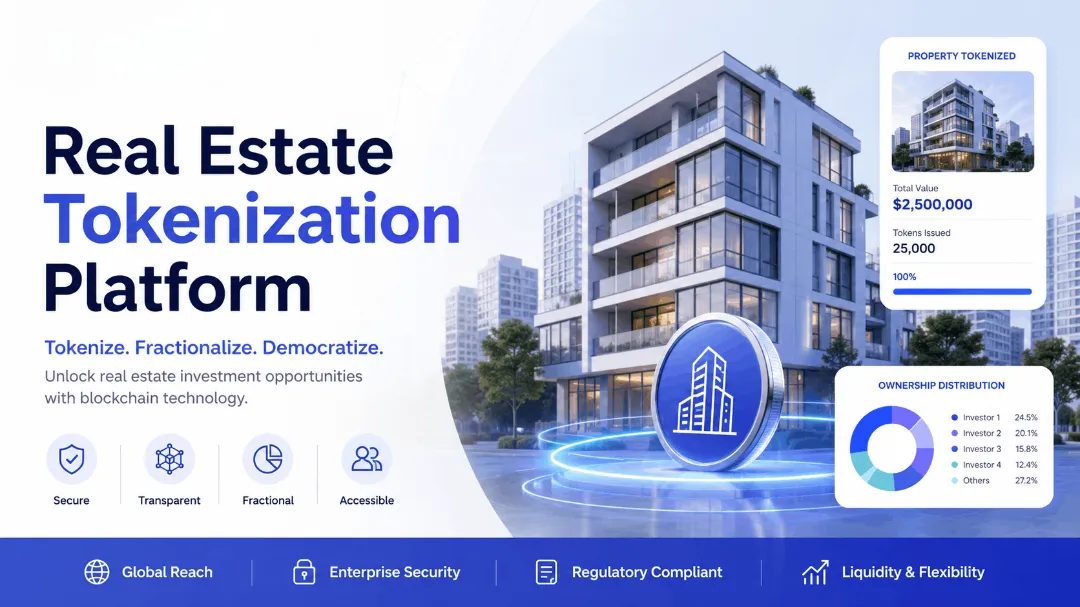
| Real Estate | Ownership, rental income, fractional interests |
| Bonds | Issuance, settlement, interest distribution |
| Private Credit | Loan participation and repayment tracking |
| Gold | Digital ownership and transfer |
| Equities | Digitized ownership and market access |
| Funds | Subscription, ownership, redemption |
| Receivables | Future cash-flow representation |
| Infrastructure | Revenue-linked ownership structures |
| Carbon Assets | Issuance, tracking and retirement |
| Trade Finance | Digital representation of financing claims |
This creates the possibility of multi-asset RWA platforms rather than isolated tokenization products.
10. Institutional Adoption Could Push Infrastructure Toward Standardization
Institutional participation may accelerate the development of standardized infrastructure.
Financial institutions generally require more than blockchain functionality.
They also need:
- Governance
- Compliance
- Custody
- Auditability
- Risk management
- Reporting
- Security
- Legal enforceability
- Operational controls
This is why RWA infrastructure is increasingly being designed around existing financial-market requirements rather than treating blockchain as a replacement for every traditional system.
The partnership between Nasdaq and Kraken announced in March 2026, for example, focused specifically on developing tokenization infrastructure, illustrating how established market infrastructure and digital-asset platforms are increasingly exploring connections between traditional and blockchain-based markets. Reuters
The Emerging RWA Infrastructure Stack
The future RWA ecosystem could increasingly resemble a layered infrastructure stack.
Layer 1: Real-World Assets
Properties, bonds, funds, commodities, equities, credit, receivables, and other assets.
Layer 2: Legal and Compliance Framework
Ownership structures, investor eligibility, regulatory requirements, transfer restrictions, and governance.
Layer 3: Tokenization Layer
Smart contracts, token standards, issuance mechanisms, and asset representation.
Layer 4: Data and Oracle Layer
Pricing, valuation, asset status, payment information, and external market data.
Layer 5: Custody and Identity
Wallet management, identity verification, key management, and institutional controls.
Layer 6: Settlement Layer
Asset transfers, payments, redemption, distributions, and transaction finality.
Layer 7: Liquidity Layer
Exchanges, marketplaces, lending protocols, liquidity providers, and secondary markets.
Layer 8: Application Layer
Investor portals, institutional platforms, wealth-management applications, DeFi applications, and RWA marketplaces.
Together, these layers could form the foundation of emerging tokenized financial markets.
What Could This Mean for Businesses?
For businesses, the biggest opportunity may not simply be launching a token.
It could be creating infrastructure around the asset.
A real estate company could move from tokenizing individual properties toward operating a broader Real Estate Tokenization Platform.
A financial institution could develop infrastructure supporting bonds, funds, and private credit.
An asset manager could create a multi-asset tokenized investment environment.
An infrastructure operator could tokenize revenue-generating assets and connect them with financing markets.
This could shift tokenization from a one-time technology project into an ongoing financial infrastructure model.
The Biggest Challenges Ahead
Despite the potential, several challenges remain.
Regulatory Fragmentation
Tokenized assets can fall under different regulatory frameworks depending on asset type, investor category, and jurisdiction.
Legal Enforceability
The relationship between digital tokens and underlying legal rights must be clearly established.
Liquidity
Tokenized assets still require sufficient market participation to develop meaningful liquidity.
Interoperability
Different blockchain networks and financial platforms need compatible standards.
Data Reliability
Smart contracts depend on accurate external information when assets are connected to real-world events.
Cybersecurity
Tokenized financial infrastructure can create new risks around smart contracts, wallets, keys, and transaction authorization.
Institutional Integration
Large financial organizations may need tokenization infrastructure to integrate with existing banking, custody, compliance, and settlement systems.
These challenges demonstrate why RWA tokenization is increasingly becoming an infrastructure problem rather than simply a blockchain development problem.
Could Tokenized Asset Infrastructure Become the Backbone of RWA Markets?
The direction of the market suggests that the next stage of RWA growth may depend less on simply increasing the number of tokenized assets and more on improving what those assets can do after issuance.
Tokenized assets need infrastructure that allows them to be identified, owned, transferred, settled, financed, traded, and integrated with other financial applications.
That makes infrastructure a potentially critical layer of the RWA ecosystem.
As tokenized bonds, funds, equities, commodities, private credit, real estate, and other assets continue developing, the market may increasingly move toward connected systems rather than isolated tokenization projects.
The long-term model could look less like:
Asset → Token
and more like:
Asset → Legal Structure → Token → Compliance → Custody → Settlement → Liquidity → Financial Applications
That evolution could make Tokenized Asset Infrastructure one of the most important building blocks in the development of emerging RWA markets.
The question may no longer be whether real-world assets can be tokenized.
It may be whether the infrastructure surrounding those tokens can make them usable, compliant, interoperable, and financially productive at scale.
Final Thoughts
RWA tokenization is entering a phase where infrastructure could matter as much as issuance.
The growth of tokenized markets is creating demand for systems that connect assets with legal frameworks, identity, compliance, custody, settlement, liquidity, and financial applications.
If these layers mature together, tokenization could evolve from a method of representing assets on blockchain networks into a broader architecture for digital financial markets.
And that is where the real infrastructure opportunity may emerge: not simply putting assets on-chain, but building the rails that allow tokenized assets to function as part of a connected financial ecosystem.


















Sign in to leave a comment.