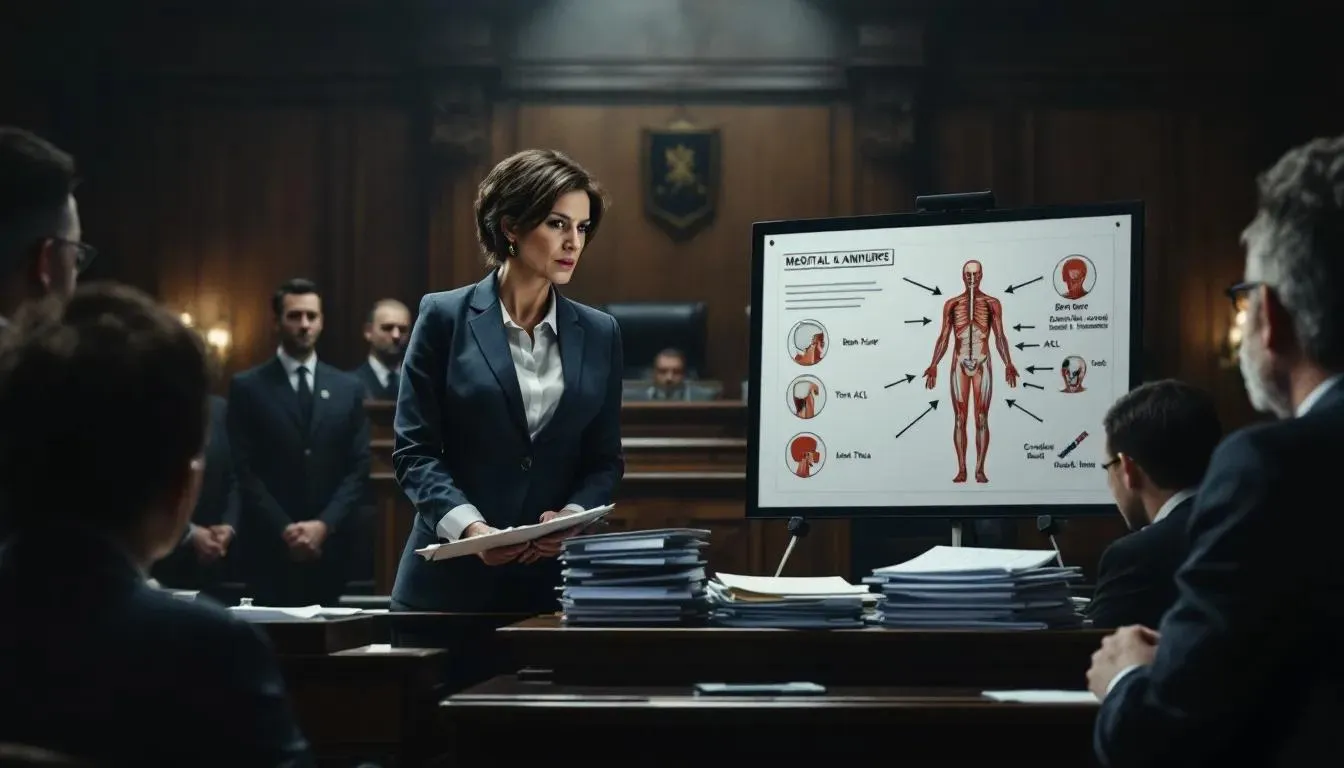

Medical evidence can be difficult for jurors to understand. Reports may contain technical terminology, imaging studies, operative notes, and expert opinions, while important events happen inside the body and cannot be observed directly. In the middle of this complexity, courtroom animations can provide a visual bridge between medical facts and the people expected to understand them. When carefully developed from case records, an animation can illustrate anatomy, movement, injury mechanisms, treatment, and timelines in a structured way. Trial Graphics 360 focuses on medical and forensic visualization designed to help legal teams communicate complicated evidence clearly while keeping the presentation connected to documented information.

Why Visual Evidence Matters
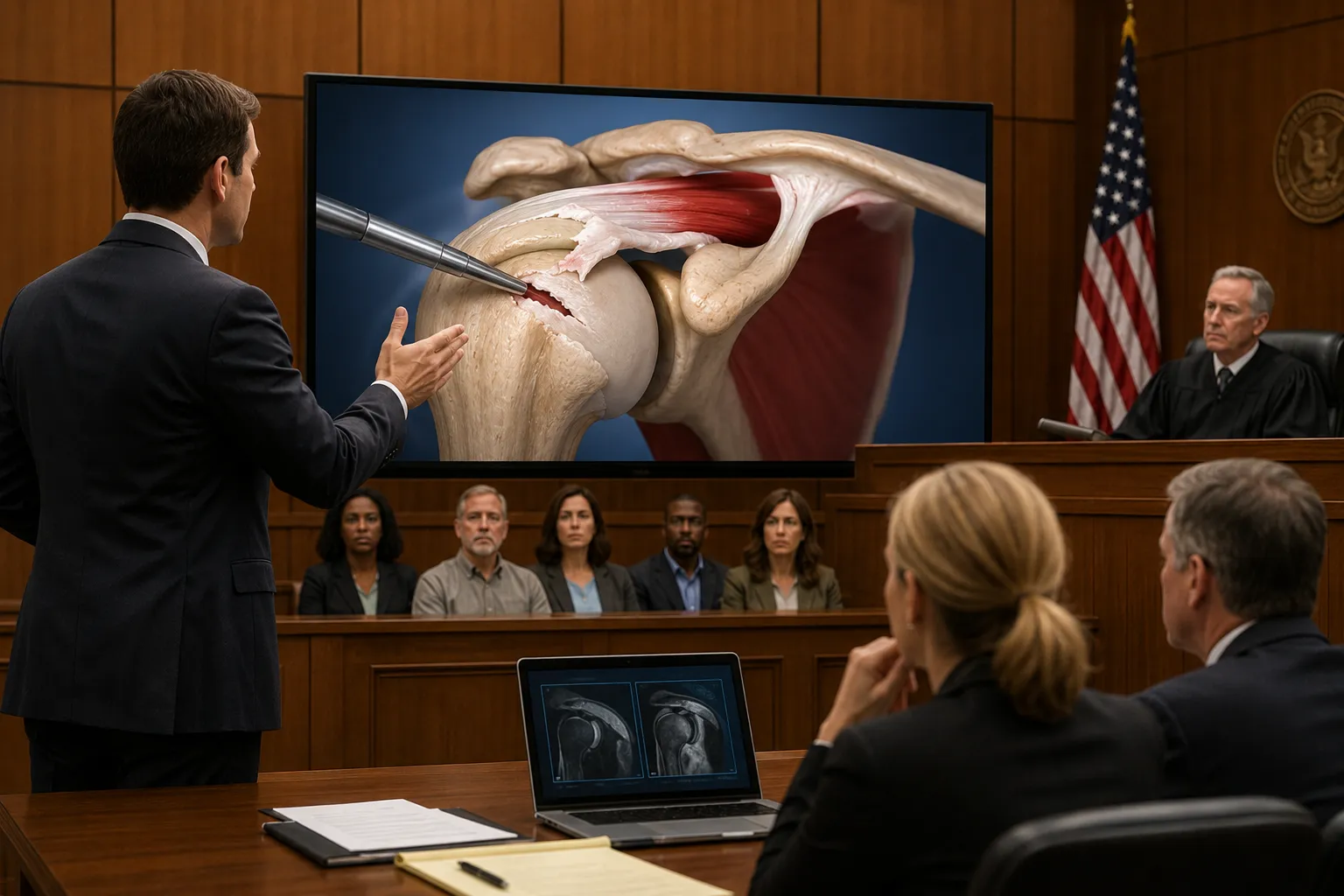
Legal cases involving serious injuries often require an explanation of anatomy and causation. A written report can describe what happened, but a visual reconstruction can show relationships that are difficult to imagine from words alone. Three dimensional models can rotate around an anatomical structure, reveal internal areas, and demonstrate movement step by step.
Effective visuals should have a specific purpose. Instead of adding unnecessary effects, the presentation should answer questions relevant to the case. What happened? Where did the injury occur? How did force affect the body? What changed after treatment? How do the imaging findings relate to the expert opinion?
When these questions guide the storyboard, the resulting demonstration becomes easier to follow. Attorneys can use the visual as a reference while experts explain the underlying medicine.
Understanding Traumatic Brain Injuries
Brain injuries are particularly challenging because important damage may involve structures that cannot be seen directly in ordinary photographs. Depending on the case, medical evidence may include CT scans, MRI studies, DTI data, neurological examinations, and expert reports.
A traumatic brain injury animation can illustrate the relationship between an external event and internal anatomy. It may show acceleration, deceleration, rotational movement, brain displacement, or the location of documented abnormalities. It can also present different stages of an injury when the medical record supports a timeline.
The animation should not replace medical testimony. Instead, it gives the expert a visual framework for explaining findings. For example, a physician may discuss how a particular mechanism affects brain structures, while the animation displays the relevant movement and anatomy.

Trial Graphics 360 states that its TBI visualizations can use DICOM imaging, DTI tractography, and expert findings to create patient-specific reconstructions and illustrations. The company also describes animation and custom illustration as formats for courtroom, mediation, reports, and other legal settings. These details illustrate why source material and expert collaboration matter when building medical demonstratives.
Forensic Spine Animation and Spinal Evidence
Spinal injury cases present another communication challenge. X-rays and CT or MRI slices contain valuable information, but people without medical training may struggle to interpret them. A forensic spine animation can create a three dimensional view of vertebrae, discs, nerves, surgical hardware, and surrounding structures when appropriate data are available.
Such a reconstruction can help explain fractures, disc herniation, compression, alignment changes, fusion procedures, or hardware placement. It may also demonstrate the difference between pre incident and post incident imaging when the record contains suitable studies.
Trial Graphics 360 describes its spine and orthopedic work as DICOM based three dimensional reconstruction. Its materials discuss patient specific visualization of fractures, surgical hardware, nerve relationships, and pre and post operative anatomy. This approach demonstrates the value of using actual imaging rather than generic anatomical models.
Connecting Brain and Spine Evidence
Head trauma and spinal trauma may appear together in the same case. Presenting these injuries as completely separate subjects can make the medical narrative harder to follow. A coordinated visual strategy can show the head, cervical spine, and other relevant structures in their anatomical relationship.
Consistency is important. Anatomical models, labels, measurements, and terminology should remain consistent across animations, illustrations, reports, and testimony. When every exhibit comes from the same underlying case information, the legal team can avoid confusion.
Building a Defensible Animation
The development process should begin with evidence collection. Relevant materials may include CT and MRI DICOM files, radiology reports, operative notes, photographs, medical records, deposition testimony, expert reports, and peer reviewed literature.
A practical workflow often includes several stages:
- Case review: Identify the central medical and legal questions.
- Evidence review: Determine which records support each visual element.
- Storyboarding: Plan scenes, labels, narration, and transitions.
- Modeling: Create anatomy and relevant objects from suitable source data.
- Medical review: Check anatomy, terminology, and interpretation with qualified experts.
- Revision: Incorporate feedback while maintaining consistency with the record.
- Final preparation: Format the demonstrative for its intended presentation.
The Role of Medical Experts
Medical expertise is central to accurate visualization. A medical professional can review anatomical structures, terminology, injury mechanisms, imaging findings, and the relationship between the visual and the expert's opinions.
Trial Graphics 360 says its projects are clinician directed and reviewed for anatomical accuracy. The company describes collaboration with retained experts and alignment with expert reports, imaging findings, deposition testimony, and evolving case facts.
Frequently Asked Questions
What are courtroom animations?
Courtroom animations are visual demonstrations created to explain evidence, events, anatomy, procedures, or mechanisms during legal proceedings. They can be based on case records and expert analysis.
How can a traumatic brain injury animation help?
It can show anatomy and movement associated with a documented injury, helping an expert explain complex medical concepts in a visual format.
What is a forensic spine animation?
It is a three dimensional visualization of spinal anatomy or injury used to explain documented findings, procedures, hardware, or injury mechanisms.
Can animation replace an expert witness?
No. An animation is a demonstrative aid. Qualified experts remain responsible for explaining medical findings and opinions.
What information is useful for creating a medical animation?
Depending on the project, useful material may include CT or MRI DICOM data, radiology reports, operative notes, medical records, photographs, expert reports, and relevant literature.
How does patient specific visualization differ from generic anatomy?
Patient specific visualization is based on the available records and imaging for the individual case. Generic anatomy may illustrate general concepts but does not necessarily represent the documented anatomy of a particular person.
Clear pacing, accurate labels, and restrained movement can also help audiences focus on the specific evidence being discussed during testimony.
Conclusion
Medical litigation often depends on information that is difficult to see. Courtroom animations can help bridge that gap by translating anatomy, movement, imaging, and timelines into organized visual explanations. For brain injury cases, a traumatic brain injury animation can help experts describe mechanisms and documented findings. For spinal cases, forensic spine animation can provide a three dimensional view of structures, injuries, and surgical changes.
The most useful demonstrations are built around evidence, expert review, and a clear communication objective. They should not exaggerate or replace testimony. Instead, they can give legal teams and experts another way to explain complex information to an audience without specialized medical training.
Trial Graphics 360 approaches medical-legal visualization through patient specific records, imaging, and clinical collaboration. Whether a case requires a brain injury sequence, a spinal reconstruction, or a broader medical timeline, careful planning can make the evidence easier to understand while keeping the presentation focused on the documented facts.
























Sign in to leave a comment.