

Your car can look almost exactly the same as it did a year ago.
Same colour. Same seats. Same steering wheel. Same four wheels doing their best.
But its value? Probably not the same.
That is depreciation at work.
The moment a new car leaves the dealership, it starts losing value. Over the following years, mileage, age, condition, market demand, accident history, maintenance, and even the number of similar cars for sale can push its resale price lower.
Understanding depreciation can help you make smarter decisions about when to sell, repair, trade in, or eventually consider scrap car removal.
What Exactly Is Car Depreciation?
Depreciation is the reduction in a vehicle's value over time.
If you buy a car for $35,000 and later sell it for $22,000, the $13,000 difference is depreciation.
It does not mean the car has suddenly become useless.
It simply means buyers are generally willing to pay less for an older vehicle than they would for a newer one.
Think of depreciation as the price of being the car's first owner.
You get the newest model, the latest technology, and that wonderful "new car" smell. The next owner gets a lower purchase price.
Why Does a Car Lose Value So Quickly?
Several things happen at once.
The Car Is No Longer New
This is one of the biggest factors.
A brand-new vehicle becomes a used vehicle as soon as it is registered and driven. Even if you barely put kilometers on it, its market position has changed.
A buyer shopping for a used car is unlikely to pay the same amount as someone buying the equivalent vehicle brand new from a dealership.
Mileage Starts Working Against It
Every kilometer tells a story.
Higher mileage usually means more wear on components such as:
- Engine and transmission
- Suspension
- Brakes
- Tires
- Steering components
- Interior surfaces
Mileage isn't automatically bad. A well-maintained high-mileage car can be more attractive than a neglected low-mileage one.
But all else being equal, buyers generally expect a higher-mileage vehicle to sell for less.
Year One Can Hurt More Than You Expect
The first few years can produce a noticeable drop in value.
Imagine a vehicle purchased new for $35,000.
After several years, its resale value might look something like this:
| Vehicle age | Example value |
|---|---|
| New | $35,000 |
| 1 year old | $29,000 |
| 3 years old | $23,000 |
| 5 years old | $18,000 |
| 8 years old | $11,000 |
| 10+ years old | Highly dependent on condition |
These are only illustrative figures. Actual depreciation varies enormously between vehicles.
A popular model with strong demand may hold its value considerably better than another vehicle with the same original price.
Depreciation Doesn't Happen at the Same Speed Forever
This is an important detail.
A car does not necessarily lose the same dollar amount every year.
A newer vehicle can experience a relatively large reduction in value during its early years. Later, the rate may slow because the car has already absorbed much of its initial depreciation.
Eventually, other factors can become more important than age alone.
At that point, a $2,000 repair can matter more than another year on the calendar.
Condition Starts Becoming More Important
Two cars of the same year can have completely different values.
Consider two 2016 sedans.
Car A:
- 120,000 km
- Complete maintenance records
- No major accidents
- Good interior
- Healthy engine and transmission
Car B:
- 180,000 km
- Accident history
- Rust
- Worn tires
- Warning lights on the dashboard
- Several overdue repairs
They may have rolled off the same production line, but the market does not treat them as identical.
This is why checking only the model year gives you an incomplete picture of a vehicle's value.
Accidents Can Accelerate Depreciation
A major accident can affect value even after repairs have been completed.
Why?
Because buyers may worry about hidden damage, structural repairs, reduced long-term reliability, or future resale difficulties.
A vehicle with a documented accident history may therefore sell for less than an otherwise similar car with a clean history.
The severity of the accident matters too.
A repaired bumper and a vehicle that suffered major structural damage are obviously not the same situation.
Maintenance Can Protect Value, But It Can't Stop Depreciation
Regular maintenance is one of the best things you can do for a vehicle.
Oil changes, fluid services, brake maintenance, tire replacement, inspections, and addressing small problems early can keep the car in better condition.
But maintenance does not freeze the odometer or turn a ten-year-old car into a new one.
It can help preserve the vehicle's condition.
It cannot completely prevent depreciation.
That distinction matters when deciding whether another repair makes financial sense.
Why Some Cars Depreciate Faster Than Others
Age isn't the only reason one car loses value faster than another.
Market demand plays a major role.
A vehicle with:
- Strong reliability reputation
- Good fuel economy
- Affordable maintenance
- Popular body style
- Easy parts availability
- Strong used-car demand
may retain value differently from a vehicle that has expensive repairs, poor fuel economy, or weak demand.
Consumer preferences also change.
A feature that seemed impressive five years ago might barely influence a buyer today.
Technology Can Age a Car Faster
Modern cars contain a surprising amount of technology.
Touchscreens, driver-assistance systems, digital dashboards, connected services, cameras, sensors, and advanced safety systems can all affect how a vehicle feels over time.
A ten-year-old car may still run perfectly while its technology feels dated beside a newer model.
And replacing some electronic components can be surprisingly expensive.
That creates an interesting problem: the vehicle may still have useful mechanical life, but its market value may continue falling.
When Repairs Become Bigger Than the Car's Value
This is where depreciation becomes particularly important.
Suppose your car is worth $6,000.
Then the transmission starts failing.
The estimated repair is $5,000.
Technically, repairing it is possible.
Financially, however, you have to ask a different question:
Will spending $5,000 create enough additional value or useful transportation to justify the expense?
There is no universal answer.
If the vehicle is otherwise excellent and you plan to keep it for years, repairing it may make sense.
If it also needs tires, suspension work, brakes, rust repairs, and other major maintenance, the calculation changes.
The car's current market value gives you an important reference point.
Depreciation Eventually Changes the Selling Strategy
When a car is relatively new, owners often think about:
"How much can I sell it for?"
As the car gets older, the question can become:
"What is this car actually worth in its current condition?"
That is a very different calculation.
An older vehicle may have value through several channels:
- Resale value
- Parts value
- Metal value
- Reusable components
- Salvage value
- Recycling value
A vehicle that no longer makes sense to repair is not necessarily worthless.
When a Junk Car Buyer Becomes Relevant
Eventually, some vehicles reach a point where traditional resale becomes difficult.
Maybe the engine has failed.
Maybe the car has extensive rust.
Perhaps it has been sitting unused for years.
Or the repair bill is simply too large compared with what the vehicle is worth.
At this stage, a junk car buyer may evaluate the vehicle based on its condition, parts, weight, model, and other factors rather than treating it like an ordinary used car.
That can give an owner another option besides leaving the vehicle parked indefinitely.
What About Cash for Scrap Cars?
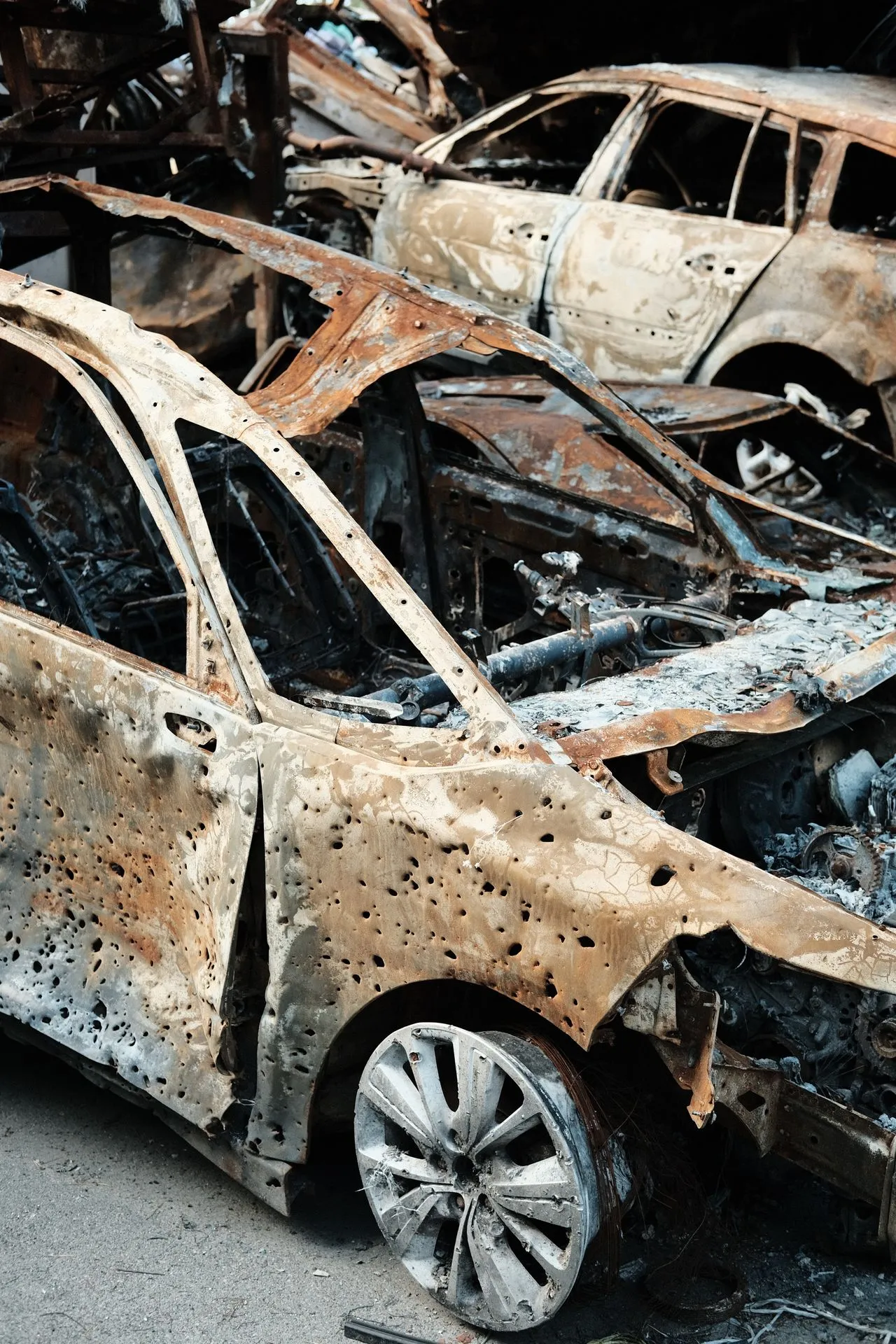
For severely damaged, unwanted, or end-of-life vehicles, the value may come from more than resale potential.
A vehicle can contain recoverable steel, aluminum, copper, catalytic-converter materials, reusable components, and other materials.
This is one reason people may look into cash for scrap cars when a vehicle has reached the end of its practical road life.
The amount offered can vary significantly.
Vehicle type, weight, condition, location, current material prices, and usable parts can all influence the final value.
Depreciation Doesn't Mean You Should Sell Immediately
It can be tempting to think:
"Cars lose value every year, so I should sell mine as soon as possible."
Not necessarily.
You also need to consider the cost of replacing the vehicle.
If your current car is reliable and inexpensive to operate, keeping it for several more years may be financially reasonable even though its resale value continues to decline.
The money you save by avoiding a new car payment can sometimes outweigh the additional depreciation.
That's why depreciation should be considered alongside ownership costs, not in isolation.
A Simple Way to Track Your Car's Value
You don't need a complicated spreadsheet.
Once or twice a year, check:
1. Current market value
Look at similar vehicles with comparable mileage and condition.
2. Repair costs
Keep track of major upcoming maintenance.
3. Mileage
Record how quickly you're adding kilometres.
4. Condition
Check rust, body damage, interior wear, tires, and mechanical issues.
5. Ownership costs
Consider insurance, fuel, maintenance, and financing.
Then ask:
"Is this car still giving me enough value for what it costs to keep?"
That question is often more useful than simply asking how much the car has depreciated.
The Bottom Line
Depreciation starts early and continues throughout a vehicle's life, but the rate is not identical for every car or every year.
Age matters.
Mileage matters.
Condition matters.
So do accidents, maintenance, demand, technology, fuel economy, and repair costs.
Eventually, a vehicle's resale value can become only one part of the equation. For an older or severely damaged vehicle, its parts and recyclable materials may become more important to its overall value.
The key is to stop thinking of your car's value as one permanent number.
It changes as the car ages, wears out, gets repaired, and moves through different stages of its life.

























Sign in to leave a comment.