

You could have the best product in your market and still watch people scroll right past your brand. That's the uncomfortable truth many business owners run into. Being good at what you do isn't the same as being visible, and being visible isn't the same as being trusted. Somewhere between "nobody knows we exist" and "customers keep coming back," a lot has to happen, and that's exactly the gap digital marketing is built to close.
Quick answer: Digital marketing connects brands with customers by meeting them at each stage of their decision-making process: helping people discover a brand (through SEO, social media, and ads), building trust through content and consistent presence, personalising the experience based on behaviour, and staying in touch after the sale through email and retention strategies. It works because it matches how people actually research and buy, not how businesses wish they would.
The rest of this guide breaks down exactly how that process works, stage by stage, and where most businesses lose people along the way.
The Customer Journey: The Framework Behind Everything Else
Before looking at individual channels, it helps to understand the structure they all fit into. Marketers often describe this as a journey with a few broad stages:
- Awareness: the customer realises they have a problem or need and starts looking for options.
- Consideration: they compare solutions, read content, check reviews, and narrow their choices.
- Decision: they choose a provider and make a purchase or sign up.
- Retention: after the purchase, they either become a repeat customer or drift away.
- Advocacy: satisfied customers refer others or leave reviews that influence the next person's awareness stage.
Every channel discussed in this article maps to one or more of these stages. SEO and social media mostly drive awareness. Content and reviews influence consideration. A clear website and strong offer drive decisions. Email and customer service handle retention. Understanding this structure is what separates a business that "does marketing" from one that builds a system where each part supports the next.
How Customers Discover Brands Today
A few years ago, discovery mostly meant word of mouth, local ads, or stumbling across a storefront. Now it's a mix of search engines, social feeds, recommendations, reviews, and content people find useful enough to share.
Someone searching for a solution to a problem, scrolling through Instagram during a break, or reading a comparison article before buying, all of that is discovery happening in real time. What most businesses underestimate is that customers rarely decide after one interaction. They see a brand a few times across different places (a search result, a social post, a friend's recommendation) before they actually act. Marketers sometimes call this idea "multiple touchpoints," and it's the reason a single ad or post rarely does the heavy lifting alone.
This is why digital marketing isn't one single activity. It's a combination of channels working together, each one catching a different type of customer at a different stage of their journey.
The Core Channels That Make Up a Digital Marketing Strategy
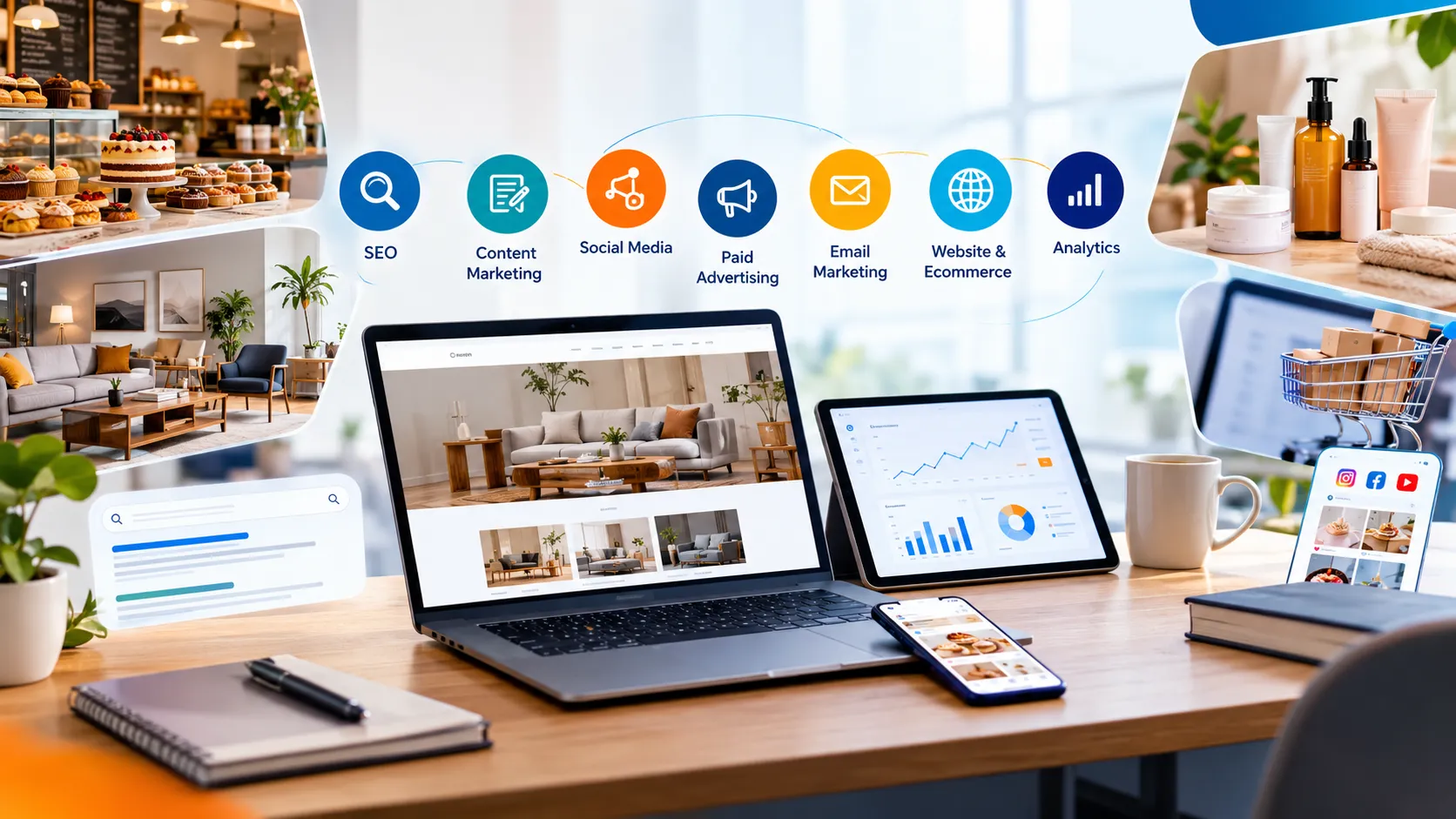
Most complete strategies combine several of the following:
- Search engine optimisation (SEO): improving your website so it ranks for what people search for
- Content marketing: blogs, videos, guides, and resources that educate and build trust
- Social media marketing: organic posting and community engagement
- Paid advertising (PPC): search ads, social ads, and display ads for faster visibility
- Email marketing: direct communication with people who've already shown interest
- Conversion rate optimisation (CRO): improving your website so visitors actually take action
- Marketing automation: using tools to send the right message at the right time without manual repetition
- Analytics and reporting: tracking what's working and what isn't
Not every business needs all of these at once. A new company might start with SEO and content to build a foundation, then add paid ads once they understand what converts. An established brand might already have traffic but need better email nurturing to increase repeat purchases. The right mix depends on where you are, not on doing everything at once.
Building Awareness Without Shouting for Attention
Awareness is often misunderstood as simply "getting seen." But visibility without relevance doesn't build a brand, it just adds noise.
Real awareness comes from repeated, meaningful exposure. A blog post that answers a question. A social media update that feels honest instead of scripted. An ad that shows up at the right moment instead of interrupting someone mid-task. Over time, these small touchpoints add up to familiarity, and familiarity is what makes someone pause and consider a brand instead of scrolling past it.
This is also where a lot of businesses realise they need outside expertise. Running a company and running a marketing calendar at the same time is difficult, which is one reason many growing brands eventually bring in a digital marketing agency to handle strategy, execution, and consistency without pulling focus from day-to-day operations.
In-House Marketing Versus Hiring Outside Help
This question comes up for almost every growing business, so it's worth addressing directly.
Handling marketing in-house works well when a business has someone with genuine expertise across multiple channels, or when the scope is narrow enough for one person to manage well (for example, just social media for a local shop). The advantage is closer control and faster internal communication.
Hiring outside help makes more sense when the business needs several channels running at once (SEO, content, ads, email) and doesn't have the internal bandwidth or specialised skill to run them well. The trade-off is cost versus time saved and expertise gained. There's no universally right answer here. It depends on team size, budget, and how much marketing complexity the business actually needs right now versus six months from now.
Reaching the Right Audience, Not Just a Large One
There's a big difference between reaching people and reaching the right people. A campaign that gets thousands of views but zero relevant leads hasn't actually done its job.
Understanding your audience means knowing their pain points, their habits, and where they're likely to be looking for a solution like yours. This could mean:
- Targeting specific job roles for outreach aimed at other businesses
- Focusing on local audiences for a service-based business
- Speaking to a particular age group or interest on social platforms
- Narrowing ad targeting by past behaviour instead of broad demographics
Precision matters more than reach. A smaller, well-targeted audience that actually needs your product will always outperform a broad audience that has no real intent to buy. This is also why buyer personas (simple profiles describing your ideal customer's needs, habits, and objections) are still useful, even though the term gets overused. They keep messaging focused instead of trying to speak to everyone at once.
Social Media: Where Conversations Happen
Social media isn't just a place to post updates anymore. It's where customers ask questions, read reviews, compare options, and decide whether a brand feels trustworthy.
What works here isn't constant selling. It's showing up as a brand people can actually relate to: answering comments, sharing useful tips, being transparent when something goes wrong. Customers notice when a brand treats social media as a two-way conversation instead of a broadcast channel.
Not every platform suits every business. A B2B software company will likely get more value from LinkedIn than from TikTok. A local café or fashion brand might see the opposite. Instead of trying to maintain a presence everywhere, it's usually smarter to focus on two or three platforms where your actual audience spends time, and do those consistently well.
Search Engine Visibility: Being There When It Matters
When someone searches for a product, service, or solution, they're already showing intent. That's what makes search engine visibility so valuable. You're not interrupting someone's day, you're answering a question they're actively asking.
SEO generally breaks down into three parts. On-page SEO involves making sure your content directly answers the search query, with clear headings, relevant information, and a logical structure. Technical SEO covers the behind-the-scenes factors, like site speed, mobile friendliness, and how easily search engines can crawl your pages. Off-page SEO includes things like backlinks and brand mentions that signal to search engines your site is credible.
Local SEO deserves a separate mention too. For businesses that serve a specific area, appearing in local search results and map listings often brings in more relevant leads than broader national visibility.
Search visibility takes time to build, but it compounds. A well-optimised page can keep attracting customers months or years after it's published, without ongoing ad spend, which is what makes it different from paid channels that stop working the moment the budget stops.
Paid Advertising: When You Need Faster Results
SEO and content take time to build momentum. Paid advertising fills that gap by putting your brand in front of people immediately, whether through search ads, social media ads, or display placements.
The advantage of paid ads is control: you decide the audience, the budget, and the message. The trade-off is that visibility stops the moment spending stops. Most balanced strategies use paid ads to generate quick, measurable results while organic channels like SEO and content build a more durable foundation underneath.
Content That Actually Helps, Not Just Fills Space
Content marketing gets thrown around a lot, but at its core, it simply means providing information that helps your audience before you ever ask them to buy something.
This could be a blog explaining how to solve a common problem, a video walking through how a product works, or a guide comparing different approaches to a decision. When content is genuinely useful, it builds trust naturally. People start to see your brand as knowledgeable rather than just another company trying to sell them something.
The mistake many businesses make is creating content that talks only about themselves. Customers don't care about your company history as much as they care about whether you understand their problem. Content that answers a real question, in plain language, consistently outperforms content written purely to please a search algorithm.
Reviews and Reputation: The Trust Signal Most Businesses Ignore
Search engines and customers both treat reviews as a credibility signal. A business with a healthy volume of honest reviews, and one that responds to them professionally, tends to earn more trust than one that ignores feedback entirely.
This isn't about chasing perfect ratings. It's about showing that real customers have used the product or service and that the business is responsive when something needs addressing. For local businesses especially, reviews often influence search visibility as much as they influence a customer's final decision.
Email Marketing: The Underrated Relationship Builder
Email doesn't get the same attention as social media, but it remains one of the most direct ways to stay connected with people who already know your brand. Unlike social platforms, where algorithms decide who sees your content, email goes straight to someone's inbox.
Effective email marketing isn't about sending frequent promotions. It works better as a mix of helpful updates, useful tips, and occasional offers, so subscribers actually look forward to opening it rather than deleting it on sight. Simple things like welcome sequences for new subscribers or follow-ups after a purchase can make a noticeable difference in how connected a customer feels to a brand.
Personalisation: Making Customers Feel Understood
Generic messaging rarely works anymore. Customers expect brands to understand at least a little about who they are and what they need.
Personalisation can be as simple as:
- Sending relevant product recommendations based on browsing behaviour
- Adjusting email content based on past purchases
- Tailoring ad messaging to different customer segments
- Recognising returning visitors on a website and adjusting what's shown to them
None of this requires guessing. It comes from paying attention to how customers interact with your brand and using that information respectfully, not from collecting data just for the sake of it.
Turning Interest Into Leads and Conversions
Attention alone doesn't pay the bills. At some point, interest needs to turn into action, whether that's a form submission, a phone call, or a completed purchase.
This is where clear calls to action, simple website navigation, and a smooth checkout or inquiry process matter more than people expect. A confusing website can undo all the work put into attracting a visitor in the first place. Even small friction points, like a form asking for too much information or a slow-loading page, can quietly push potential customers away before they convert.
Lead generation also looks different depending on the business model. A local business might prioritise phone calls or store visits. A software company might focus on demo requests or free trials. Understanding your specific conversion goal is the first step to actually improving it.
Staying Consistent Across Every Channel
Customers often interact with a brand across several channels before buying: seeing an ad, checking the website, reading reviews, then following up on social media. If the messaging, tone, or branding feels inconsistent across these touchpoints, it creates doubt.
This is often called an omnichannel approach, though the term matters less than the practice: making sure a customer gets a coherent experience no matter where they encounter the brand. A promotion advertised on social media should match what's on the website. A tone that's friendly on Instagram shouldn't turn cold and corporate in an email. Small inconsistencies add up to a feeling that a brand isn't fully in control of its own presence.
Measuring What Customers Actually Do
One advantage digital marketing has over traditional advertising is that it can be measured. You can see which pages people visit, how long they stay, where they drop off, and what actually leads to a sale.
This isn't about drowning in data for the sake of it. It's about asking useful questions: Which channel brings in the most relevant traffic? Where are people losing interest? What content keeps bringing people back?
A few metrics worth watching regularly include website traffic sources, conversion rate, cost per lead (if running ads), email open and click rates, and customer retention over time. Reviewing this information regularly helps refine strategy instead of relying on guesswork, and it prevents budget from being wasted on channels that aren't actually working.
From Reaching Customers to Building Relationships
There's an important distinction worth making clear: reaching a customer and building a relationship with them are not the same thing.
Reaching someone means your ad, post, or email got in front of them. Building a relationship means they trust your brand enough to come back, recommend you to someone else, or give you the benefit of the doubt if something goes wrong.
That kind of trust doesn't come from a single campaign. It comes from consistent value, honest communication, and follow-through after the sale, not just before it. Loyalty programs, helpful email follow-ups, responsive customer service, and continued engagement after a purchase all play a part in this.
This relationship-building stage is often where digital marketing services for small business owners prove especially valuable, since smaller teams rarely have the bandwidth to maintain consistent follow-up without dedicated support.
Why B2B Marketing Requires a Different Approach
Business customers don't buy the way individual consumers do. Purchase decisions often involve multiple people, longer research periods, and a stronger need for proof that a solution actually works.
This is why b2b digital marketing services usually focus more on detailed content, case-based explanations, and platforms like LinkedIn or email, rather than the fast, visual-first approach that works well for consumer brands. The goal isn't quick attention, it's building enough credibility that a buying committee feels confident moving forward. Sales cycles in B2B are also longer, so nurturing leads over weeks or months through helpful content matters more than trying to force a quick conversion.
Common Mistakes That Quietly Undermine Digital Marketing
A few patterns show up repeatedly across businesses struggling to connect with customers online:
- Posting inconsistently, then disappearing for weeks at a time
- Focusing only on selling instead of educating or helping
- Ignoring website speed and mobile experience
- Running ads without a clear conversion goal in mind
- Treating every channel the same instead of adapting the message
- Never reviewing performance data to adjust strategy
- Letting reviews and customer feedback go unanswered
None of these mistakes are dramatic on their own, but together they quietly limit how much a brand can grow online.
Why Consistency Matters More Than Intensity
One of the most overlooked parts of digital marketing is consistency. A single great campaign won't build a brand. Regular, dependable presence across search, social, and content will.
Customers notice when a brand disappears for months and then suddenly pushes hard for sales. It feels transactional. A steady, ongoing strategy feels reliable, and reliability is a big part of what makes people trust a brand enough to buy from it more than once.
This is also why working with the best digital marketing agency for your specific needs matters more than working with the most well-known one. The right fit depends on your industry, goals, and budget, not just reputation. Some businesses take time comparing different best digital marketing agencies before choosing a long-term partner, and that diligence is worth it, since strategy and communication style matter just as much as technical skill.
Frequently Asked Questions
How long does digital marketing take to show results?
It depends on the channel. Paid ads can bring visibility within days, while SEO and content marketing typically take a few months to build momentum, since they rely on search engines and audiences gradually recognising your site as relevant and trustworthy.
Can a small business handle digital marketing without outside help?
Some parts, like basic social media posting, are manageable in-house. Others, like technical SEO or ad campaign management, often benefit from experience, since mistakes in these areas can waste budget or hurt visibility.
Is digital marketing better than traditional marketing?
It's not necessarily better, but it is more measurable and often more cost-efficient for reaching a specific audience. Many brands still combine both, depending on their industry and customer base.
What's the difference between SEO and paid ads?
SEO builds visibility gradually and keeps working after the initial effort, while paid ads deliver immediate visibility but stop the moment spending stops. Most effective strategies use both together.
How much should a business budget for digital marketing?
There's no fixed number that fits every business, since it depends on industry, competition, and goals. What matters more than the exact figure is matching the budget to a clear objective, whether that's brand awareness, lead generation, or direct sales, rather than spreading a small budget too thin across every channel at once.
How do I know which digital marketing channels my business actually needs?
Start with where your customers already are. A local service business benefits most from local SEO and Google visibility, while a B2B company often gets more value from LinkedIn, email, and in-depth content.
Bringing It All Together
Connecting with customers online isn't about picking one tactic and hoping it works. It's about understanding how visibility, engagement, content, and follow-through fit together into one coherent experience across the entire customer journey, from the first search to the tenth repeat purchase.
Businesses like KPTL Web Solution approach this by looking at each piece, from search visibility to social engagement to conversion, as part of a single strategy rather than isolated tasks.
At its core, digital marketing isn't about interrupting people until they notice you. It's about showing up consistently, offering real value, and earning enough trust that customers choose to stay. That's what actually connects brands with the people they're trying to serve, not just for one purchase, but for the relationship that follows.




















Sign in to leave a comment.