
Industrial organizations often have to manage multiple work activities at the same time. Maintenance, construction, equipment inspection, shutdowns, commissioning, and routine operations can all take place within the same facility. When some of these activities involve hazardous conditions, organizations need a structured process to make sure work is properly planned and controlled.
A permit-to-work (PTW) system provides that framework. It establishes a formal process for identifying hazards, defining precautions, assigning responsibilities, and authorizing specific work.
As industrial operations become more complex, many organizations are moving from paper-based permits toward digital solutions. Permit to work software can help connect work authorization, risk assessment, isolation, approvals, field verification, and permit monitoring within a centralized system.
What Does a Permit-to-Work Process Control?
A permit-to-work process is generally used for activities that require additional safety controls because of their potential hazards.
Depending on the organization's procedures, permits may be required for:
- Hot work
- Confined-space entry
- Electrical work
- Excavation
- Work at height
- Lifting operations
- Line breaking
- Equipment maintenance
- Radiography
- Work involving hazardous substances
The permit provides a formal way to communicate the conditions under which the work is authorized.
However, issuing a permit alone does not make an activity safe. Effective PTW depends on proper hazard identification, suitable controls, competent personnel, communication, supervision, and verification of site conditions.
The UK Health and Safety Executive (HSE) describes a permit-to-work system as a formal system used to control certain types of potentially hazardous work and communicate the precautions required.
Why Digital PTW Is Becoming Important
Paper permits can become difficult to manage when an organization has multiple departments, contractors, work locations, and shifts.
Imagine a large manufacturing facility carrying out a planned shutdown. Maintenance teams may be working on electrical systems while contractors perform hot work, scaffolding activities, equipment cleaning, and inspection work.
The EHS team may need to monitor hundreds of permits and determine whether:
- The permit has been approved
- Required controls have been completed
- Equipment has been isolated
- The permit is still valid
- Other work is taking place nearby
- The work has been suspended
- The permit requires revalidation
- The job has been completed and closed
With paper records, this information can require considerable manual coordination.
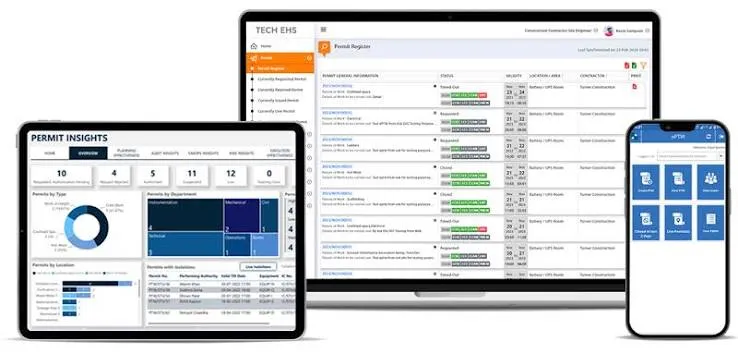
Digital PTW systems provide a centralized view of this information and can make permit status easier to track.
Creating a Structured Permit Workflow
One of the key advantages of digital PTW is workflow management.
Instead of relying on users to manually move a document from one person to another, organizations can establish predefined stages for each permit type.
A typical workflow might be:
Work Request → Risk Assessment → Document Review → Isolation → Field Verification → Approval → Permit Issue → Work Execution → Revalidation → Closure
Different permit types can have different workflows depending on the organization's requirements.
For example, a confined-space permit may require atmospheric testing and rescue arrangements, while an electrical permit may require specific isolation and verification steps.
A configurable digital workflow can ensure that the relevant requirements are addressed before the permit moves to the next stage.
Connecting Work Permits With Risk Assessment
Risk assessment is an important part of planning hazardous work.
A digital PTW platform can connect the permit with relevant hazard assessments, JSA/JHA documents, checklists, and control measures.
This allows users to consider the conditions associated with the actual job rather than treating the permit as a generic authorization.
For example, a risk assessment for hot work might identify potential hazards involving fire, combustible materials, gases, nearby operations, and equipment condition.
The associated permit can then require the relevant controls to be verified before work is authorized.
This creates a stronger connection between risk identification and work authorization.
Integrating Isolation and Hazardous Energy Control
Maintenance work can expose workers to hazardous energy from electrical, mechanical, hydraulic, pneumatic, thermal, chemical, and other sources.
Before work starts, the applicable energy sources may need to be isolated and verified according to the organization's procedures.
A digital PTW system can connect isolation requirements to the associated work permit.
This provides greater visibility into the relationship between:
Equipment → Isolation → Permit → Authorized Work
TECH EHS Solution's PTW platform includes isolation management capabilities designed to help organizations manage isolation activities as part of the broader permit-to-work process.
For organizations using lockout/tagout procedures, digital integration can also help maintain a more structured record of the relationship between the work and energy-control activities.
Managing Simultaneous Operations
SIMOPS, or simultaneous operations, can introduce additional complexity into industrial work environments.
The challenge is that individual jobs may be adequately controlled while interactions between different jobs create additional risks.
For example, a facility may simultaneously have:
- Hot work in one area
- Chemical transfer nearby
- Crane operations overhead
- Electrical maintenance
- Confined-space work
- Equipment commissioning
A centralized permit system can provide visibility into these activities.
With location-based permit information and SIMOPS monitoring, responsible personnel can review active work and identify potential conflicts before authorizing additional activities.
This capability can be particularly useful during shutdowns, turnarounds, construction projects, and commissioning activities.
Improving Contractor Work Authorization
Contractors often perform a substantial amount of maintenance and project work at industrial sites.
Managing contractor permits through separate documents can make it harder for site management to maintain consistent oversight.
A digital PTW platform can bring contractor activities into the organization's established authorization workflow.
Depending on the configuration, contractors can provide information such as:
- Scope of work
- Risk assessment
- Method statement
- Required certificates
- Worker details
- Competency information
- Safety controls
Authorized personnel can then review the information before the permit is approved.
This creates a common process for managing hazardous work regardless of whether the work is performed by employees or contractors.
Field Verification and Mobile PTW
A permit is only useful if the actual site conditions match the conditions under which the work was authorized.
For this reason, field verification can be an important part of the PTW process.
Mobile-enabled PTW platforms allow authorized personnel to access relevant permit information from the worksite. Depending on the system, users may be able to complete inspections, checklists, gas tests, approvals, electronic signatures, or other required activities.
TECH EHS Solution supports digital and mobile-based permit management, helping connect field personnel with the broader PTW workflow.
This can reduce dependence on physical documents and improve communication between field teams and permit authorities.
Managing Permit Status and Expiry
A permit normally has a defined period of validity. If work continues beyond that period, the organization's procedure may require revalidation, extension, or a new permit.
Managing these dates manually can be difficult when many permits are active.
Digital systems can provide status information for:
- Draft permits
- Pending approvals
- Active permits
- Suspended permits
- Expired permits
- Revalidated permits
- Completed permits
- Closed permits
This gives safety and operations teams a clearer picture of what requires attention.
Automated alerts can also help responsible users identify permits approaching expiry or requiring action, depending on the system configuration.
Supporting Shift Handover
Many industrial facilities operate continuously across multiple shifts.
When work continues from one shift to another, important information about active permits, isolations, work status, and outstanding controls needs to be communicated.
A centralized digital permit register can help incoming personnel review active permits without relying entirely on physical paperwork or informal communication.
This can make the handover process more structured and provide a consistent record of the work status.
Building a Stronger Audit Trail
Another benefit of digital PTW management is traceability.
A digital permit can maintain information about actions taken throughout its lifecycle.
For example:
- Who requested the permit?
- Who completed the risk assessment?
- Who reviewed the permit?
- Who approved it?
- When was it issued?
- Was it suspended?
- Was it revalidated?
- When was the work completed?
- Who closed the permit?
This information can support audits, management reviews, incident investigations, and compliance activities.
Instead of searching through physical files, authorized personnel can retrieve historical permit information from the centralized system.
Using PTW Data to Identify Trends
Digital permits can also create a valuable source of operational data.
Organizations can analyze permit information to understand patterns such as:
- High volumes of specific permit types
- Areas with frequent hazardous work
- Permit approval delays
- Repeated permit deviations
- Contractor activity
- Suspended permits
- Expired permits
- Work conflicts
- Audit findings
- Permit closure performance
These insights can help organizations improve their planning and control-of-work processes.
For example, if a particular work area repeatedly experiences permit conflicts, management can investigate whether better scheduling or coordination is required.
What Should Organizations Consider Before Implementing PTW Software?
Technology should support the organization's safety management process rather than replace it.
Before selecting a solution, organizations should evaluate several areas.
1. Permit Configuration
Can the system support the organization's different permit types, forms, approval levels, and workflows?
2. Risk Management
Can risk assessments, hazards, and control measures be connected to the permit?
3. Isolation Management
Can the platform support the organization's isolation and LOTO processes?
4. SIMOPS
Can users understand what other work is taking place within relevant areas?
5. Contractor Access
Can contractors participate in the workflow while maintaining appropriate authorization controls?
6. Mobile Access
Can field personnel access and update relevant permit information from the worksite?
7. Reporting
Can management access dashboards and reports that provide useful information about PTW performance?
8. Integration
Can the system integrate with existing EHS, ERP, maintenance, identity-management, or other business systems where required?
9. Auditability
Does the platform maintain a reliable history of permit actions and status changes?
TECH EHS Solution for Digital Permit Management
TECH EHS Solution provides a digital permit-to-work platform designed to help organizations manage hazardous work through centralized workflows.
The solution supports capabilities such as permit creation, configurable workflows, risk assessment, isolation management, SIMOPS, gas testing, permit monitoring, audits, dashboards, and permit closure.
By connecting these activities within one platform, TECH EHS Solution helps organizations move beyond document-based permit administration toward a more connected control-of-work process.
The platform can be used across industries where hazardous work needs to be planned and controlled, including manufacturing, oil and gas, chemicals, energy, pharmaceuticals, construction, automotive, and other industrial environments.
Digital PTW as Part of Modern EHS Management
Permit-to-work management does not operate independently from the wider EHS management system.
A permit may connect with risk assessments, contractor management, inspections, incident investigations, training, isolation procedures, and corrective actions.
Digitalizing these connections can give organizations a more comprehensive view of how work is planned and controlled.
A modern permit to work software solution therefore should not be viewed simply as an electronic replacement for a paper form. Its greater value lies in connecting people, work activities, hazards, controls, equipment, and authorization processes.
For organizations managing complex industrial environments, digital PTW can provide greater visibility and traceability while reducing administrative effort.
The technology works best when it is supported by clear procedures, competent personnel, effective supervision, and strong safety leadership.
Ultimately, the purpose remains the same: to ensure that hazardous work is properly planned, authorized, controlled, monitored, and completed under defined safe conditions.
























Sign in to leave a comment.