
Industrial machines often operate for long hours under heavy loads, high temperatures, dust, and continuous vibration. In these conditions, even a small lubrication problem can gradually affect machine performance. Bearings may wear faster, moving components may experience excessive friction, and maintenance teams may face unexpected equipment stoppages.
This is why Grease Lubrication Systems are an important part of industrial maintenance. They help deliver grease to critical moving components, support consistent lubrication, and reduce the need for repeated manual greasing. When properly selected and maintained, these systems can contribute to reliable machinery operation and more organized preventive maintenance.
What Are Grease Lubrication Systems?
Grease Lubrication Systems are arrangements designed to supply grease to specific lubrication points in industrial machinery. Depending on the machine and operating conditions, grease may be delivered manually, automatically, or through a centralized distribution network.
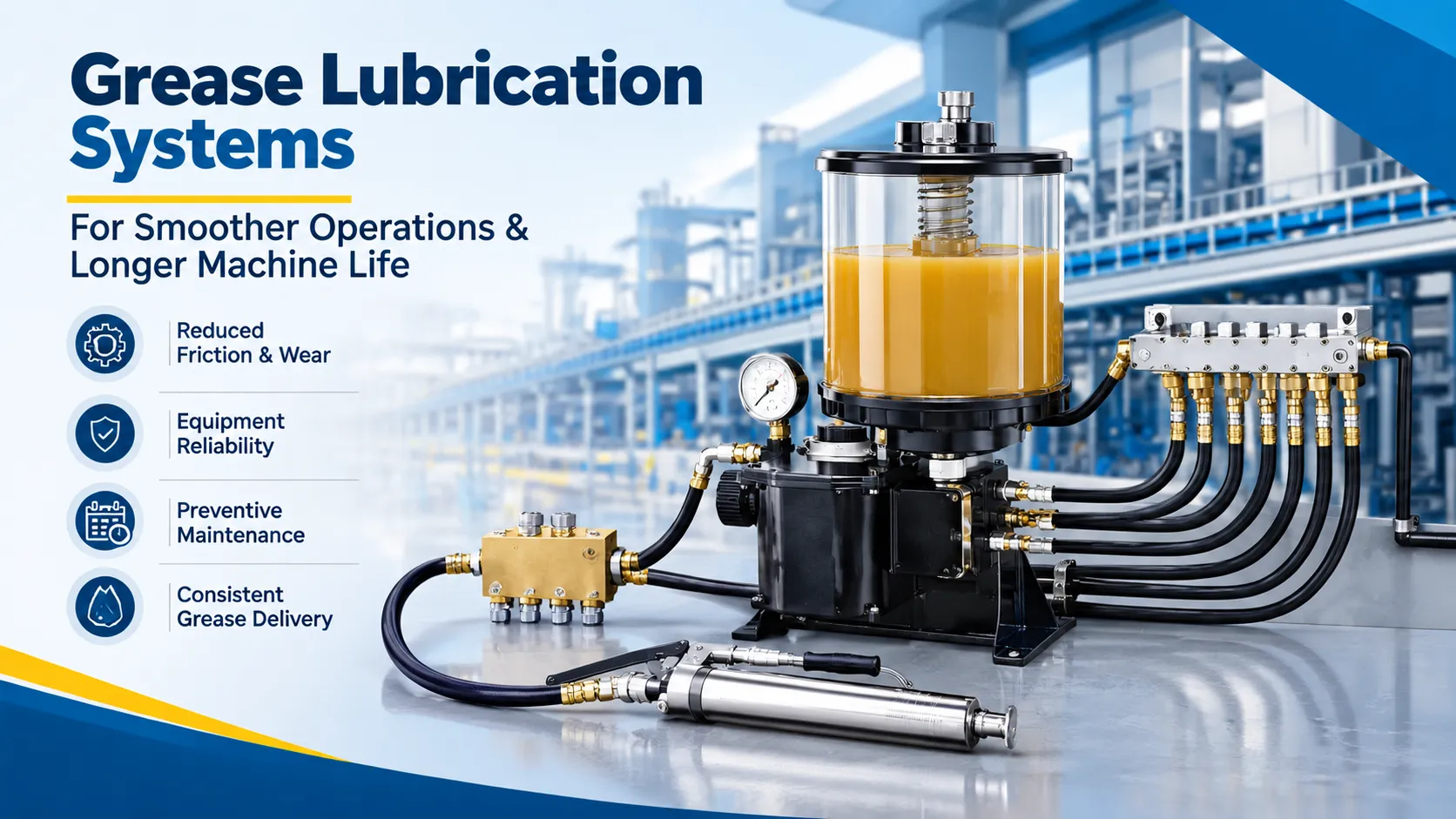
A typical system can include a grease reservoir, pump, distribution blocks, metering devices, pipelines, fittings, and a controller where automation is used. Each component plays a role in moving grease from its storage point to the parts that require lubrication.
For machines with several bearings, chains, joints, or sliding components, a centralized arrangement can make lubricant delivery easier to manage. Instead of depending entirely on an operator to grease each point individually, the system can distribute grease according to its design and operating cycle.
Why Is Consistent Grease Lubrication Important?
Grease creates a lubricating film between contacting surfaces, helping reduce friction and wear. It can also help protect components against moisture and certain contaminants when the correct grease and application method are used.
However, applying grease is not simply a matter of using more lubricant. Too little grease may leave components inadequately protected, while excessive greasing can waste lubricant and may cause problems in applications where over-lubrication is unsuitable.
A correctly configured lubrication system helps deliver grease in quantities and at intervals appropriate for the machinery. This supports consistent maintenance and helps reduce avoidable lubrication errors.
How Do Grease Lubrication Systems Work?
The working principle depends on the system configuration. In a centralized system, grease is stored in a reservoir and supplied by a pump. It then travels through pipelines to distribution or metering components, which direct the lubricant to designated points.
In an automatic arrangement, a controller may manage lubrication cycles based on preset intervals or machine operating requirements. Other configurations may use progressive or dual-line distribution methods, depending on the number of lubrication points and the application.
For example, a conveyor system with multiple bearings may benefit from a centralized arrangement that supplies grease to designated points without requiring maintenance personnel to visit each location for every lubrication cycle.
The correct design depends on grease characteristics, required delivery quantities, operating pressure, machine layout, and environmental conditions.
Key Benefits for Industrial Applications
1. Reduced Friction and Component Wear
Regular, appropriate lubrication helps protect bearings, joints, chains, and other moving components from excessive friction. This can support longer component service life when combined with correct installation and maintenance.
2. More Organized Preventive Maintenance
Automated or centralized systems can reduce repetitive manual greasing tasks. Maintenance teams can plan inspections and lubrication schedules more systematically, although routine checks remain necessary.
3. Improved Lubrication Consistency
A properly designed system delivers grease according to its specified distribution method. This can help reduce the variation associated with manual application, particularly when machinery has numerous lubrication points.
4. Less Unnecessary Lubricant Consumption
Controlled grease delivery can help avoid over-application. Actual savings depend on the system design, machine requirements, and maintenance practices.
5. Support for Equipment Reliability
By helping maintain suitable lubrication conditions, these systems can contribute to fewer lubrication-related problems. They do not eliminate every cause of breakdown, but they form a valuable part of a broader preventive maintenance programme.
Where Are Grease Lubrication Systems Used?
These systems are useful across industries where machinery contains multiple moving components and requires regular grease application.
Common applications include:
- Steel and rolling mills: Bearings, rollers, and material-handling equipment.
- Cement plants: Crushers, conveyors, and other heavy-duty machinery.
- Mining operations: Equipment exposed to dust, heavy loads, and demanding working conditions.
- Manufacturing facilities: Production machinery, bearings, chains, and mechanical assemblies.
- Material handling: Conveyor systems and equipment with multiple lubrication points.
- Heavy engineering: Machines that require dependable lubrication during repeated operating cycles.
The appropriate configuration should always be selected according to the equipment manufacturer's recommendations and the actual operating environment.
How to Choose the Right Grease Lubrication System
Before selecting a system, maintenance and engineering teams should assess the machine's lubrication requirements rather than choosing equipment based on price alone.
Important factors include the number and location of lubrication points, grease grade and consistency, required lubricant quantity, operating pressure, lubrication frequency, and ambient conditions. The team should also consider whether manual, centralized, or automatic delivery is most suitable.
Installation and serviceability matter as well. Pipelines should be routed appropriately, connections should be compatible, and the system should allow routine inspection of lubricant levels, leaks, and distribution performance.
Working with experienced Mediwave Grease Lubrication Systems Manufacturers can help businesses evaluate these requirements and identify equipment suited to their machinery. Buyers comparing Grease Lubrication Systems Manufacturers in India should look at technical expertise, product suitability, component quality, and the availability of application support.
Why Consider Techno Drop Engineers?
Techno Drop Engineers supplies industrial lubrication equipment, including grease lubrication systems, centralized lubrication solutions, and related products. The company states that it has served industrial lubrication requirements since 1999.
For businesses evaluating lubrication options, the key consideration should be whether the proposed configuration matches the machine, grease, and maintenance requirements. Discussing these details with a knowledgeable manufacturer can help clarify the appropriate system arrangement and installation needs.
You can explore the Grease Lubrication Systems range from Techno Drop Engineers for product information. You may also review the company's centralized lubrication system solutions to understand how lubricant distribution can be managed across multiple machine points.
Frequently Asked Questions
Do grease lubrication systems eliminate manual maintenance?
No. Automatic systems can reduce routine manual greasing, but lubricant levels, pipelines, fittings, and distribution performance still need periodic inspection.
Are grease lubrication systems suitable for heavy machinery?
Yes, when the system is designed for the machine's operating pressure, grease requirements, load conditions, and lubrication points.
How do I select the correct system?
Evaluate the machine layout, grease type, required delivery quantity, operating conditions, and maintenance schedule before choosing a configuration.
Conclusion
Grease Lubrication Systems help industrial facilities manage lubricant delivery more consistently, protect moving components, and organize preventive maintenance. Their effectiveness depends on correct system selection, suitable grease, proper installation, and regular inspection.
For industries operating heavy machinery or equipment with multiple lubrication points, a well-matched system can be a practical investment in long-term equipment reliability. Reviewing the application requirements with an experienced manufacturer is the best starting point for choosing a solution that meets the needs of the plant.



















Sign in to leave a comment.