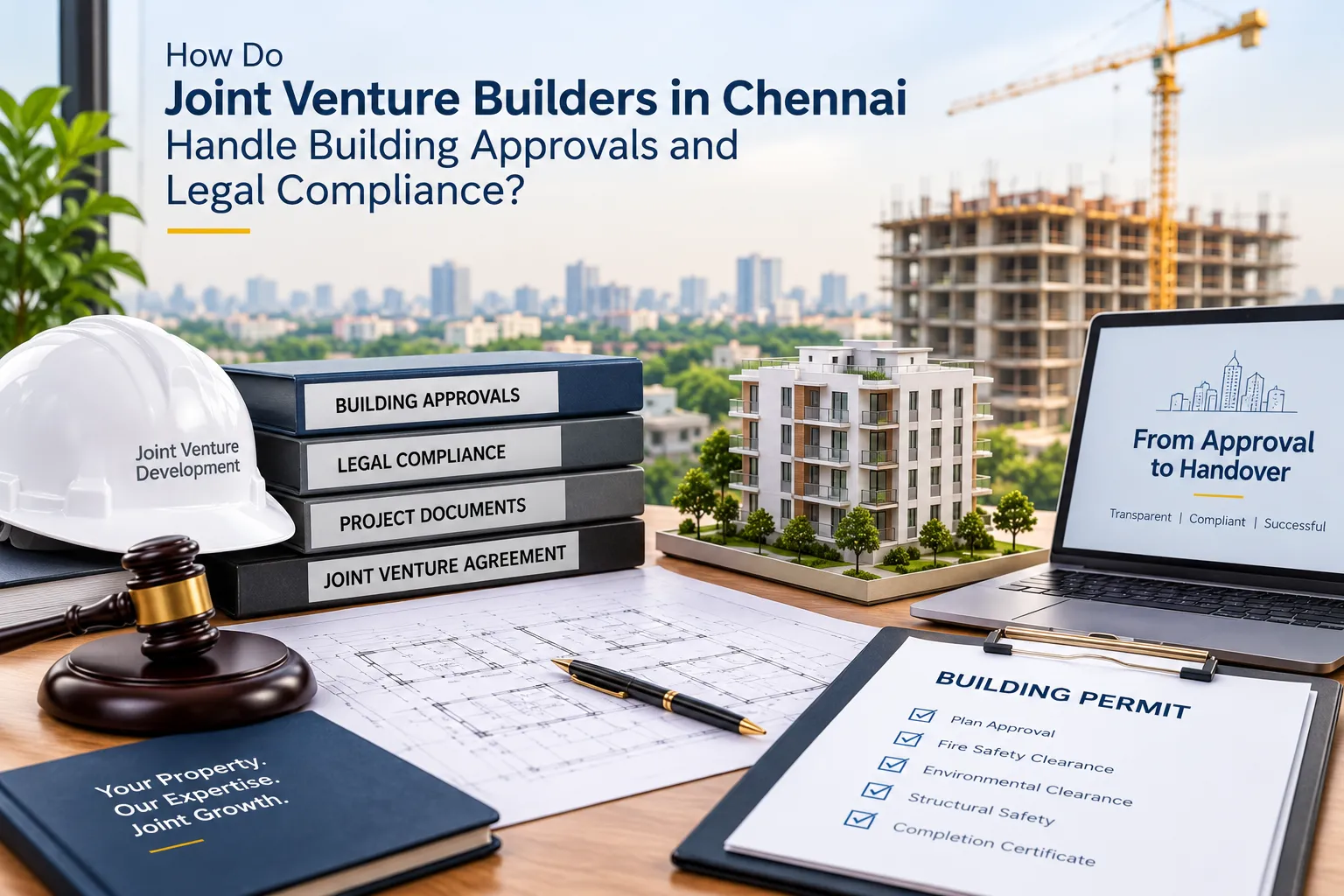

Building approvals and legal compliance are essential for successful joint venture property development. Professional joint venture builders in Chennai help landowners navigate legal procedures, obtain necessary permissions, and ensure construction follows applicable government regulations.
From property verification to final project handover, experienced developers manage regulatory responsibilities systematically, reducing legal risks and unnecessary construction delays.
Why Are Building Approvals Important for Joint Venture Construction?
Building approvals confirm that a proposed development complies with local planning regulations, zoning requirements, and construction standards.
Without proper permissions, property development may face legal disputes, penalties, construction delays, or difficulties obtaining completion certificates.
Reliable joint venture builders in chennai prioritize regulatory compliance before beginning construction to protect landowners and ensure smooth project execution.
How Do Joint Venture Builders in Chennai Manage Building Approvals?
1. Property Document and Ownership Verification
Before starting development, builders conduct a detailed examination of the property's legal documents.
Important records include:
- Sale deed and parent documents
- Encumbrance Certificate (EC)
- Patta and relevant revenue records
- Property tax receipts
- Existing building approval documents
This verification helps identify ownership disputes, legal restrictions, or documentation issues that could affect project development.
2. Site Assessment and Planning Permission
After document verification, developers evaluate the property's construction potential.
They examine plot dimensions, road width, setback requirements, permissible Floor Space Index (FSI), and applicable zoning regulations.
Depending on the property's location and development category, planning permission may involve the Chennai Metropolitan Development Authority (CMDA) or another competent planning authority.
Proper site evaluation helps developers prepare building plans that comply with regulatory requirements.
3. Obtaining Necessary Government Approvals
Experienced joint venture builders coordinate with architects, engineers, and relevant authorities to secure statutory permissions.
Depending on project requirements, these may include:
- Planning permission and building permits
- Fire safety clearance, where applicable
- Environmental clearance for qualifying projects
- Other necessary statutory approvals
Professional developers ensure that construction begins only after obtaining the required permissions.
4. Preparing a Legally Compliant Joint Venture Agreement
A well-drafted agreement protects both the landowner and developer by clearly defining their responsibilities.
It generally includes ownership details, property-sharing ratios, construction specifications, approval responsibilities, project timelines, and dispute resolution procedures.
Experienced builders for joint ventures in chennai work with legal professionals to establish transparent contractual terms and reduce potential disagreements during development.
5. Ensuring Construction Follows Approved Plans
Obtaining building approval is only the beginning of regulatory compliance.
Developers must ensure construction follows sanctioned drawings, applicable safety standards, and approved specifications.
Regular site inspections help identify unauthorized modifications, structural deviations, or compliance concerns before they affect project completion.
How Do Builders Handle Legal Compliance After Construction?
Once construction is completed, developers coordinate the applicable inspection and certification procedures.
This may include obtaining completion or occupancy certification from the competent authority and fulfilling RERA requirements wherever applicable.
Proper documentation also supports property handover, ownership-related formalities, and future property transactions.
Frequently Asked Questions (FAQs)
1. Who is responsible for obtaining building approvals in a joint venture?
Joint venture builders in Chennai generally coordinate approval applications, while landowners provide the necessary ownership documents and authorization according to their agreement.
2. Is CMDA approval required for every joint venture project?
Approval requirements depend on the property's jurisdiction, development category, and applicable planning regulations.
3. Can joint venture construction begin without building approval?
No. Construction requiring statutory permission should begin only after obtaining the necessary approvals and permits.
4. How do builders prevent legal complications?
Builders reduce legal risks through document verification, properly drafted agreements, regulatory approvals, and continuous construction monitoring.
5. What should landowners verify before selecting a joint venture builder?
Landowners should review the builder's experience, completed projects, legal transparency, approval procedures, and contractual commitments.
Conclusion
Professional joint venture builders in Chennai simplify property development by coordinating building approvals, legal documentation, construction compliance, and completion procedures.
Choosing experienced developers helps landowners protect their property interests while ensuring a transparent development process.
Planning a joint venture project in Chennai? Contact AAnirudh Flat Promoters Pvt Ltd for reliable joint venture construction solutions and professional property development guidance.



















Sign in to leave a comment.