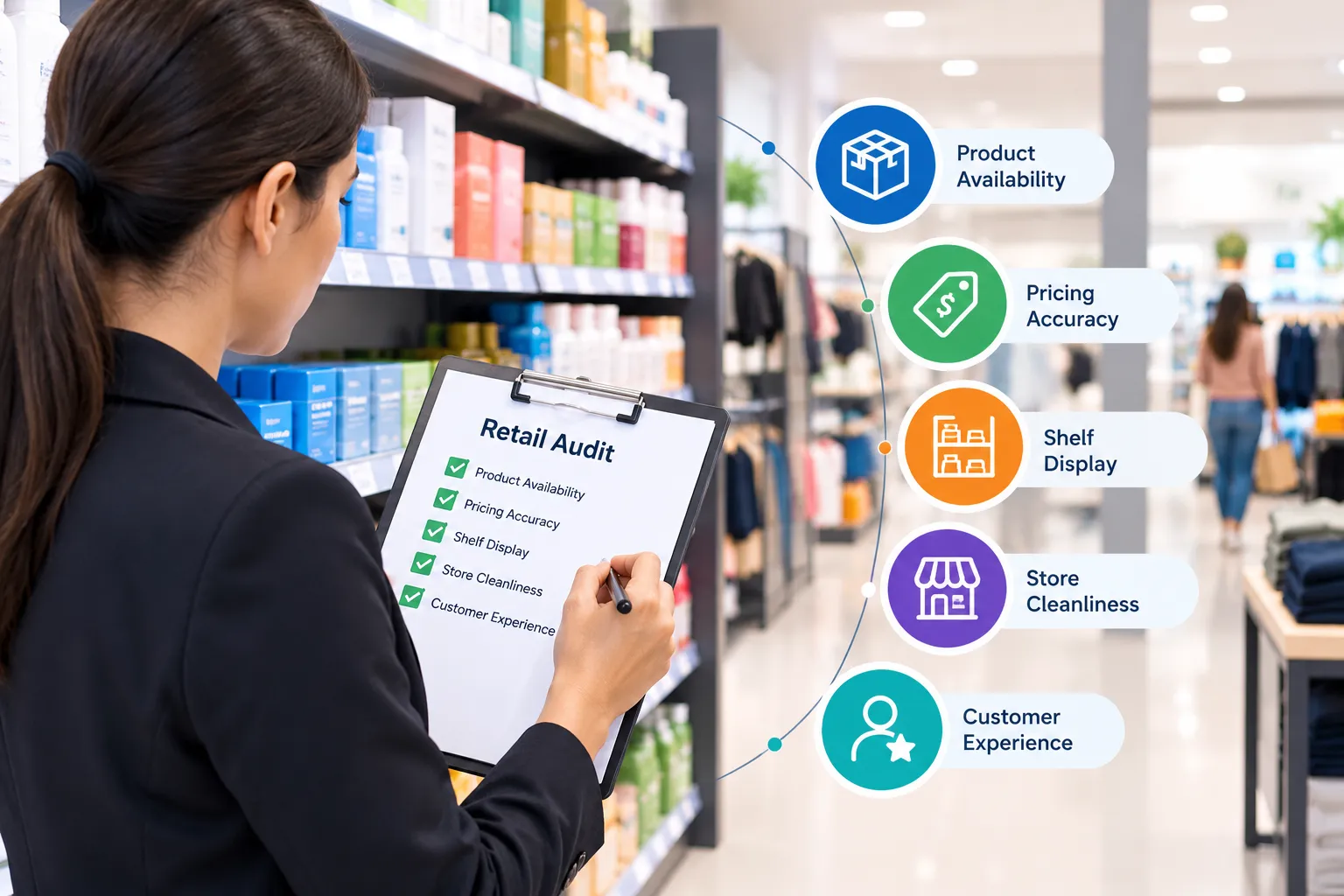

A brand may sell well in one market but struggle to get the same results somewhere else. One product might have plenty of shelf space in Dubai, while the same item is hard to find in another city. Prices, promotions, competitor activity, and stock levels can all affect how a brand performs. Retail Audit Services help businesses compare what is happening in stores across different markets by collecting information on product availability, shelf placement, pricing, and competitor activity. These findings give teams a clearer picture of where their products are performing well and where changes may be needed.
1. Compare Product Availability Across Markets
A brand cannot make sales if customers cannot find its products. Stock levels and product availability may differ between stores, retail chains, and locations. A product that is regularly available in one market may often be out of stock in another.
Retail audits help businesses check whether selected products are present on shelves and available for customers to buy. Teams can compare the results across locations to spot gaps that might otherwise go unnoticed.
For example, a beverage brand may find that its products are available in most supermarkets in Dubai but missing from several stores in another market. This could point to a distribution issue, weak stock replenishment, or a difference in how retailers manage the product range.
2. Check Shelf Space and Product Placement
Getting a product into a store is only one part of the job. Its position on the shelf can also affect whether shoppers notice it. Some brands may receive eye-level placement or several shelf facings, while competing products occupy more visible areas.
A store audit can record how products are displayed and compare those findings across markets. Useful details include:
- The number of shelf facings given to each brand.
- Whether products are placed in the expected section.
- The amount of shelf space used by competing products.
- Whether displays follow the agreed planogram, where one exists.
These checks help businesses see whether their products receive similar visibility in different locations. If a brand has less shelf space in one market, the team can investigate whether the cause is retailer policy, competitor activity, or an issue with store-level execution.
3. Compare Prices and Promotions
Prices can vary between markets for several reasons, including local competition, retailer decisions, distribution costs, and promotional plans. A brand may also find that a competitor offers discounts more often in one area than another.
Retail audits can capture shelf prices, promotional offers, and display materials during store visits. Comparing this information helps businesses understand how their products are presented to shoppers and how their prices sit alongside competing brands.
For instance, if a product is regularly discounted in one market but sold at its usual price elsewhere, the business can examine whether the difference is linked to a planned campaign or a retailer's own pricing decision. This information supports better discussions with sales teams and retail partners.
4. Understand Competitor Activity
A brand's performance is affected by what other brands are doing in the same stores. Competitors may introduce new products, increase their shelf space, offer special deals, or improve their displays.
A consistent audit process makes it easier to compare these activities across markets. Rather than relying on occasional observations, businesses can collect similar information from selected stores over a set period.
This can help answer practical questions. Is a competitor gaining more shelf space? Are its products available in more outlets? Does it use more promotional displays in one market than another?
The findings do not explain every reason behind a competitor's success, but they show what is happening at store level and where further research may be useful.
5. Use the Same Measures for Fair Comparisons
Comparing markets only works when the information is collected in a consistent way. If one team records every product facing while another records only whether the product is present, their results cannot be compared fairly.
Businesses should agree on the stores, products, measures, and reporting periods before fieldwork begins. They should also record relevant differences between markets, such as store formats or product ranges. A large supermarket and a small convenience store may not offer the same shelf space or selection.
Clear checklists, trained fieldworkers, and dated store photos can help improve the quality of the findings. These steps make it easier to separate real market differences from gaps in data collection.
6. Turn Audit Findings Into Business Decisions
The value of an audit comes from what a business does with the results. A report may show that one market has frequent stock gaps, another has poor shelf visibility, and a third has strong competitor promotions. Each issue calls for a different response.
Retail Audit Services help organise these observations into reports that teams can use to set priorities, discuss problems with retailers, and review progress during later visits. Businesses can also compare results over time to see whether agreed changes have made a difference.
The aim is not to assume that every market should perform in exactly the same way. Local shopping habits, store types, and retailer practices can differ. A useful comparison shows both the common issues and the local factors that may explain them.
1. What information can a retail audit compare across markets?
It can compare product availability, shelf space, prices, promotions, product placement, and competitor activity. The exact information depends on the brand's goals and the stores included in the audit.
2. How often should brands conduct retail audits?
The timing depends on how quickly the market changes. Some businesses may need regular checks, while others may audit around product launches, seasonal campaigns, or major promotions.
3. Can retail audits explain why one market sells more than another?
They can reveal store-level differences, such as stock gaps or weaker shelf visibility. However, sales can also depend on customer demand, distribution, pricing, and other factors, so additional research may be needed to understand the full picture.





















Sign in to leave a comment.