
- Look at apps an agency has shipped and kept running, not at how polished its pitch is.
- App budgets in Australia swing widely, so ask for a scoped estimate with the assumptions written down.
- Travel apps live or die on booking flow, offline access and payment reliability.
- Machine learning is worth adding only when you have real data and one clear decision to improve.
- Before signing, confirm who owns the code, what support covers and who will actually build your product.
Most failed app projects were not sunk by bad code. They were sunk at the hiring stage. Someone chose a mobile app development company because the quote was cheapest or the sales call felt easy, then found out months later that the team was thin and the scope was fuzzy.
This guide is for founders and operations leads in Australia who need an app built and want to ask better questions before they commit.
What does a mobile app development company actually do?
Writing code is only one part of the work. Strategy, design, development, testing, app store submission and post-launch support all sit in the scope, and different people usually handle each one.
Small teams often cover just one or two of those stages well. An agency that codes beautifully may be weak at discovery, the early phase where you decide what to build first. Skipping it is how a six-month project quietly becomes a twelve-month one.
So ask who will work on your project each week. You want names, roles and the hours each person will give you. If the answer is “our team will look after it,” keep pushing until you get detail.
How much does it cost to build an app in Australia?
Price depends on scope, number of platforms, integrations and how much custom design you want. A simple single-platform app costs a fraction of a multi-platform product with payments, user accounts and an admin back end.
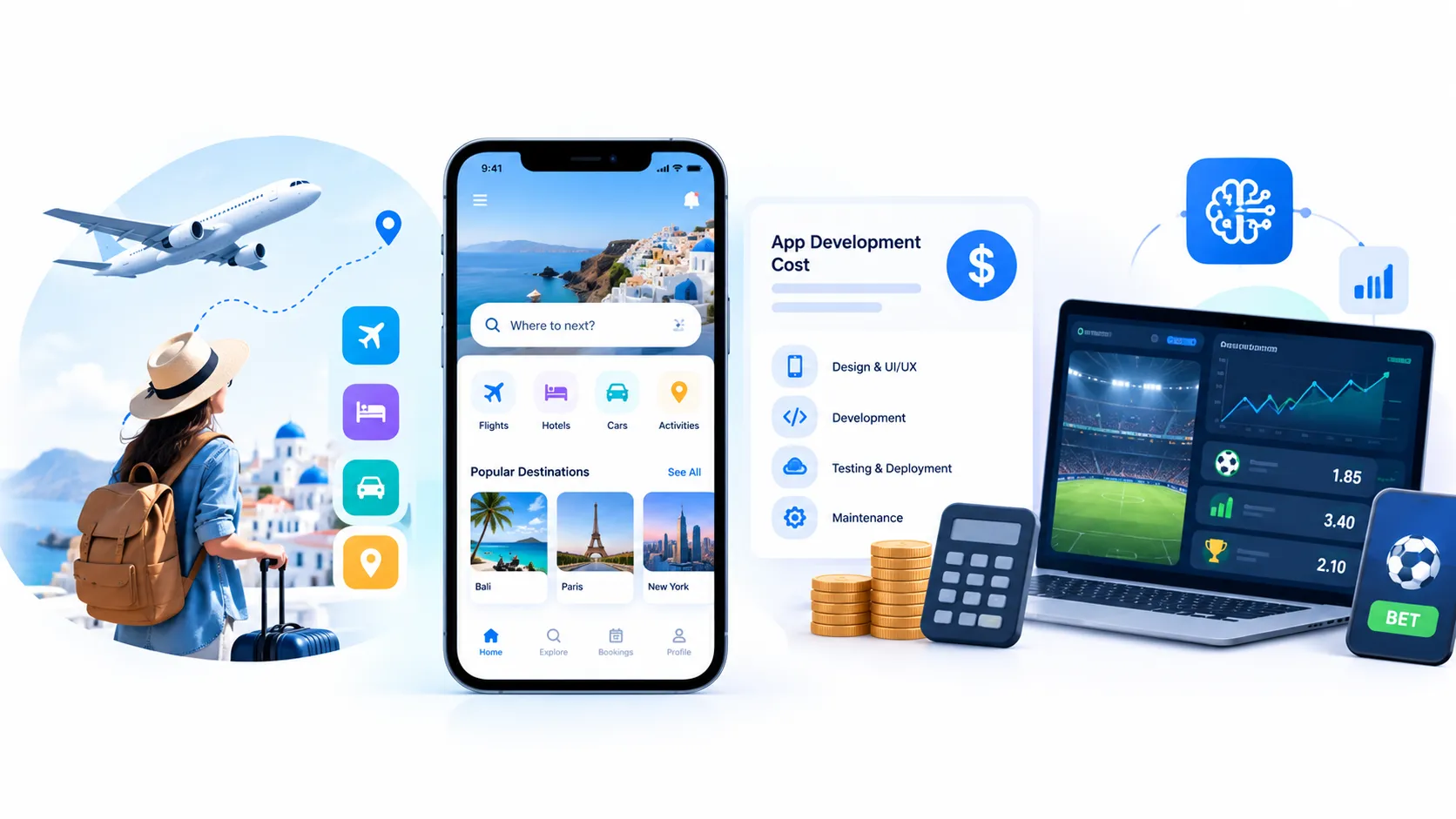
Treat any quote that shows up without questions with suspicion. A reliable mobile app development company will ask about your users, your must-have features and your deadline before it names a figure. For a closer look at what moves the price, this mobile app development company cost guide for 2026 lays out typical ranges.
Request the estimate as a range, with assumptions listed in writing. If an assumption changes, you should be able to see exactly how the price shifts.
Why does a travel app development company need more than clean code?
Travel is a tougher category than most. People book on weak hotel WIFI, jump between devices mid-search and expect their itinerary to open on a plane. One extra tap in the booking flow can cost you the sale.
A travel app development company worth hiring will have firm views on search filters, offline mode, saved trips and payment fallbacks. It should also know how to plug into booking engines, maps and currency services without slowing the app down.
Ask to see a travel or booking app the team has built, then use it yourself. Search on a poor connection. Cancel a payment halfway through and watch what happens.
Here is a typical example. A Queensland tour operator once wanted a push notification for every itinerary change. The agency talked them down to alerts for cancellations and gate changes only. Open rates stayed high because customers were not being nagged.
When does machine learning app development make sense?
Machine learning is easy to oversell. Plenty of apps do not need it, and adding it too early can double your timeline.
It fits when one decision repeats thousands of times and you have enough past data to learn from. Recommendations, demand forecasting, fraud flags and personalised pricing are common cases. A simple rule of thumb: if a few clear rules get you 80 percent of the way, start with the rules.
If your idea does qualify, look for a team with hands-on machine learning app development experience. Spotting patterns in betting data is one well-documented case where models catch behaviour that fixed rules miss.
Ask where the training data will come from, how the model will be monitored after launch and what happens when its accuracy slips. Vague answers are a warning sign.
How to vet a mobile app development company before you sign
Begin with the portfolio, then go further. Choose two apps and ask for the client’s contact details. A ten-minute call with a past client tells you more than any case study.
Then run through the basics:
- Is the app live on the App Store or Google Play, with recent updates?
- Does the agency employ its own developers, or hand work to contractors you will never meet?
- Who owns the source code and design files once you have paid?
- What does the support period cover, and what does it cost afterwards?
Read reviews on Clutch or Google, but give them modest weight. A few detailed, specific reviews beat fifty short ones.
Finally, read the contract closely. Fixed price suits a tightly scoped build. Time and materials suits a product that will change as you learn. Both are legitimate, but you should know which one you signed.
What to ask a mobile app development company on the first call
A first call is a short window, so use it well. Ask how scope changes are handled midway through a build. Ask what their most recent failed project taught them. Ask how often you will see working builds rather than status reports.
Watch how they react to disagreement. Float a feature you suspect is a bad idea and see whether they push back with reasons or just nod along. An agency that agrees with everything will also agree to a deadline it cannot meet.
Ask about testing too. Real devices should be part of the answer, not only simulators, along with accessibility checks for Australian users on older phones.
Where to start this week
Write a one-page brief covering who the app is for, the three things it must do on day one and the budget you can commit. Send it to three agencies and compare their replies as well as their prices.
The best partner is usually the one whose questions sharpened your idea. If a team improves your brief before any contract exists, you have probably found the right one.
Frequently asked questions
How long does it take to build a mobile app in Australia?
A simple app can take three to four months. Apps with payments, accounts and custom integrations often run six to twelve months, depending on scope and how fast you approve designs.
Should I build for iOS and Android at the same time?
Not always. If most of your audience uses one platform, launch there first. Cross-platform frameworks can cover both with one codebase, which often lowers cost, though some features still need native work.
Do I need a local Australian agency?
It helps with time zones, privacy law and in-person workshops. Offshore teams can work well too, but you will want clear overlap hours and a contract governed by Australian law.
What ongoing costs come after launch?
Plan for hosting, app store fees, bug fixes, operating system updates and small feature work. Many teams suggest setting aside a yearly amount tied to the original build cost, so ask your agency for a figure.
Is machine learning worth adding to a first version?
Usually not. Launch the core product, collect real usage data, then add machine learning once you know which decision it should improve.
















Sign in to leave a comment.