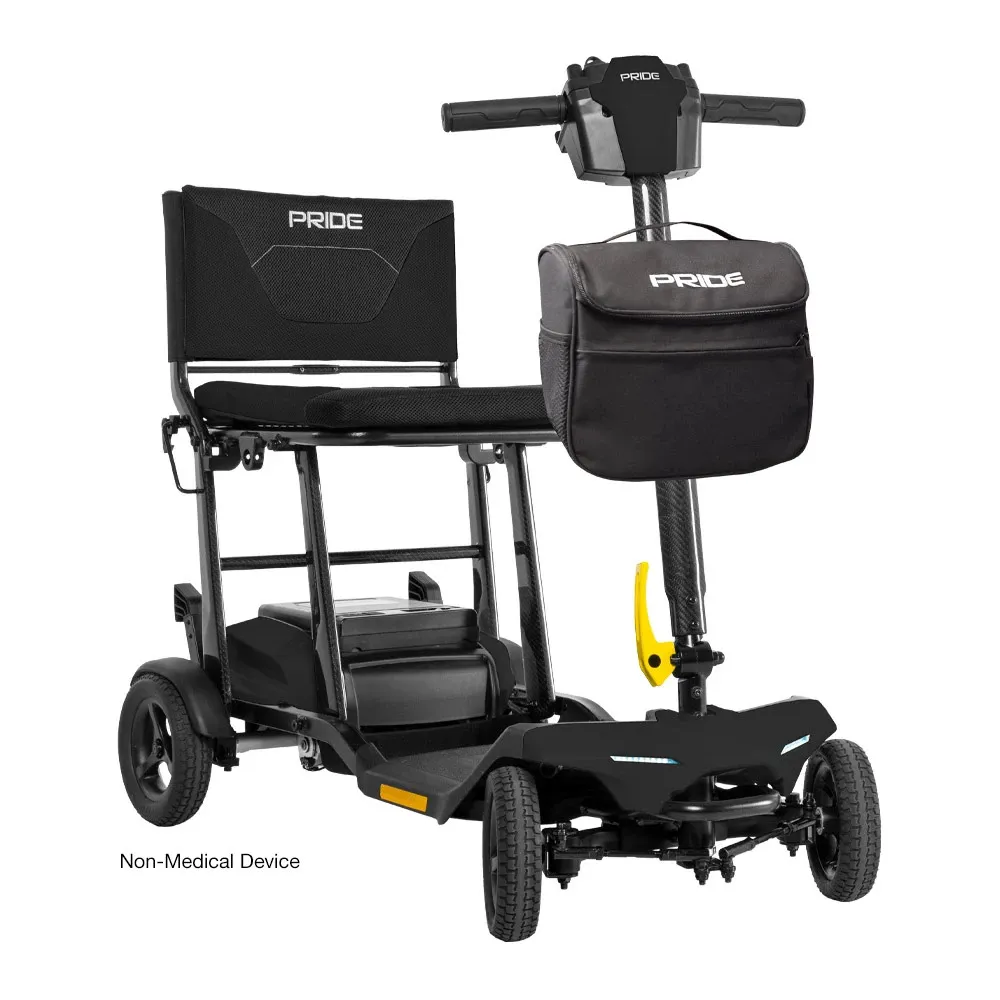

Mobility scooters help people who have difficulty walking travel more comfortably and maintain independence in their daily routines. They can make activities such as shopping, visiting family, attending appointments, and spending time outdoors easier to manage. However, choosing the right scooter depends on the user's mobility needs, preferred travel distance, comfort, and storage requirements.
With several types available, understanding the differences between a mobility scooter, a travel mobility scooter, and a foldable mobility scooter can help buyers make a more informed decision.
What Is a Mobility Scooter and Who Can Benefit From Using One?
A mobility scooter is a battery-powered device designed to help people with limited mobility travel without relying entirely on walking. It typically includes a seat, handlebars or a steering tiller, wheels, and a rechargeable battery.
Mobility scooters may benefit older adults, people with certain disabilities, and individuals who find walking long distances difficult. They can be useful for everyday activities, including shopping trips, outdoor visits, and moving around larger spaces.
The right model depends on the user's physical abilities, balance, seating needs, and the environments where the scooter will be used. Anyone unsure whether a scooter is suitable should consult a healthcare professional or mobility specialist before making a purchase.
How Do You Choose the Best Mobility Scooters for Seniors?
When comparing mobility scooters for seniors, comfort, ease of operation, and stability should be among the first considerations. A scooter that works well for one person may not suit another, so buyers should focus on their regular activities rather than choosing a model based on appearance alone.
Seat design is an important factor, particularly for people who expect to use the scooter for extended periods. A comfortable seat, suitable back support, and easily accessible controls can make everyday use more manageable.
Weight capacity should also match the user's needs. Buyers should check the manufacturer's specifications and consider whether the scooter will regularly carry shopping bags or other belongings.
The intended route matters, too. A compact scooter may be suitable for shopping centers and shorter trips, while a larger model may be better suited to longer outdoor journeys. Comparing turning space, ground clearance, battery range, and wheel design can help narrow down the options.
When Should You Choose a Travel Mobility Scooter?
A travel mobility scooter is designed for people who want to transport their scooter between locations. It can be useful for family visits, holidays, road trips, and outings where carrying a full-size scooter would be inconvenient.
Most travel models are designed to fold or separate into smaller sections. This makes storage and vehicle transportation easier, although the actual weight and dimensions vary between models.
Before choosing a travel mobility scooter, consider how frequently it will be transported and who will handle the loading process. The total scooter weight is important, but the weight of the heaviest removable section can be even more useful when determining whether it can be lifted safely.
Battery range is another consideration. A scooter intended for short outings may have different capabilities from one designed for longer days away from home. Buyers should compare the manufacturer's stated range with their typical travel needs and allow for conditions that may reduce battery performance.
People planning to fly should also confirm the airline's current battery and mobility-device requirements before purchasing a scooter for air travel.
What Are the Benefits of a Foldable Mobility Scooter?
A foldable mobility scooter can make storage and transportation more convenient for people with limited space at home or in their vehicles. Depending on the design, the scooter may fold into a compact shape or require certain components to be removed before storage.
This design can be particularly useful for people who travel regularly or need to transport their scooter in a car. A folding frame may also make it easier to store the device when it is not being used.
However, foldable models differ in their folding mechanisms, weight, dimensions, and operating range. Some require manual folding, while others feature powered folding systems. Buyers should check how much effort is needed to fold the scooter and whether its folded dimensions fit their available storage space.
Portability should not be the only deciding factor. Seat comfort, weight capacity, battery performance, and ease of steering are equally important when selecting a scooter for regular use.
How Does an Electric Mobility Scooter Make Everyday Travel Easier?
An electric mobility scooter uses a rechargeable battery and electric motor to provide powered movement. Instead of relying on continuous physical effort to walk, users operate the controls to move and steer the scooter.
Electric mobility scooters are available in different sizes and configurations. Compact models may suit shorter journeys and easier transportation, while larger models may offer features intended for more frequent outdoor use.
Battery range is an important specification to compare. The advertised distance represents performance under particular conditions and may differ in everyday use. Rider weight, hills, surface conditions, temperature, and frequent stopping can all affect how far a scooter travels on one charge.
Charging requirements should also be considered. Buyers should check the manufacturer's recommended charging procedure, battery information, and charging time. Establishing a regular charging routine can help reduce the risk of running out of power during an outing.
Safety features deserve attention as well. Responsive brakes, clear controls, appropriate lighting, and a speed setting suited to the user's abilities can support more confident operation.
What Is the Difference Between a Travel Mobility Scooter and a Full-Size Scooter?
The main difference is the intended use. A travel mobility scooter prioritizes portability, while a full-size scooter may place greater emphasis on everyday outdoor performance, seating space, and longer journeys.
Travel models are often easier to fold, disassemble, or transport in a vehicle. Their compact design can be helpful for people who frequently visit different locations. However, some models may have smaller wheels, less ground clearance, or a shorter range than larger alternatives.
Full-size scooters may be more suitable for people who primarily use their device around their neighborhood or on regular outdoor routes. Their larger frames can provide additional space and may support features intended for longer journeys.
Neither type is automatically the better option. The right choice depends on where the scooter will be used, how often it needs to be transported, and which features matter most to the rider.
Which Features Should You Check Before Buying a Mobility Scooter?
Comparing a few practical features can help buyers avoid choosing a scooter that does not fit their daily routine.
Battery range: Consider the distance of regular trips and whether charging will be convenient between outings.
Weight capacity: Confirm that the scooter's rated capacity is suitable for the intended user and any belongings carried.
Seat comfort: Look for a seat and backrest that support a comfortable riding position.
Portability: Check the folded dimensions, total weight, and heaviest removable section if the scooter will be transported in a vehicle.
Maneuverability: Consider turning space, doorway widths, and the surfaces where the scooter will be used.
Controls and brakes: Make sure the rider can reach and operate the controls comfortably and understand how to stop the scooter safely.
Maintenance and charging: Review the manufacturer's instructions for battery care, tire checks, cleaning, and routine maintenance.
Taking time to compare these details can help buyers find a mobility scooter that suits their requirements without paying for features they may not need.
How Can You Use a Mobility Scooter Safely?
Safe operation starts with understanding the scooter's controls and practicing in a suitable, open area before using it in busy surroundings. Riders should read the manufacturer's instructions and become familiar with steering, braking, speed adjustment, and turning.
The scooter should be used on surfaces and routes appropriate for its design. Wet ground, steep slopes, loose gravel, and uneven surfaces can affect stability and braking, so riders should follow the manufacturer's guidance and avoid unsuitable terrain.
Regular checks can also help keep the device in good working condition. Inspect the tires, brakes, battery, and controls according to the manufacturer's recommendations. The battery should be charged using the specified charger, and the scooter should not be operated if a safety-related fault is suspected.
Riders should also consider local rules governing mobility scooters, including where they may be used and any applicable road or sidewalk requirements.
How Do You Find the Right Mobility Scooter for Your Needs?
Choosing a mobility scooter becomes easier when you start with the activities you want to manage more comfortably. People who travel frequently may prefer a travel mobility scooter, while those with limited storage space may benefit from a foldable mobility scooter. Riders who need powered assistance for regular daily journeys may want to compare different electric mobility scooter designs.
For seniors and other people with limited mobility, the most suitable option is one that fits their comfort, physical abilities, travel habits, and storage arrangements. Comparing specifications and understanding how each design works can help narrow the choices.
Explore the mobility scooter options available at ACG Medical to learn more about different designs and find a model that better matches your everyday mobility needs.
























Sign in to leave a comment.