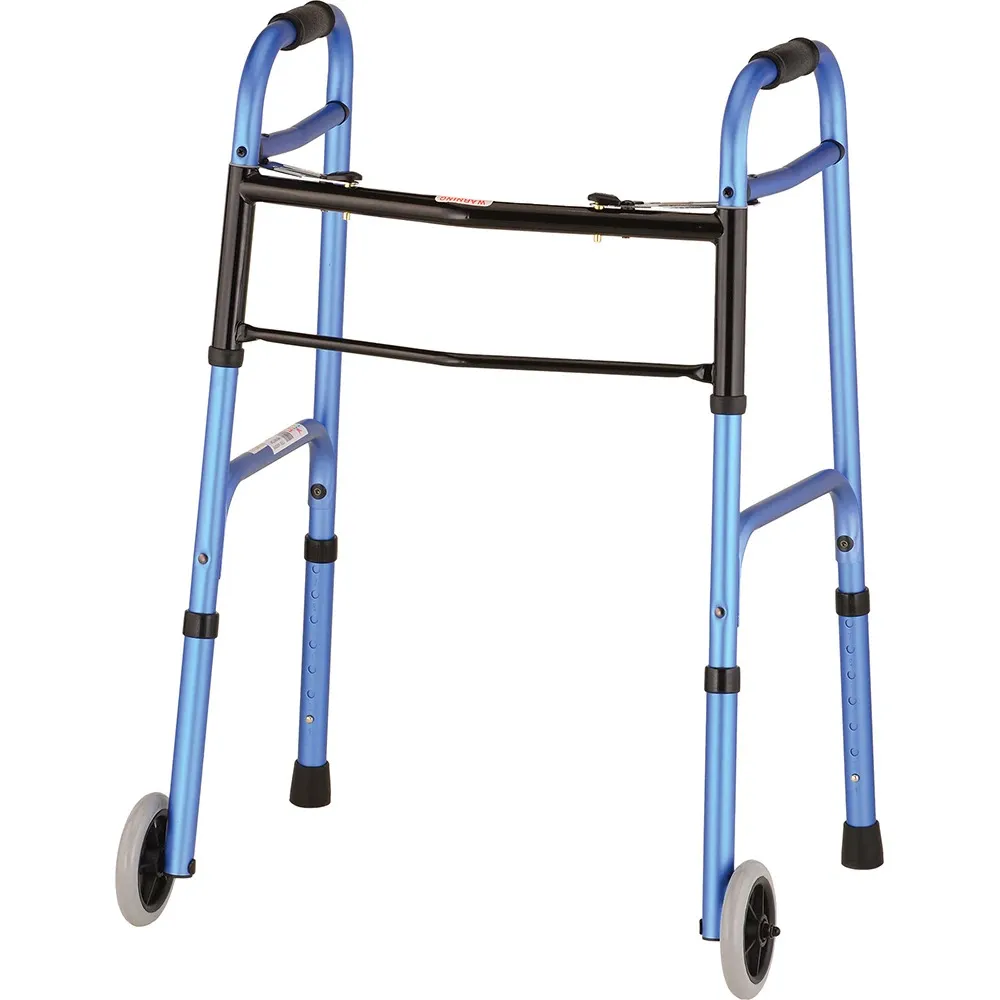

Choosing the right walking aid can make everyday movement easier for older adults who need additional support with balance, stability, or mobility. But with different types available, it can be difficult to know whether a standard walker, medical walker, folding walker, or lightweight walker is the right option.
The right choice depends on how much support the user needs, where the walker will be used, and how easily the person can lift, move, and control it. Healthcare professionals can also help determine which type of walker is appropriate for an individual's needs.
What Is a Standard Walker and Who Should Use One?
A standard walker is a basic mobility aid with four legs and non-skid rubber tips. Unlike wheeled walkers, it does not roll forward on its own, so the user lifts and places it ahead before taking a step.
This design can provide a high level of stability for people who need substantial support while walking. It can be useful during recovery from an injury or surgery, or for people who have difficulty maintaining balance.
However, lifting a standard walker with every step requires some upper-body strength. If lifting the frame is difficult, a two-wheel or another suitable walker may be considered with guidance from a healthcare professional.
How Does a Medical Walker Help With Everyday Mobility?
A medical walker is designed to provide additional support while a person moves around the home or other everyday environments. Depending on the model, walkers may have features such as adjustable height, wheels, folding frames, comfortable hand grips, or other accessories.
A properly fitted walker can help the user maintain a more comfortable walking position and provide support while moving from one place to another.
Walker height is especially important. Mayo Clinic recommends adjusting the walker so the user's elbows are comfortably bent when holding the grips, while the hand grips should generally line up around wrist level when the arms are relaxed.
Why Is a Walker for Elderly Adults Useful at Home?
A walker for elderly adults can provide support during everyday activities such as walking between rooms, getting up from a chair, or moving around the home.
For older adults experiencing balance difficulties or reduced leg strength, having an appropriate mobility aid can make daily movement more manageable. Walkers can also be used temporarily during recovery from certain injuries or surgeries.
The walking environment should also be considered. Clear pathways, remove loose rugs or objects from walking areas, and make sure the walker is adjusted correctly before regular use.
What Are Folding Walkers and Why Are They Convenient?
Folding walkers are designed to collapse or fold when they are not being used. This can make them easier to store at home or transport in a vehicle.
For people who regularly travel to medical appointments or need to put their walker in a car, a folding design can be particularly convenient. Some walkers can also be folded to take up less storage space when they are not needed.
Before using a folding walker, always make sure the frame is completely opened and securely locked. ACG Medical also recommends checking that the folding mechanism is properly engaged before use.
How Can a Lightweight Walker Make Transportation Easier?
A lightweight walker can be useful when the user or caregiver needs to lift the walker frequently. A lighter frame can make tasks such as folding, carrying, storing, or placing the walker inside a vehicle easier.
However, weight should not be the only factor when choosing a walker. The walker should still provide the appropriate level of support and should be suitable for the user's physical needs and environment.
If a person has difficulty lifting a traditional walker, discussing lighter or wheeled options with a healthcare professional can help identify a suitable alternative.
What Should You Check Before Choosing a Walker?
Before selecting a walker, consider how much support is required and how the walker will be used each day.
Walker Height
The handles should be positioned at an appropriate height so the user can maintain a comfortable posture with slightly bent elbows. An incorrectly adjusted walker can make walking more difficult and may increase strain on the shoulders or back.
Walker Weight
Consider whether the user can comfortably lift and control the frame. A lightweight design may be easier to transport, but the walker still needs to provide suitable support.
Walker Size
Check whether the walker can comfortably fit through the doors and spaces where it will be used most often. This is particularly important for people who mainly use a walker inside their home.
Walker Features
Depending on individual needs, useful features may include folding mechanisms, wheels, adjustable height, storage accessories, or other mobility-focused additions. The right features depend on how the walker will be used.
How Do You Use a Walker Safely?
Using a walker correctly is just as important as choosing the right model. Before walking, make sure the walker is stable, and all legs or wheels are properly positioned on the ground.
Keep the walker close enough to provide support without stepping too far forward into the frame. Move slowly, especially when turning, and maintain an upright posture.
When sitting down, back up toward the chair until you can feel the seat behind your legs. Then reach back toward the chair and sit down carefully rather than pulling yourself down using the walker.
How Do You Choose Between Different Types of Walkers?
There is no single walker that works for everyone. A standard walker may suit someone who needs substantial stability and can lift the frame. A two-wheel walker may reduce the need to lift the entire frame. A four-wheel rollator can provide a different type of support for people who can safely manage wheels and brakes.
The most suitable option depends on the person's balance, strength, walking ability, environment, and reason for needing mobility support. A doctor, physical therapist, or other qualified healthcare professional can help determine the appropriate type.
Where Can You Find the Right Walker for Your Mobility Needs?
Whether you are looking for a standard walker, medical walker, walker for the elderly, folding walker, or lightweight walker, choosing based on the user's actual mobility needs is more important than simply choosing the model with the most features.
ACG Medical offers a range of walkers designed for different mobility requirements, making it easier to explore options based on support, design, portability, and everyday use.























Sign in to leave a comment.