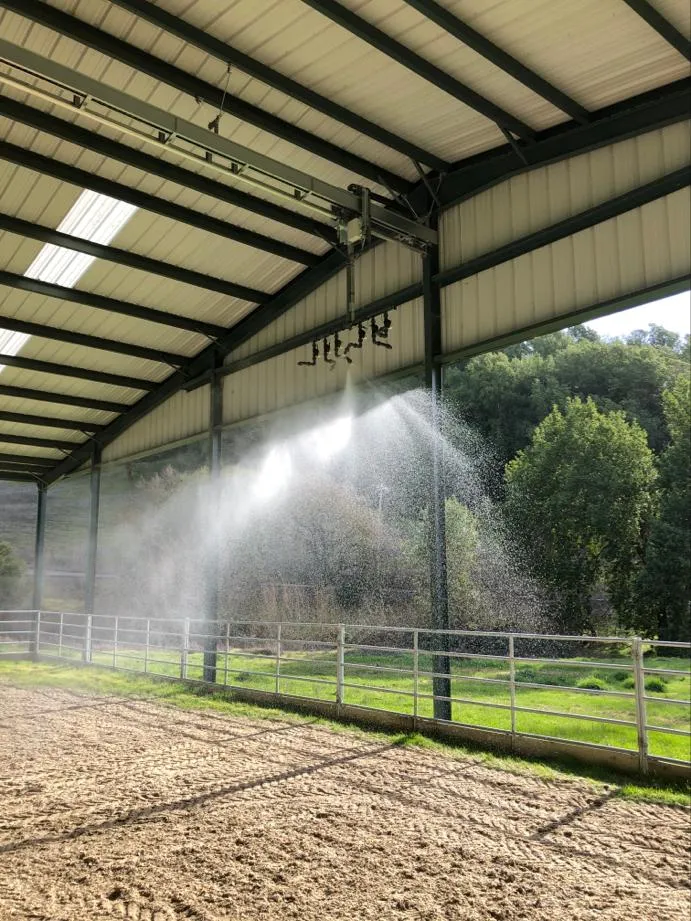

Maintaining good riding conditions requires regular attention to footing, moisture, and dust. An arena irrigation system helps distribute water across the riding surface, keeping the footing appropriately damp and consistent. Proper moisture levels can improve footing performance while reducing dust during training. For busy equestrian facilities, controlled watering can also reduce the time and effort required for manual arena maintenance. But how can the right approach to watering influence the experience of both horses and riders?
Why Does Arena Moisture Matter?
Moisture plays an important role in how arena footing responds to movement. When footing becomes too dry, loose particles can rise into the air as horses walk, trot, canter, or jump. Dry surfaces may also become less consistent, especially in areas that receive frequent traffic.
Too much water can create its own concerns. Excessively wet footing may become deep, uneven, or slippery. This is why arena maintenance should focus on balanced moisture rather than simply adding large amounts of water.
Consistent watering helps keep footing damp enough to reduce dust while supporting a more stable riding surface. The amount of water required depends on factors such as arena size, footing material, weather conditions, humidity, and frequency of use.
How Does an Arena Irrigation System Improve Surface Consistency?
Manual watering with hoses or portable sprinklers can make it difficult to evenly cover a large arena. Some areas may receive plenty of water while others remain dry. Professional irrigation equipment is designed to provide more uniform coverage across the riding area.
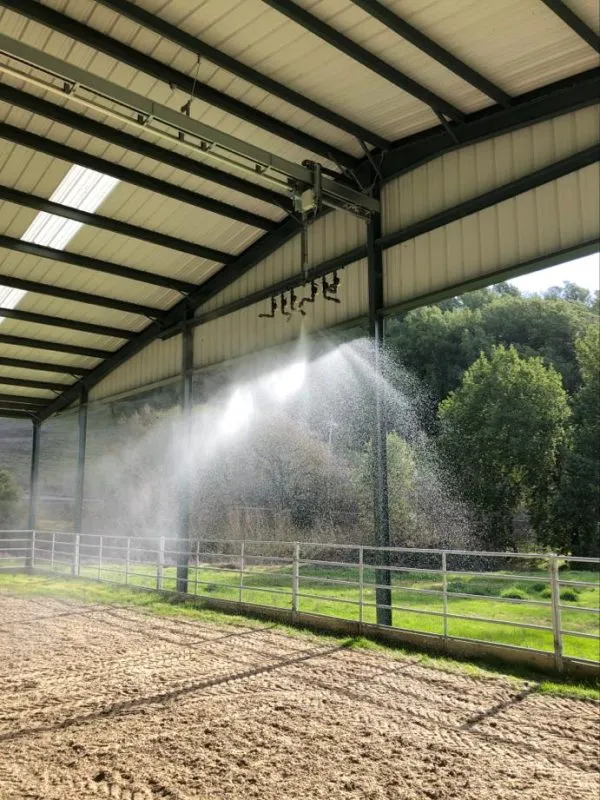
An arena irrigation system can distribute water through strategically positioned nozzles, helping maintain consistent moisture throughout the surface. This can be particularly useful in indoor arenas, where natural rainfall cannot contribute to the moisture in the footing.
More uniform moisture supports predictable footing during circles, transitions, jumping exercises, and other training activities. Riders can move across different sections of the arena without experiencing major changes caused by dry or overly wet patches.
Better Dust Control During Training
Dust is one of the most noticeable problems associated with dry riding surfaces. Each hoof movement can disturb fine particles, especially when multiple horses use the arena throughout the day.
Keeping the surface appropriately damp can limit the amount of dust that becomes airborne. This contributes to a cleaner training environment and can improve visibility for riders, instructors, and spectators.
Riding arena moisture-control systems can make dust management a regular part of arena care rather than a response to excessively dry conditions. Controlled watering allows facility managers to maintain appropriate moisture levels based on current surface conditions.
The objective is to provide enough moisture to control loose particles without saturating the footing. Regular monitoring remains important because watering requirements may change with temperature, humidity, ventilation, and arena usage.
Supporting More Consistent Training Conditions
Horses perform best when their training environment is properly maintained. Uneven footing conditions can affect how confidently a horse moves through different parts of an arena. A dry corner, overly wet section, or loose patch may feel different under the hooves.
Maintaining balanced moisture helps create more consistent conditions across the riding surface. This can support routine flatwork, jumping, dressage exercises, and other equestrian activities.
Watering should also be combined with other arena maintenance practices. Dragging or harrowing helps redistribute footing, reduce compaction, and smooth areas affected by regular hoof traffic. When these practices are paired with appropriate moisture management, facility owners can maintain a more dependable training surface.
Reducing Manual Arena Maintenance
Manually watering a large riding arena can require considerable time and labor. Staff may need to move hoses or sprinklers repeatedly to reach different areas. It can also be challenging to determine whether every section has received a similar amount of water.
Professional overhead watering equipment can simplify this process. Depending on the design, systems may offer manual or automatic operation, allowing facility managers to select an approach that suits their maintenance routine.
Some overhead solutions travel through the arena, distributing water via multiple nozzles. This arrangement can provide broad coverage without placing watering equipment directly on the active riding surface.
For facilities with frequent lessons, training sessions, or competitions, reducing manual watering work can allow staff to focus on other important barn and arena responsibilities.
Maintaining Footing Over the Long Term
Quality arena footing is an important investment, and regular maintenance helps preserve its condition. Repeatedly allowing the surface to become extremely dry or uneven can affect its usability and increase maintenance demands.
A structured watering schedule can help facility managers respond before footing becomes excessively dusty. However, there is no single watering schedule suitable for every arena. Managers should consider the type of footing, daily horse traffic, seasonal weather, ventilation, and drainage.
Regular inspection is equally important. If hoofprints become unusually deep or water begins collecting in certain areas, the watering level or drainage conditions may need adjustment.
Conclusion
Reliable moisture management is an important part of maintaining comfortable and consistent riding conditions. An arena irrigation system can help distribute water more evenly, reduce dust, maintain consistent footing, and decrease the effort of manual watering.
When used alongside regular dragging, surface inspection, and appropriate drainage, Riding arena moisture control systems can support a more organized approach to arena maintenance. Choosing suitable equipment should be based on arena size, footing type, usage levels, and specific watering requirements.
If you want to improve footing moisture, reduce dust, and simplify arena maintenance, contact an equine equipment specialist today to discuss a watering solution suited to your facility.





















Sign in to leave a comment.