

Spray foam insulation in Jackson, WY performs exceptionally well during harsh winter conditions across Jackson Hole and surrounding border valleys. By expanding to fill tiny gaps, closed-cell and open-cell foams create an airtight barrier that helps stop drafts, resist moisture, and reduce convective heat loss. Many builders consider this material the best insulation for Idaho winters because it handles persistent sub-zero temperatures and heavy snow loads better than fibrous batts.

The regional climate around Jackson Hole and the Teton Basin creates severe thermal demands on residential structures. Cold air drafts from eastern Idaho can push temperatures well below zero degrees Fahrenheit. Having installed building envelope systems across high-altitude mountain zones for years, building science specialists understand that stopping air leakage is just as important as the insulation material's rated performance.
How Extreme Sub-Zero Climates Test Traditional Insulation
Mountain homes face extreme temperature differentials between indoor living areas and outdoor air. When outdoor temperatures drop to minus twenty degrees, interior heat naturally rises and escapes through upper ceilings, pulling freezing air in through the crawlspace or basement. This chimney effect strains heating equipment and spikes utility bills.
Traditional fiberglass batts and blown cellulose often struggle in these conditions. They allow air to move through them, which drastically reduces their effective performance when high winds blow across the valley. Studies show that unsealed air gaps cause up to 40 percent of total heating loss in typical mountain homes.
Moisture adds another layer of difficulty. Warm indoor air carries humidity into wall cavities. When that humid air meets freezing exterior sheathing insulated with fibrous batts, condensation forms. Over time, that hidden moisture degrades insulation performance and promotes wood rot. Applying the spray foam insulation Wyoming contractors recommend creates a built-in vapor barrier that prevents warm indoor air from reaching cold outer surfaces.
Spray Foam Behavior in High Elevation Freezing Temperatures
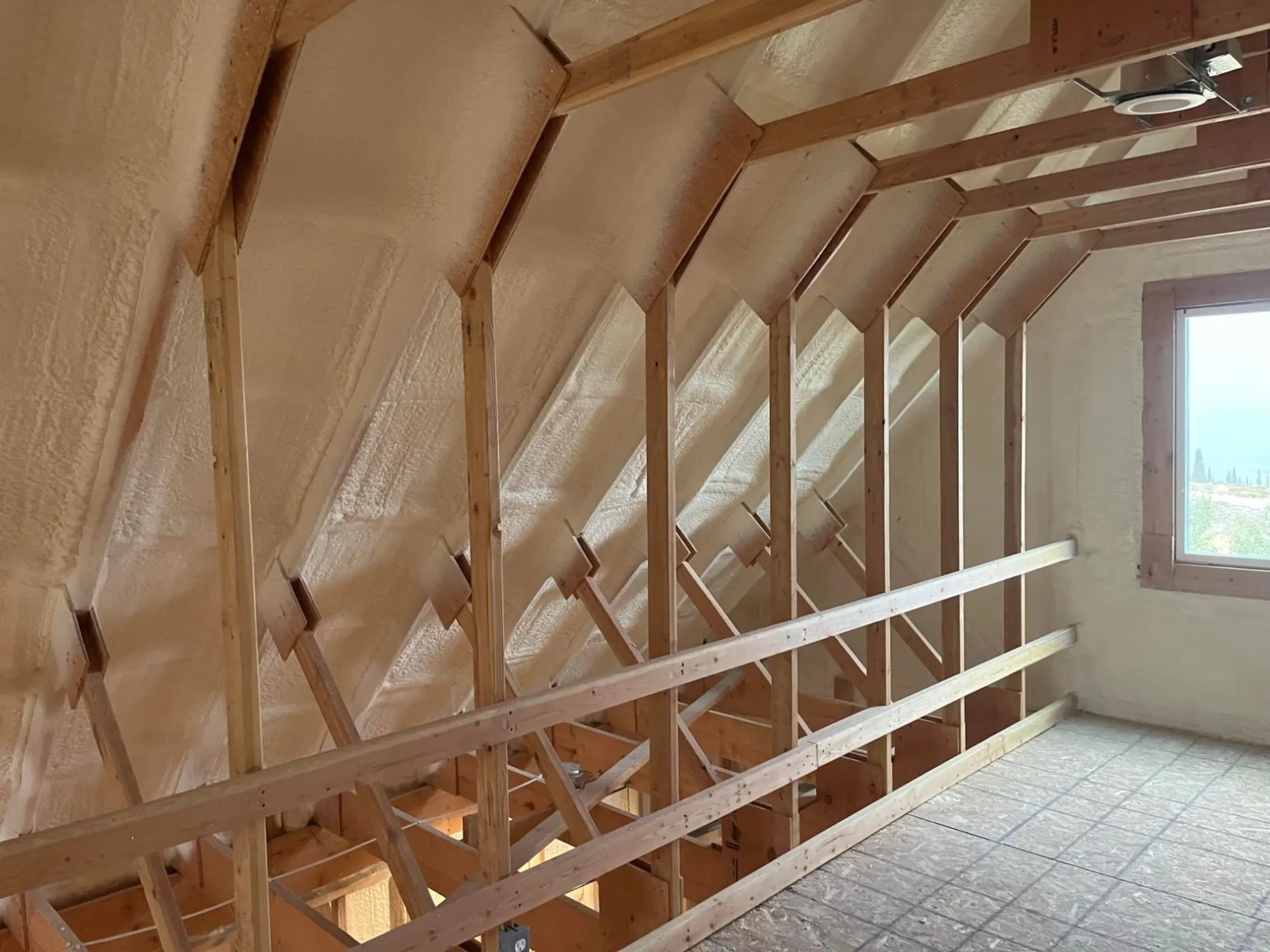
Closed-cell spray foam is a rigid, dense material that sets quickly upon application. It provides an impressive thermal barrier in a compact profile, making it ideal for standard wall cavities and cathedral ceilings where space is limited. It also adds structural rigidity to wall assemblies facing heavy snow drifts.
Open-cell foam is lighter and expands significantly more than closed-cell foam. While open-cell works well for interior sound dampening and attic floors in moderate zones, mountain builders primarily rely on closed-cell formulations for exterior thermal boundaries. The closed-cell structure keeps water out and maintains high resistance against cold wind washing.
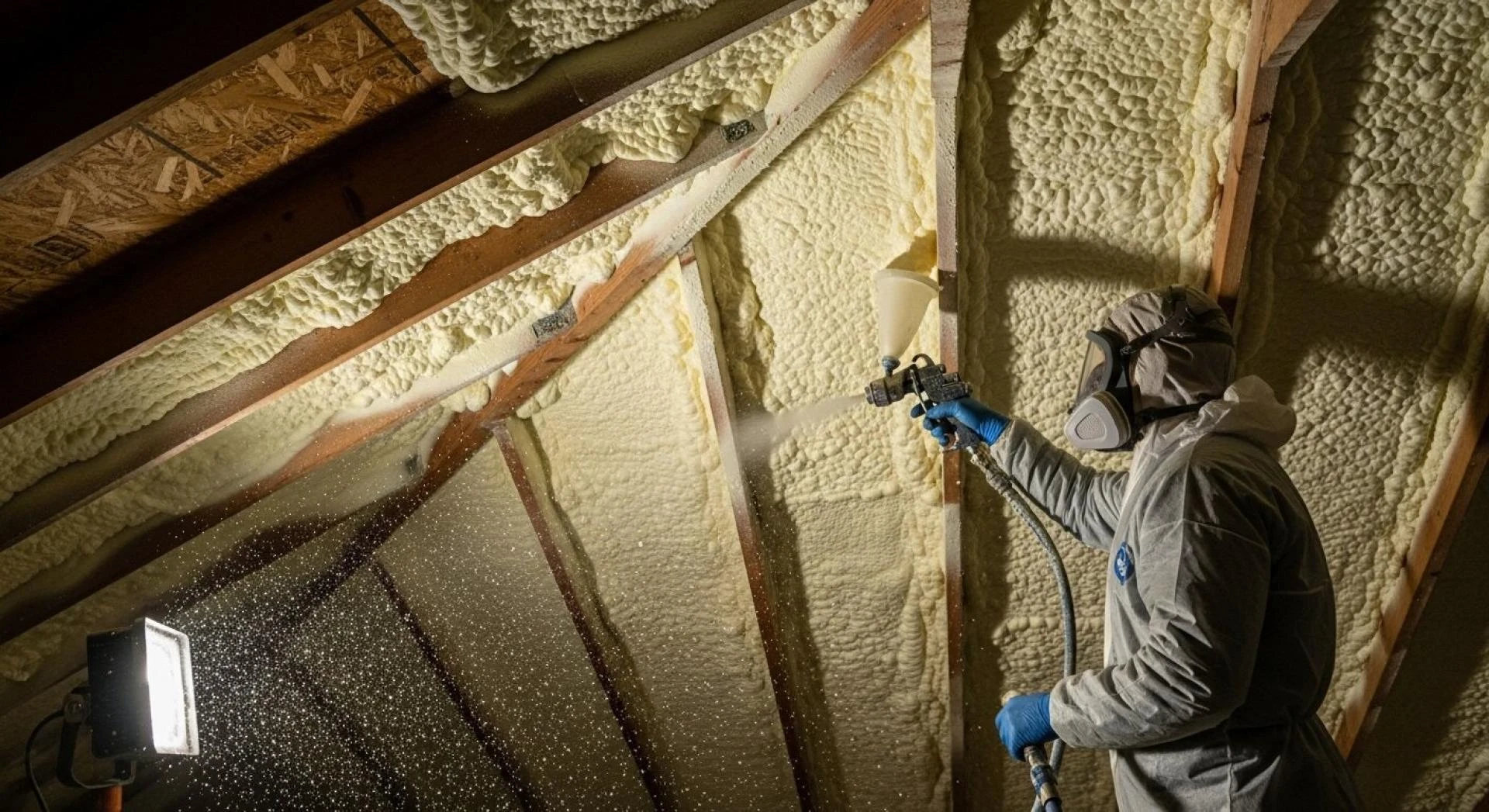
Proper spray foam temperature control helps buildings maintain steady interior comfort during sudden blizzards. Because the foam adheres directly to framing and roof decks, it leaves zero dead air spaces where cold pockets can form.
Bonus Tip: Apply closed-cell foam directly to rim joists and basement foundation walls. Rim joists represent one of the thinnest, leakiest parts of a mountain home, and sealing them provides immediate draft reduction.
Thermal Performance and Building Standards for Mountain Regions
Building codes in climate zones 6 and 7 demand high thermal resistance values. Meeting the required r-value for Idaho homes means choosing materials that maintain their rated performance even when outdoor temperatures plunge far below zero. Traditional materials can lose significant real-world performance as the temperature gradient widens, but dense foam retains its protective qualities.

The reference table below illustrates how different insulation materials compare when installed in cold-climate building assemblies:
| Insulation Material | Physical Structure | Air Infiltration Barrier | Moisture Resistance | Average R-Value Per Inch |
|---|---|---|---|---|
| Closed-Cell Spray Foam | High-density rigid foam | Complete air seal | Impermeable to water | R-6.5 to R-7.0 |
| Open-Cell Spray Foam | Low-density flexible foam | Moderate air seal | Permeable to vapor | R-3.5 to R-3.8 |
| Blown-In Cellulose | Loose recycled paper fiber | Poor (requires separate membrane) | Absorbs moisture easily | R-3.2 to R-3.7 |
| Fiberglass Batts | Spun glass fibers | Very poor (air passes through) | Traps condensation | R-2.9 to R-3.4 |
| Mineral Wool | Spun rock fibers | Poor (requires air barrier) | Repels liquid water | R-3.8 to R-4.2 |
When reviewing an insulation R-value chart, builders must look beyond simple numbers per inch. Total thermal performance depends on stopping air movement alongside conductive heat transfer. Because rigid foam stops both, it stands out as the best insulation for Idaho winters where continuous sub-zero snaps occur.
Why Preventing Air Infiltration Matters Most in Mountain Valleys
Valley winds sweeping over mountain passes accelerate convective cooling on building exteriors. Wind pushes cold air into exterior wall cracks and pulls conditioned air out of roof vents. Standard insulation does nothing to stop air movement on its own, requiring separate house wraps and taped seams that can tear or degrade.
Spray polyurethane foam expands up to thirty times its liquid volume upon application. It expands into electrical cutouts, plumbing penetrations, and header joints, sealing paths where cold air enters.
Preventing air leakage also stops ice dams on eaves. Ice dams form when warm air leaks into the attic, warms the roof deck, and melts snow that refreezes at the cold eaves. Sealing the attic deck with spray foam keeps the roof cold and eliminates the air leaks that trigger ice buildup.
Bonus Tip: For unvented hot roof designs, spray closed-cell foam directly to the underside of the roof sheathing. This prevents warm indoor air from warming the roof shingles and keeps snow melting evenly.
Choosing the best insulation for Idaho winters comes down to controlling air movement, stopping moisture drive, and keeping heat inside where it belongs.

Critical Factors to Review Before Installing Foam Insulation
Upgrading building envelopes requires careful planning to achieve maximum energy savings. Homeowners and general contractors should examine several site conditions before scheduling installation work:
- Substrate Moisture Levels: Framing wood must have a moisture content below 18 percent before applying spray foam. Trapping high moisture under foam can damage framing lumber over time.
- Ambient Application Temperatures: Chemical components require specific drum and surface temperatures to react properly. Installers must heat the work zone during mid-winter installations.
- Ventilation and Indoor Air Balance: Tightly sealed homes require mechanical ventilation systems like Heat Recovery Ventilators to supply fresh air without wasting thermal energy.
- Space Limitations in Older Homes: Historic or rustic cabins with shallow two-by-four framing benefit from closed-cell foam because it yields maximum thermal resistance in shallow cavities.
Bonus Tip: Schedule insulation work after all electrical and plumbing rough-ins are inspected and complete. Modifying wiring after foam is cured requires cutting channels through the material.
Key Takeaways for High Country Home Performance
High-altitude climates require insulation systems that do more than resist conductive heat loss. They must stop air leaks, control moisture, and protect roof structures from severe snow buildup. Spray foam insulation provides an all-in-one thermal and air barrier that keeps indoor living areas warm throughout long cold spells. Evaluating your property construction details, current energy expenses, and long-term heating goals will help you select the right foam assembly for your structure. Investing in the best insulation for Idaho winters protects both structural integrity and indoor comfort for decades.
How to Get Expert Assistance and Free Estimates for Mountain Insulation
If you want to upgrade your building envelope or need professional air sealing on an upcoming project, connecting with an experienced local contractor is your best next step. High Country Solutions provides complete residential and commercial spray foam insulation, air sealing services, foundation waterproofing, and thermal barrier installations across the region. You can contact their team by email at [email protected]. Call their office at (307) 248-9063 to discuss your project requirements and request a free quote for your property.
Frequently Asked Questions About Mountain Climate Insulation
Can spray foam be installed during freezing winter months?
Yes, technicians can spray foam during winter by heating the building interior and keeping chemical drums at manufacturer-specified temperatures prior to application.
How does spray foam help prevent winter ice dams?
Spray foam seals air leaks in attic ceilings and roof decks. This keeps warm interior air from heating the roof, preventing uneven snowmelt that forms ice dams.
What is the difference between open-cell and closed-cell foam in cold climates?
Closed-cell foam is dense, acts as a vapor barrier, and repels water. Open-cell foam is lighter, vapor-permeable, and mainly used for interior acoustic insulation or dry attic floors.
Does spray foam require an ignition barrier in mountain homes?
Building codes require an approved thermal or ignition barrier, such as gypsum drywall or special fire-rated coatings, over exposed spray foam in living spaces and accessible attics.
How long does spray foam insulation last in cold weather regions?
Quality spray foam remains stable for decades without sagging, settling, or deteriorating, provided it is protected from direct sunlight and physical damage.























Sign in to leave a comment.