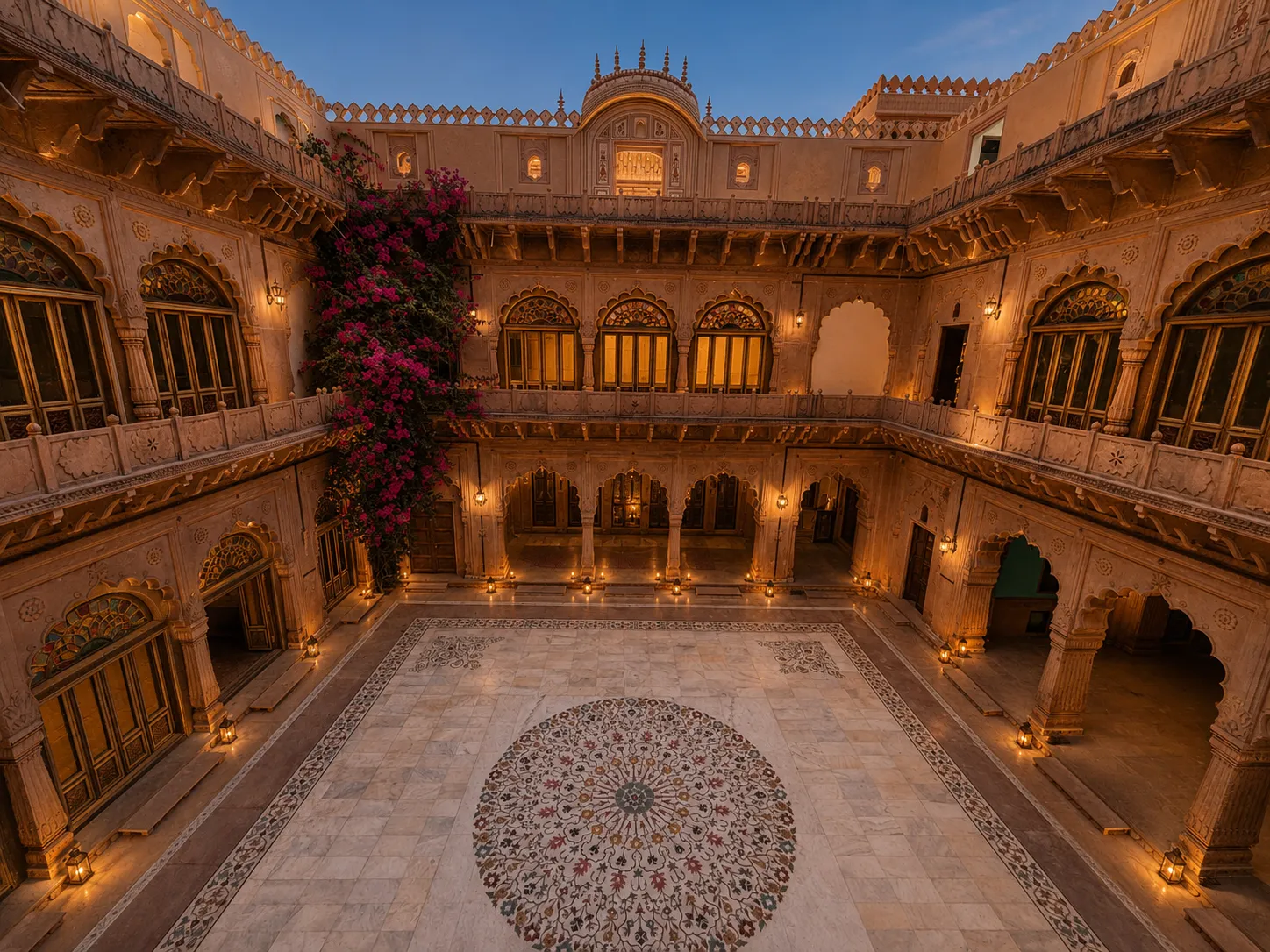

Visiting a historic destination and staying within a historic environment are two different experiences.
During an ordinary sightseeing visit, travellers enter a monument, observe its architecture, take photographs and leave after a limited period. Their accommodation may have little connection with the history they explored during the day.
Staying within a heritage setting allows the destination’s historical character to continue beyond sightseeing hours. Architecture, courtyards, pathways and the surrounding atmosphere become part of the traveller’s everyday experience rather than a short stop on an itinerary.
Mahal Khas Palace is situated within the historic Lohagarh Fort complex in Bharatpur. This location gives guests an opportunity to experience a palace stay inside Lohagarh Fort while remaining connected with the wider identity of the city.
What is the difference between visiting and staying in a heritage setting?
A visitor normally experiences a historic place according to fixed sightseeing hours. Attention is concentrated on major architectural features and historical facts.
An overnight guest encounters the environment more gradually.
The experience may include:
- Arriving through a historic setting
- Observing architectural details at different times
- Experiencing changing morning and evening light
- Moving through spaces without a rushed sightseeing schedule
- Spending time discussing the history of the location
- Connecting accommodation with the wider journey
This slower interaction can produce a more personal understanding of place.
Why does location influence the meaning of accommodation?
Accommodation is not only a room. It also determines what surrounds the traveller before sleeping, after waking and during the unplanned periods between activities.
A modern hotel located away from the historic area can provide comfort, but the guest must travel separately to experience the destination’s heritage. When accommodation is situated within a historic environment, the sense of place continues after the formal sightseeing ends.
This does not mean guests should expect to live exactly as people did centuries ago. Contemporary hospitality and historical surroundings can coexist. The value comes from experiencing modern comfort within an environment connected to the destination’s past.
How does architecture affect a traveller’s experience?
Architecture influences scale, light, movement and atmosphere. Thick walls, historic proportions, courtyards, passages and traditional design elements can create an experience substantially different from a standard commercial building.
Guests may begin noticing:
- How spaces were arranged
- How natural light enters at different hours
- How architectural proportions affect temperature and atmosphere
- Which elements have been preserved
- How old spaces are adapted for present-day use
- How the building relates to the surrounding fort environment
These observations help travellers understand that heritage is not only a date written on a plaque. It is visible in how a building was conceived and continues to function.
Does staying in a palace automatically teach visitors its history?
No. Architecture can stimulate curiosity, but accurate interpretation remains important.
Travellers should distinguish between verified history and attractive storytelling. Dates, rulers, construction details and architectural claims should be supported by credible records rather than repeated simply because they sound impressive.
Mahal Khas Palace was built in 1826 during the reign of Maharaja Balwant Singh. Its location inside Lohagarh Fort connects the property with an important chapter of Bharatpur’s royal and architectural history.
Guests who want deeper knowledge should consult official or authoritative historical sources rather than depending solely on casual social-media captions.
What is living heritage?
Living heritage describes a historic place that continues to serve a meaningful contemporary purpose.
A building does not have to remain frozen in time to retain heritage value. It may be carefully adapted for hospitality, cultural use or another responsible function, provided its historical identity is respected.
In a functioning heritage property:
- Rooms accommodate contemporary guests
- Historic spaces remain part of daily movement
- Maintenance protects continued use
- Staff help connect visitors with the property
- Modern requirements are introduced thoughtfully
- The building remains socially and economically active
This continued use can help people develop a stronger relationship with heritage than observation from a distance alone.
Why is the morning experience different in a historic setting?
Sightseeing destinations are often experienced during their busiest hours. An overnight stay allows guests to encounter a quieter part of the day.
Morning light can reveal textures and architectural details differently. Pathways and shared areas may feel more spacious before the daily routine begins. Guests have time to look without feeling that they must immediately move to another attraction.
The value of morning is not based on guaranteed silence or a particular view. It comes from having an unhurried opportunity to notice the environment.
How does evening influence the atmosphere?
Evening changes the way historic architecture is perceived. Shadows, lighting and reduced movement can emphasise forms that appear different during the day.
Guests may also use this time to reflect upon what they explored in Bharatpur. Instead of ending the day in accommodation disconnected from the destination, they remain within a historically meaningful environment.
A conversation after sightseeing can become more engaging when the surroundings continue to reflect the character of the city.
Can a historic stay appeal to families?
Yes, provided the family chooses accommodation and an itinerary that suit everyone’s practical needs.
Children may respond to stories, visual details and the idea of staying within a fort environment. Adults may appreciate architecture and photography, while grandparents may value the opportunity to share family or regional history.
Families should nevertheless consider:
- Comfortable room arrangements
- Mobility requirements
- Supervision of children
- Suitable meal timings
- Rest periods
- Distance between different areas
- Accessibility needs that require confirmation
Heritage value should complement comfort rather than replace it.
What should senior travellers confirm before booking?
Historic properties can differ from newly constructed hotels in layout and circulation. Senior guests or travellers with mobility limitations should ask specific questions before reserving.
They may need to confirm:
- Steps and level changes
- Distance to the allocated room
- Lift availability where relevant
- Bathroom configuration
- Vehicle access
- Assistance with luggage
- Proximity to dining or common areas
Requirements should be discussed directly. Travellers should not assume that every room or area offers identical access.
How can guests behave responsibly in a heritage property?
Responsible behaviour helps protect the character of historic surroundings.
Guests should:
- Follow property instructions
- Avoid touching or damaging sensitive elements
- Supervise children appropriately
- Use permitted photography areas
- Avoid attaching decorations without approval
- Keep pathways clear
- Treat historic objects and surfaces respectfully
- Avoid presenting unverified stories as facts
Heritage hospitality works best when visitors recognise that they are staying in a place with value beyond their individual visit.
How should travellers photograph a historic palace respectfully?
Photography is an important part of travel, but it should not inconvenience other guests or affect the property.
Travellers should avoid blocking corridors, moving furnishings without permission or using professional equipment where approval is required. Drone photography, commercial shoots, lighting installations and staged productions should always be confirmed in advance.
Natural light, architectural lines and smaller details can create meaningful photographs without requiring intrusive arrangements.
Can a heritage property also provide contemporary comfort?
Yes. Heritage hospitality is not a rejection of modern expectations.
The purpose is to preserve the identity of the setting while providing the essential comfort and service required by present-day travellers. Successful adaptation respects both the building and the guest.
Before booking, travellers should check the current room information, services and facilities rather than assuming that the word “palace” guarantees a particular amenity.
A historic accommodation experience in Bharatpur should be evaluated through its actual location, rooms, service and heritage context.
How should guests plan their Bharatpur itinerary?
A heritage stay works best when travellers avoid overcrowding the day.
A balanced itinerary may include:
- A principal sightseeing experience
- Adequate travel time
- A comfortable meal
- Afternoon rest
- Time to experience the property
- An unhurried evening
- Flexibility for children or senior travellers
The objective is not to visit the maximum number of locations. It is to understand Bharatpur without turning the journey into a checklist.
What makes the experience memorable?
The strongest memory may not be one grand architectural feature. It could be the feeling of waking inside a historic environment, noticing an old detail during a walk or discussing Bharatpur’s past with family.
These small interactions create a deeper sense of place.
A heritage-led palace experience gives travellers an opportunity to remain connected with Bharatpur’s identity beyond formal sightseeing hours.
Final Thoughts
Staying within a historic fort environment changes the relationship between accommodation and destination.
The hotel is no longer simply the place where sightseeing begins and ends. It becomes part of the cultural experience itself.
Guests can observe heritage across different hours, understand how old architecture continues to serve a modern purpose and spend more time engaging with the atmosphere of Bharatpur.
That continuity is what distinguishes visiting history from temporarily living within its surroundings.
Frequently Asked Questions
What is the difference between visiting and staying in a heritage setting?
Visiting a heritage site typically involves a short, scheduled experience focused on major architectural features. In contrast, staying in a heritage setting allows guests to immerse themselves in the environment over a longer period, experiencing the atmosphere and details at their own pace.
How does architecture influence a traveler's experience in a historic setting?
Architecture affects a traveler's experience by shaping the scale, light, and movement within the space. Historic features, such as thick walls and traditional designs, create a unique atmosphere that can deepen the visitor's understanding of the location's history and cultural significance.
Is staying in a historic palace enough to learn its history?
No, while the architecture can spark curiosity, a thorough understanding of the history requires credible sources. Guests should seek out verified information rather than relying solely on casual storytelling to gain a deeper insight into the palace's historical context.
Can families enjoy a stay in a heritage property?
Yes, families can have a wonderful experience in a heritage property, as long as they choose accommodations and activities that suit everyone's needs. It’s important to consider factors like room arrangements, mobility requirements, and suitable meal options to ensure a comfortable stay for all family members.
What should senior travelers consider before booking a historic accommodation?
Senior travelers should confirm specific details such as the presence of steps, lift availability, and the distance to their allocated room. It's essential to discuss any mobility concerns directly with the property to ensure that their needs are met during the stay.
How can guests act responsibly in a heritage property?
Guests can protect the character of historic surroundings by following property guidelines, avoiding damage to sensitive elements, and treating historic objects with respect. Responsible behavior enhances the experience for everyone and helps maintain the integrity of the heritage site.
How can travelers photograph a historic palace respectfully?
Travelers should be mindful of their surroundings when taking photos, avoiding obstructing pathways or using equipment that requires permission. Capturing the essence of the palace through natural light and architectural details can create meaningful images without being intrusive.
What makes a heritage stay in Bharatpur memorable?
A memorable heritage stay often comes from small, personal interactions with the environment, such as waking up in a historic space or discussing the region's history with loved ones. These experiences create a deeper connection to Bharatpur than simply checking off tourist sites.



























Sign in to leave a comment.